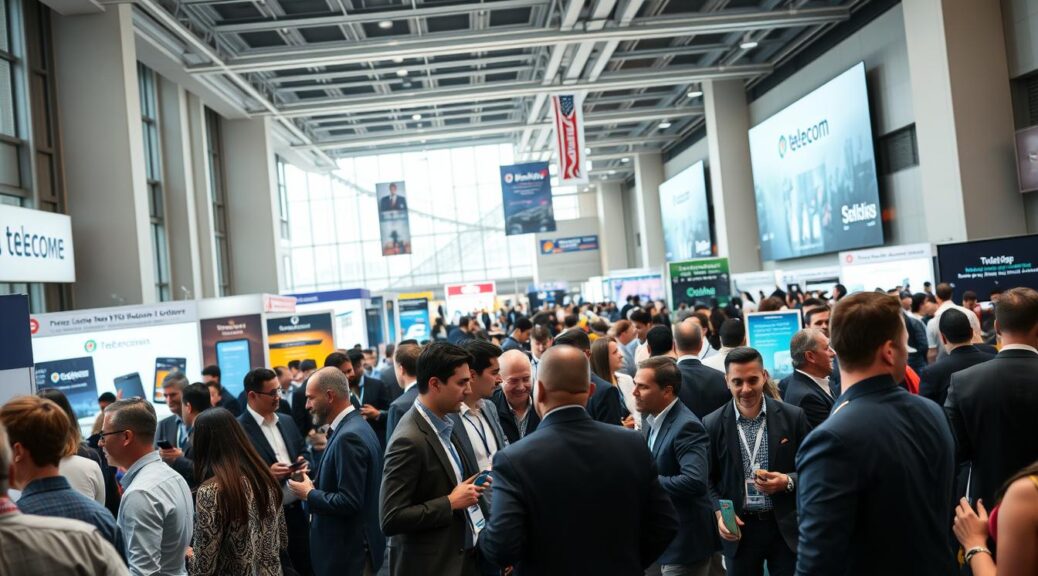
Let’s face it. Your LinkedIn feed is full of vague posts. The real action happens offline.
It’s in the hotel ballrooms and convention centers. These are the places hosting key industry events. It’s where real conversations happen, not just online.
We’re focusing on the real world. We aim to find the places where the future of tech is being shaped.
Think of this as your guide to IRL network. In these places, a simple handshake can be as valuable as a thousand online connections.
The Value of In-Person Conferences
Your LinkedIn network is like a museum, but a conference floor is alive. We’ve mixed up being connected with being part of a community. A “like” isn’t the same as a handshake, and a comment thread isn’t a real talk.
Why is being there in person important? It’s all about the depth of connection. Digital chats lack the subtlety of a smile or the urgency of a real question. Regional tech events are where the real connections happen.
Think about it. Social events at these gatherings are perfect for networking. They let you meet peers and leaders who are changing the world. This isn’t just talk; it’s real.
The real value isn’t in the main talks. It’s in the moments that aren’t planned:
- The Serendipity Factor: Your most valuable connection might not be on your schedule. It could be someone you meet in line, sharing a dislike for bad coffee.
- Unscripted Insight: The real news often comes in the hallway after a talk. It’s when speakers drop their corporate masks and share their true thoughts.
- Kinetic Trust: Trust grows fast in person, through body language and laughter. It’s much quicker than any digital message.
Zoom fatigue isn’t just about tired eyes. It’s about lazy communication. We stick to safe, planned messages. In person, you must think quickly. This is where you grow professionally.
While you can network from home, you miss out on a lot. Regional tech events offer a full, real experience. The name tag might fall off, but the connections you make will last.
Major Events on This Year’s Calendar
Looking at the list of over 60 telecom events, it’s clear this is more than just a schedule. The data for 2026-2027 shows over 63 international gatherings. These range from the International Conference on Telecommunications and Signal Processing (ICTSP) to deep dives on AI in Communication.
This isn’t just a suggestion to network. It’s a key part of your career strategy. Trying to attend every event is like trying to drink from a firehose. You’ll get burned out and end up with a lot of similar conference programs.
The events aren’t spread out randomly. They cluster around key places. Montreal and Toronto are major hubs, with Vancouver and Quebec City also important. This shows where innovation, talent, and industry hubs are focused.
| Primary Hub City | Sample Conferences (2026-2027) | Typical Focus Areas | Strategic Advantage |
|---|---|---|---|
| Montreal | ICTSP, ICSPCN, International Conference on AI in Networks | Signal Processing, AI Integration, Quantum Networking | Strong academic-industry crossover, bilingual ecosystem. |
| Toronto | ICCSNDSP, Conference on 6G Frontiers, Telecom Policy Forum | Next-Gen Hardware, Security Protocols, Regulatory Frameworks | Major financial and corporate headquarters, vast scale. |
| Vancouver | Pacific Rim CommTech Summit, Green Telecom Symposium | Sustainable Tech, Trans-Pacific Collaboration, IoT | Gateway to Asian markets, focus on cleantech innovation. |
| Quebec City | Francophone Tech Connect, Secure Networks Workshop | Cybersecurity, Francophone Market Solutions | Niche, high-security focus, unique cultural and business angle. |
For your networking calendars, find your cluster. Are you into hardware? Toronto’s your place. Or maybe AI in comms? Montreal’s your spot. This makes a big list into a focused plan.
For a global view, check the global telecom calendar. It shows how these North American clusters fit into the world’s events.
Think of it as chess, not checkers. You don’t need to be everywhere at once. You need to be in the right place, at the right time, with the right people. The map is drawn. The strategic clusters are identified. Now, you just have to plot your move.
Regional Highlights & Featured Keynotes
If telecom conferences were cities, each would have its own unique vibe. Atlanta mixes southern charm with tech savvy. Las Vegas is a place where business thrives under bright lights. This year, we’re exploring the industry’s cultural hubs.
Vancouver focuses on tech with a Pacific Rim twist, blending openness and green innovation. Montreal combines deep theory with practical application, thanks to its bilingual, academic vibe. Austin is where startups challenge the status quo, mixing energy with rebellion.
Now, let’s talk about the keynotes. They’re the stars of the show. But, the real gems are often found in smaller rooms. These events offer a wealth of knowledge, from technical talks to panels.
So, how do you pick the right sessions? Look beyond the keynote titles. Search for workshops where experts share real-world insights. Panels where regulators and innovators discuss the future are also key.
Exploring these telecom conferences is about finding your community. The city sets the backdrop, but you create your own agenda. Seek out sessions where the future is being shaped, not just presented.
What to Expect: Registration, Sessions, and Networking
Think of a modern telecom conference as a brain triathlon. Registration is the warm-up. Sessions are the main event. Networking is the victory lap. You’ve picked your regional tech events and marked the calendar. Now, let’s dive into the details.
First up: Registration. It’s a ritual of queues and lanyards. Your first taste of the crowd. It’s like the opening credits of a long, informative movie. The goal is more than just getting your badge.
It’s about scanning the room. Who’s here? What companies are they from? That person fumbling with their phone charger might be your next collaborator.
The process itself is a study in human efficiency. Or lack thereof. Online pre-registration is your friend. It helps you avoid the main scrum. But showing up early has its own perks. You get to see the lay of the land before it gets crowded.
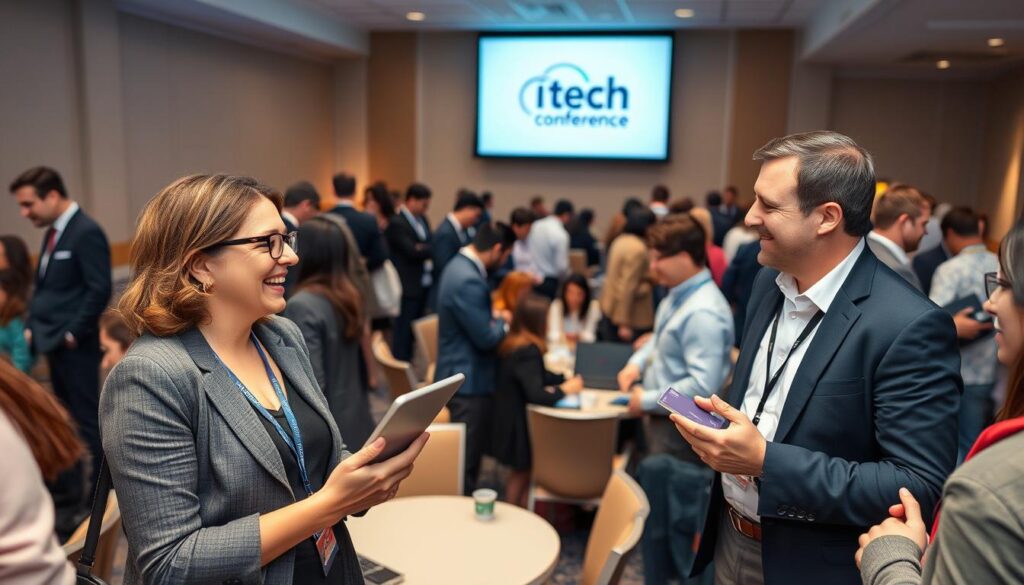
Next: The Sessions. This is the intellectual buffet. A menu of keynotes, panels, and deep-dive workshops. The temptation is to eat everything related to your niche. But don’t.
Strategic sampling is key, not gluttony. Balance deep dives into your specialty with forays into adjacent fields. The next big disruption often comes from unexpected places. Can a 5G security talk inform your IoT project? Probably.
Ask yourself: Is this session giving me new data or just repackaging a blog post I’ve already read? The best presentations offer a clear thesis, supported by evidence, and end with a provocative question. If a speaker is just reading slides, you have my permission to quietly exit.
Now, the Networking. This is where the magic—and the deals—actually happen. It’s not just the scheduled “social events,” though, as the research confirms, they provide ideal opportunities for connection. It’s the spaces in between. The coffee line. The awkward five minutes before a session starts.
Your mission is to transition from “attendee” to “participant.” How? Ditch the sales pitch. Lead with curiosity. “What brought you to this talk?” is a better opener than “Here’s what my company does.” The exhibition hall is a minefield of eager sales bots. Your strategy? Have a goal. “I need to see three vendors about edge computing solutions,” then stick to it.
The real connections are made when you find common ground beyond work. A shared love of terrible airport food. A mutual frustration with a particular software. These are the glue of professional relationships.
| Phase | The Vibe | Key Action | Pro Tip |
|---|---|---|---|
| Registration | Controlled chaos. The first impression. | Observe the crowd. Collect your materials. | Pre-register online. Arrive 30 minutes early to avoid the peak rush. |
| Sessions | Intellectual buffet. Information overload. | Curate your schedule. Sample widely but purposefully. | Target 70% core topic, 30% adjacent field. Always sit near an aisle for a clean exit. |
| Networking | Organic exchange. The deal-making engine. | Listen more than you talk. Seek common ground. | Follow up within 24 hours via LinkedIn with a specific reference to your conversation. |
So, you have your playbook. Registration gets you in the door. Sessions arm your mind. Networking builds your world. The value of these regional tech events isn’t in the swag bag. It’s in converting a planned itinerary into genuine intellectual and professional currency. Now go forth and exchange.
How to Prepare and Make the Most of Events
Going to a telecom conference without much prep is like showing up to a tech battle with just a spoon. The pros plan their meetings carefully. They don’t leave their success to chance.
Start by doing deep research. Look beyond just the session titles. Check out the speaker and attendee lists. This helps you know who to talk to and what to expect.
Next, work on your opening line. It should start a conversation, not be a sales pitch. Try saying something like, “I saw your session on Open RAN challenges is tomorrow. What’s the biggest challenge you think the industry is missing?”
Set clear goals for yourself. Instead of “network more,” aim for specific things like having three meaningful conversations. Or finding two people to work with on a project.
Yes, bring business cards. They help you follow up digitally. But make sure to write down who you met and what you talked about. This helps you remember people better.
Don’t forget the follow-up after the event. Sending a generic email is not enough. Make sure your email is personal and adds value.
- Reference your conversation: “You mentioned the latency issue in your deployment—that reminded me of this article.”
- Add value: Attach a relevant white paper or link to a resource you discussed.
- Propose a next step: “Let’s schedule a 15-minute virtual coffee next week to continue the chat.”
This shows you listened and care. It’s not about collecting connections for the sake of it.
Use these tips to improve your networking calendars. Plan your research and follow-ups in advance. This way, the event becomes a valuable part of your strategy, not just a distraction.
Being prepared makes you stand out at events. It’s the difference between making a contact and building a relationship. Your networking calendars are your guide. Now, go make connections.
Testimonials
Forget the glossy brochures. The true measure of any telecom conference is found in the anecdotes shared over bad coffee and late-night drinks. We can analyze ROI and session schedules until we’re blue in the face. But the proof, as they say, is in the pudding—or in this case, the post-event collaborations and funded projects.
Below, you’ll find a table of real outcomes. These aren’t generic five-star reviews. They’re messy, human stories of connections that actually stuck.
| Attendee Profile | Conference Attended | The “So What?” Moment |
|---|---|---|
| Maria K., Network Architect | ICTSP, Montreal | “I went to geek out on signal processing panels. I left with a collaborator for a pilot project on edge computing. Six months later, it was funded. The conference coffee was terrible. The connection was absolute gold.” |
| David L., Startup Founder | Toronto Telecom Forum | “The panel debate on 5G rollout got so heated, we continued it at the bar. That’s where the real consensus started to form. A possible investor was listening in. Sometimes you need a pint to resolve a protocol dispute—and secure a seed round.” |
| Chloe R., Regulatory Analyst | Southwest Connectivity Summit, Austin | “I asked a question after a keynote about spectrum policy. The speaker sought me out later. That conversation turned into a job offer at a major think tank. My career trajectory shifted in a hotel lobby.” |
| Ben T., Systems Engineer | North American 5G Expo | “I was complaining about a specific hardware integration flaw at a roundtable. The person next to me said, ‘My team solved that.’ We exchanged cards. Their solution saved my project three months of R&D. The entire trip paid for itself in one complaint.” |
See a pattern? The magic rarely happens in the scheduled keynote. It happens in the between spaces. The coffee line. The post-session huddle. The accidental “what did you think of that last point?” thrown to a stranger.
These stories embody the tangible, often unpredictable ROI of showing up. It’s not just learning. It’s partnering, hiring, and paradigm-shifting. The data on a slide is static. The handshake that leads to a pilot project is dynamic. That’s the core value proposition these industry gatherings sell, but often can’t guarantee. You have to be there to write your own story.
For a deeper archive of these human data points, explore the real attendee stories collected here. They prove the theory with lived experience. So, the next time you evaluate a telecom event, ask yourself: do I want to just listen, or do I want to become part of someone’s anecdote?
Resource List
Beyond the big conferences, there’s a world of smaller gatherings. Think of this list as your guide. It’s not just for attending; it’s for taking action. Get ready to dive in.
The Submission Channel: Your Direct Line. Found a hidden gem of an event? Share it. The Sage wants to spread the word. Send event details to events@ourdomain.com. It’s your duty to the tech community.
The Official Calendars: The Established Beat. Our list is great, but the internet has more. Bookmark these sites for regional tech events:
- IEEE Communications Society: Their calendar is top-notch for tech and research.
- TM Forum: The best for telco updates and digital ecosystems.
- USTelecom: Great for U.S. policy and infrastructure.
- Local Tech Councils: Groups like Triangle Tech Network and Silicon Valley Forum host amazing local events.
The Social Sleuthing: Finding the Underground. The best industry gatherings are often hidden. Follow influencers and join LinkedIn groups. It’s like having a local scout.
The Operator’s Toolkit: Apps & Analog. Your phone is key. Use Whova or Brella for events. Trello is great for planning your trip.
The International Note: Cover Your Bases. Meeting people from abroad? Check your visa. The U.S. Department of State’s website is essential.
This list is always growing. New events and tools appear. The smart networker keeps adding to it. Now, go out there and connect. The world is waiting for you.
Conclusion
So you’ve got the map. This year’s telecom conference circuit is more than just dates and places. It’s a chance to connect and grow.
Think of this calendar as a compass. It guides you to where deals are made, tech is discussed, and careers start. Treat it as a living guide, not just a list.
When you’re on the expo floor, it’s time to act. Don’t just watch; join in. The next big partnership might happen over coffee at Collision in Toronto or in a hallway at IBC in Amsterdam.
Your next step is clear. Add these events to your calendar. Then, go out there and join the conversation. Your next big opportunity is waiting for you.