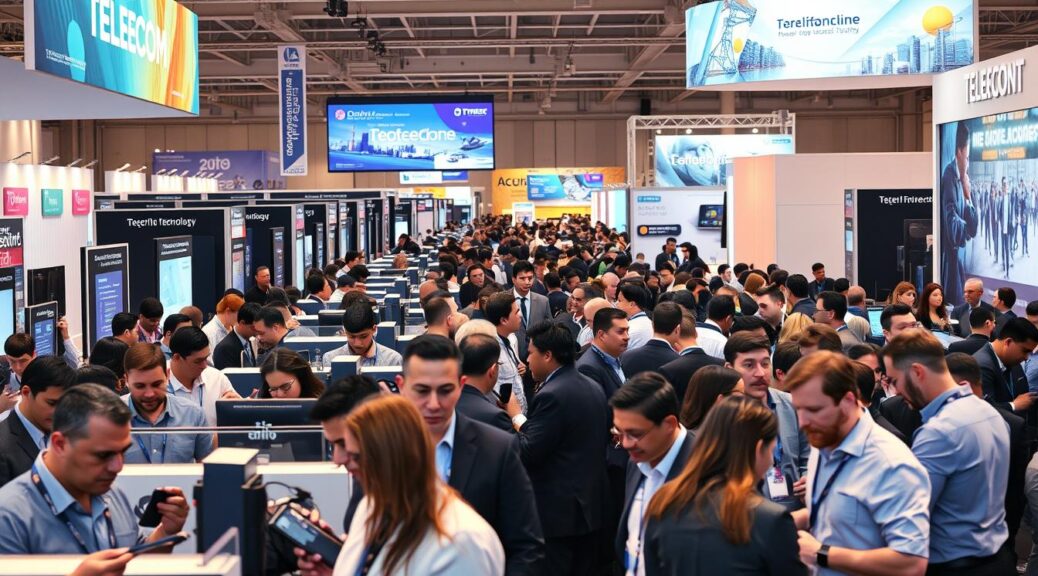
Your LinkedIn feed and inbox are full of noise. Finding real signals in this sea of information is a challenge.
We’re surrounded by content but crave genuine connections. This is what we call a “crisis of ignorance.”
But there’s a surprising solution: 35% of B2B leaders want to spend more on in-person events. This isn’t just a throwback. It’s a smart move.
This guide is your backstage pass. We’re going beyond just looking at brochures. We’ll show why attending major networking events is essential for your career.
Why is this important? In 2024, staying up-to-date is key. We’ll mix data with real-world insights from trade shows.
Why Trade Shows Matter for Networking
In today’s world, digital connections are common. But, the real deals are made face-to-face at trade shows. Think about your last big success. Was it from a digital message or a handshake?
Research shows that in-person connections are key. At a top technology expo, networking is everything. The whole event is set up for people to meet and talk.
There’s magic in meeting people by chance. Online, you might find someone, but it’s different in person. At a show, you might meet the lead engineer at the coffee line.
At trade shows, everyone is there to meet new people. Your outreach becomes an invitation, not a cold call. This makes conversations more natural and meaningful.
So, why do in-person meetings work better than virtual ones? It’s about trust and connections. You can’t build trust online like you can in person. It’s about body language and shared experiences.
Let’s look at the benefits of networking at trade shows compared to online:
- The Serendipity Engine: Chance meetings with key people you’d never find online.
- Trust Acceleration: Building rapport quickly through non-verbal cues.
- Context-Rich Conversations: Talking about products in real-time, with demos nearby.
- Vendor Accessibility: Key players are there, making it easier to connect.
Trade shows are where the industry comes together. Your network is more than just names; it’s a living system. The best place to grow it is at a busy technology expo.
Calendar: Top Telecom Industry Trade Shows
Think of the telecom event calendar like a festival lineup. You need to pick the best events to attend. It’s not just about showing up; it’s about making meaningful connections.
Your strategic itinerary starts here. This isn’t just a list of dates. It’s a guide to where the industry’s heart beats each quarter.
- MWC Barcelona (February): The Super Bowl of mobile. If you can only attend one show, make it this one. The sheer scale is breathtaking—a gladiatorial arena where network titans unveil their latest weapons and champagne flows like data. The networking at expos here is unparalleled, but it’s a contact sport. Come with very strong shoes and a stronger pitch.
- Enterprise Connect (March): The brain trust for enterprise communications. This is where IT directors and CIOs go to get real about UCaaS, CPaaS, and the future of work. Less spectacle, more substance. The conversations in the hallways are often more valuable than the keynotes.
- Channel Partners (Spring & Fall): The deal-making bazaar. This is pure commerce. MSPs, agents, and distributors hunt for the next white-label solution or partnership. If your goal is to sign contracts, this is your floor. The vibe is transactional, urgent, and highly efficient.
- CES (January): The wide-angle lens. While not exclusively telecom, CES sets the consumer tech agenda that the telecom industry later enables. See the wild prototypes and spot the trends—from connected everything to the next screen revolution—that will need your network to survive.
- OFC / ECOC (Spring & Fall): The fiber-optic PhD programs. These are the deep, technical dives. The halls are quieter, filled with engineers discussing light propagation and spectral efficiency. The networking is highly specialized, connecting you with the minds building the literal backbone of the internet.
- PT Expo China (September): The dragon’s den. A massive showcase of China’s telecom and tech prowess, from 6G research to smart city infrastructure. It’s essential for understanding the supply chain and geopolitical shifts shaping the global market.
- AFRICA COM (November): The frontier market. Focused on connectivity gaps, fintech, and leapfrog technologies. The energy is about building from the ground up. The connections you make here are with future market leaders.

So, how do you choose? It depends on your goals. Are you launching a product? MWC or CES provide the flashbulbs. Are you seeking technical partners or talent? OFC and ECOC are your halls. Is your goal purely revenue and channel growth? Channel Partners has your name on it.
Regional shows like IT Expo or NXT Comm offer lower-cost, high-touch alternatives. They are fantastic for focused, regional networking without the overwhelming noise of a global mega-event.
Ultimately, your calendar should reflect a portfolio strategy. One blockbuster event for brand exposure, one or two specialized forums for knowledge and partnership, and perhaps a regional wildcard for emerging opportunities. This balanced approach maximizes your return on every handshake and coffee meeting. Now go mark your dates.
Booths, Demos, and Product Launches
In the world of telecom trade shows, your booth is more than a space. It’s a showcase of your brand’s goals. A booth that looks empty or outdated is a sign of trouble.
Let’s look at what makes a booth stand out. A good demo is like a live event that solves a problem. It should be engaging and easy to understand.
Booths can be expensive, but there’s a smarter way. Using modular systems is cost-effective and flexible. It’s like building with Lego blocks, but for big booths.
What makes a booth grab attention?
- Interactive Technology: Use touchscreens, live data, or AR to get people involved.
- Clear Messaging: Your message should be clear from a distance.
- Conversation Nooks: Create areas for real conversations, not just handing out brochures.
- Strategic Lighting: Lighting sets the mood and guides the eye.
Choosing the right booth is a big decision. Here’s a quick guide:
| Booth Type | Cost Profile | Flexibility & Reusability | Best For | Visual Impact |
|---|---|---|---|---|
| Modular | Moderate upfront, low cost per use | High. Reconfigurable for different shows and spaces. | Growing companies, frequent exhibitors | Consistent, professional, modern |
| Portable | Low upfront, very portable | Moderate. Easy to transport, but limited size/scalability. | Small teams, regional events, sales calls | Good, but can look “small-time” in large halls |
| Custom | Very high upfront, one-time use | None. Built for a single footprint, often discarded. | Market leaders making a massive, one-off statement | Maximum, truly unique |
| Rental | Operational expense, no capital outlay | Low. You rent a new look each time. | Testing new markets, one-time events | Varies widely with provider and budget |
Is a custom booth always the best choice? Only if you need to make a big statement. For most, modular booths are smarter. They allow for growth and better use of resources.
The product launch is the highlight. Time it right, have key people there, and make it special. A good launch can start a big conversation at the telecom trade show.
Insider Tips: Maximizing Connections
You’ve scanned your badge and entered the arena; now the real game of connection chess begins. Wandering the floor without a strategy is like browsing Netflix for hours without picking a show. You end up with nothing but regret and a vague sense of wasted time. Let’s change that.
The pros know victory is secured before the first handshake. Your pre-game research is your secret weapon. Go beyond the speaker list. Who’s exhibiting? What startups are in the innovation pavilion? Put on your Sherlock Holmes mode and stalk—professionally—key attendees on LinkedIn. Set goals that sound like a spy’s briefing: “Identify two possible partners for edge computing solutions” or “Learn how Company X is using AI for predictive maintenance.”
These aren’t sales quotas. They are learning missions. This focus turns you from a passive spectator into an active hunter-gatherer of intelligence and opportunity.
Once on the ground, your opening move is everything. Your elevator pitch isn’t a corporate brochure read aloud. It’s a 15-second hook that states a problem you solve, not just your job title. Think: “I help telecom providers reduce network latency by 30% using software-defined architecture.” Stop talking. Listen.
The art of the graceful exit is a critical skill, often overlooked. When a conversation hits a dead end, don’t suffer. A simple, “It’s been fantastic chatting, and I don’t want to monopolize your time. Let’s connect on LinkedIn?” is a polite ejector seat. Always have a power bank. A dead phone at a trade show is a social death sentence.
Drawing from expert trade show tips for small business, the core of engagement is a clear value proposition. Your booth staff must be trained not just to demo, but to converse. They should ask questions, understand visitor pain points, and offer interactive experiences that are memorable, not just flashy.
Adopt the mindset Source 2 highlights: competitive intelligence. Observe rival booths. Listen to their pitches. What problems are they highlighting? What are they not saying? Engage their staff in deep, technical discussions. You’re not there to steal, but to understand the landscape of technology expos.
How do these tactics translate into action? The difference between an amateur and a pro is stark, and it’s often in the subtle details.
| Tactic | Amateur Move | Pro Move | Why It Works |
|---|---|---|---|
| Pre-Show Research | Glances at the floor map morning-of. | Creates a target list of 10 people/companies and schedules outreach 2 weeks prior. | Creates serendipity. You “run into” people you already emailed. |
| Conversation Starter | “So, what do you do?” | “I saw your talk on 5G slicing challenges. How are you tackling interoperability?” | Demonstrates preparation and instantly elevates the dialogue beyond small talk. |
| Competitor Intelligence | Avoids competitor booths out of awkwardness. | Visits with a specific technical question, listens to their solutions, and analyzes gaps. | Provides real-time market intelligence you can’t get from a report. |
| Follow-Up | Sends a generic “Nice to meet you” email a week later. | Sends a personalized note within 24 hours referencing the specific topic discussed, with a relevant article link. | Capitalizes on fresh memory and shows genuine interest, solidifying the connection. |
The ultimate goal is to transform fleeting chats into lasting links. In this industry, your network is quite literally your net worth. A meaningful connection made at the right technology expo can lead to a partnership, a job offer, or a critical insight that saves your project six months down the line. Don’t just attend. Engage, analyze, and connect with purpose.
Real Success Stories
Let’s look beyond the marketing hype. What does it really mean to win at a trade show?
It’s not always about grand gestures. Success often comes from quiet, meaningful conversations. It’s about solving problems in the moment.
These stories prove the value of networking at expos. They show how being there can boost your career and business.
For analysts or journalists, success isn’t just about sales. It’s about getting exclusive information. They get the scoop because they were there.
They built a relationship with a product manager before the expo. At the event, this connection gave them a sneak peek. This is how they break a story.
Startups also have success stories. Their demos might not be on the main stage. But, a chance meeting with a CTO can lead to their first big client.
Senior engineers face tough problems. But, at a vendor’s booth, they find a solution in minutes. This ends months of frustration.
So, what do these stories have in common? They’re not just luck. They follow a proven method.
| Success Archetype | The Preparation | The Authentic Moment | The Critical Follow-Up |
|---|---|---|---|
| The Analyst | Researching attendees; pre-scheduling key meetings. | Leveraging an existing rapport for an off-the-record briefing. | Publishing the insightful, exclusive analysis that builds credibility. |
| The Startup | Perfecting a concise, visual demo tailored to pain points. | Engaging a curious visitor with a solution, not just a sales pitch. | Sending a tailored proposal referencing the exact expo conversation within 24 hours. |
| The Engineer | Knowing the exact technical hurdle to bring to experts. | The collaborative “aha!” moment at a whiteboard, solving a real problem. | Connecting on LinkedIn with the specialist and sharing the implemented solution. |
Each story is built on preparation and authenticity. And, they all rely on follow-up.
This is the true value of networking at expos. It’s not about collecting cards. It’s about making meaningful connections. The expo floor is just the backdrop for your story.
Attendee Checklist
Going to a big telecom event without a plan is like trying to fix a network with a toothpick—it’s pointless. It’s not about packing clothes. It’s about making a detailed plan. We’ll get you ready with the right digital, physical, and mental gear. This way, you’ll be sharp and focused, not just another face in the crowd.
Your digital tools are your first defense. Download the event app before you go. Connect it to your CRM. It’s not just for schedules; it’s for quick notes. Remember that cool edge-compute demo? Write it down right away. Your future self will be grateful.
Now, let’s talk about what you’ll carry. Yes, you need business cards, but they must be good. Cheap cards are easily forgotten. Spend money on quality. And don’t forget about your shoes. You’ll walk a lot, so choose comfort over style.

Next, get mentally ready. This is where most people fail. Set your top three goals. Do you want to find new vendors, get leads, or learn about a tech trend? Write them down. Your goals will guide everything you do.
Look at the session list with a clear mind. Pick the ones that are must-haves for your goals. Skip others to talk to people in the hallways. Plan your coffee meetings early. The best connections happen outside the main area.
Now, let’s tackle the 3 PM slump. It’s when the hall gets quiet and boring. Here are some tips:
- Hydrate like it’s your job: The air at events is dry. Drink water instead of coffee.
- The power nap: A quick nap can refresh your mind.
- Strategic snacking: Eat protein bars, not candy. You need steady energy.
- Exit strategy: It’s okay to leave a boring session. Your time is precious.
This checklist is your guide. Follow it, and you’ll turn telecom events into focused missions. Walk in ready, and walk out with new connections.
Virtual vs. In-person Shows
Imagine watching a rock concert on your phone versus feeling the bass in your chest at the venue—that’s the core difference between virtual and in-person technology expos. The pandemic forced a grand, global experiment. We became experts at logging in, turning on our cameras, and pretending our living rooms were conference halls.
Virtual events democratized access. They were a lifeline, connecting professionals across time zones who could never have afforded a flight and a hotel. The content was often preserved on-demand, a library of insights available at your convenience. But now we have a choice. The analysis gets interesting.
So, can’t you just watch the presentations through a webinar? Sure. You can stream the lecture. But as any sage will tell you, the magic isn’t in the lecture notes. It’s in the whispered question to the speaker afterward. It’s in the coffee line debate that turns into a partnership. Nothing online truly beats a face-to-face chat for going deeper on an idea.
Think of a virtual event like streaming that concert. Convenient? Absolutely. You avoid the traffic and the overpriced beer. But you miss the crowd’s electric energy. You miss the chance encounter with the guitarist at the bar. That’s the serendipity virtual catastrophically shortchanges.
Where does the digital format excel? Broad reach and archived content are its superpowers. Where does it stumble? Networking feels transactional. Experiencing a physical product is impossible. The spontaneous “vibe” of a show floor is utterly absent.
| Aspect | Virtual Technology Expos | In-Person Technology Expos |
|---|---|---|
| Networking Quality | Scheduled chats, digital handshakes. Often superficial. | Organic, fluid conversations. Builds deeper trust and rapport. |
| Content Access | Superior. On-demand libraries, easy replay. | Real-time only. Requires active note-taking. |
| Sensory Experience | Flat. A 2D screen. | Immersive. Touch the hardware, hear the crowd, feel the scale. |
| Serendipity Factor | Near zero. Algorithms guide your path. | High. The best meetings are often the unplanned ones. |
| Cost & Logistics | Low. No travel, just registration. | High. Travel, accommodation, time investment. |
The future, of course, is likely a savvy hybrid. Major shows will offer digital passes for the content and in-person badges for the connection. This isn’t an either-or death match. It’s a spectrum.
But for the core mission of the telecom professional—building unshakable relationships and experiencing technology with your own senses—our verdict leans heavily one way. The chaotic, buzzing, handshake-filled world of the physical technology expo remains irreplaceable. You can’t download a gut feeling. You can’t code a moment of shared inspiration over a demo unit.
Choose virtual for scale and information. Choose in-person for trust and transformation. In the end, the most powerful networks are built in three dimensions.
Takeaways & Trends
After planning your schedule and perfecting your pitch, what do you really think about telecom trade shows? They’re not just work events; they’re your chance to shine. They’re all about new ideas and meeting people.
Being intentional is key. These events help you stay ahead in your field. Choose wisely, as advised by Source 2. It’s not about going to every event. It’s about making each one count.
The trends on the show floor are clear. Gone are the days of boring booths. Now, it’s all about hands-on experiences. Hybrid events are popular, reaching more people. And don’t forget about going green; it’s now a must-have.
In today’s fast-paced world, showing up matters. Being ready and curious is your best move. Networking at expos is timeless, even in our digital age. So, go out there and connect. And maybe skip the bad snacks.