
Walking into a big industry event feels like the start of The Hunger Games, but with bad coffee and more lanyards. Everyone is searching for deals, jobs, and info. But most leave with just a sore hand and forgotten cards.
So, why the gap? The numbers show the truth: 81% of attendees want to meet experts. They’re not there for the food or awards. They’re there for you.
But many confuse being busy with being strategic. They collect contacts like Pokémon cards without a plan. It’s time to move from shaking hands to real networking.
This is your crash course in efficiency. An industry pro once said Dreamforce is like packing three years of work into seventy-two hours. We’ll teach you how to pack that punch for our field.
This isn’t just about shaking hands. It’s about shaking hands with a purpose. Let’s change the game from a chaotic mess to a well-planned campaign.
Pre-event prep: schedule stack, anchor meetings, booth map
Think of conference success as a chess game. The early moves of pre-event planning set the stage for success. It’s not just about carrying extra business cards. It’s about setting up your own command center before you even book your flight.
Your first move is the schedule stack. Don’t just mark every session on 5G core virtualization. That’s what everyone else does. Instead, use the event app like a spy. Download it right away. Your goal is to be everywhere strategically, not to attend everything.
Look at speaker lists and attendee rosters. Find out who’s behind the titles. Who’s talking about Open RAN? Which analyst is leading the cloud-native panel? The schedule stack is your personal guide, telling you where to be and who to meet.
Next, plan your anchor meetings. These are your must-do coffees or chats. Book them weeks before the event. Target that dream partner, the top analyst, or the big enterprise prospect you’ve been chasing. These meetings are your sanity in the chaos.
Why anchors? They ensure you get a return on your investment. Even if everything else goes wrong, these conversations will make a difference. They’re your solid foundation. Pro tip: Schedule them for day two. Day one is too busy for everyone. By day two, things settle down, and you can focus better.
Then, there’s the booth map. If you have a booth, plan its layout like a Broadway director. Where will demos happen? Where’s the quiet spot for serious talks? If you’re roaming, know the best places to be.
Where do the tech experts hang out? Which lounge is for the big shots? The vendor café near Hall B? It’s not being paranoid. It’s using data to guide your feet. Knowing the layout saves you from getting overwhelmed.
This method turns random networking into focused interactions. It’s how you build a connected event tech ecosystem that works for you, not against you.
| Planning Tool | Amateur Approach | Pro Approach | Strategic Advantage |
|---|---|---|---|
| Event App | Bookmarks random sessions | Maps speaker/attendee networks | Identifies high-value contacts pre-event |
| Calendar Strategy | Fills every time slot | Creates “white space” buffers | Prevents burnout, allows for serendipity |
| Anchor Meetings | Schedules day-of via luck | Secures 2-3 key meetings weeks prior | Guarantees minimum ROI regardless of other outcomes |
| Venue Intelligence | Wanders aimlessly | Studies floor plans, identifies zones | Reduces decision fatigue, maximizes presence in high-traffic areas |
| Follow-up System | Relies on memory post-event | Sets CRM tags & templates before arriving | Ensures no lead falls through the cracks |
The table above isn’t just a checklist. It’s a mindset shift. Notice how the pro approach focuses on people and patterns, not just schedules. This is what makes conferences productive, not just expensive vacations.
Your pre-event planning should feel like preparing for a special ops mission. Every detail counts. Every contact is researched. Every zone is mapped. When you enter the conference center, you shouldn’t be checking your phone for what’s next. You should already know.
That’s the power of planning your luck. It turns the conference floor from chaos to a chessboard where you’re always ahead.
Your 30‑second story + value one-pagers
Pre-event planning for your message transforms you from a vendor into a valued consultant before you even shake a hand. In a room buzzing with static and sales speak, your introduction must be a sonic boom. It’s not your grandpa’s elevator pitch. It’s a value-loaded narrative hook designed to start a dialogue, not end one.
Compare these two approaches. Generic: “We provide telecom SaaS solutions.” Compelling: “We help carriers like you stop revenue leakage from OSS/BSS silos—typically finding 15% in hidden margins.” The first is a forgettable statement. The second is an intellectual bait. It poses an implicit question: “How are we leaking revenue?” That’s your conversation starter.
Your 30-second story should follow a simple, powerful formula: “Our mission is to help [your specific audience] solve [their acute problem], and we do it by [your unique mechanism] to deliver [a tangible outcome].” It’s specific, outcome-oriented, and makes you a problem-solver, not a product-pusher.
But a great story needs proof. Enter the ‘value one-pager.’ This is your tactical battle card, not a product brochure. Think of it as social currency you can physically or digitally hand over.
Forget glossy specs. Create a single, dense page on “3 Ways to Reduce Tower Lease Costs in a 5G World.” Or “The Regulatory Shift Quietly Impacting Your Edge Strategy.” These documents equip your prospect with immediate, actionable insight. You’re not selling; you’re enabling.
This level of pre-event planning ensures you’re a walking insight hub. You become the person others seek out for a perspective, not just another vendor with a QR code and a tired smile. You have the story to hook them and the substance to keep them engaged.
Live tactics: small-group huddles, hallway track, hosted tables
While big names speak on stage, the real action happens in secret. The main stage is for inspiration. But, the real deals are made in the hidden corners.
Think of it as three different worlds. Each needs a special approach. Master them, and you become the leader.
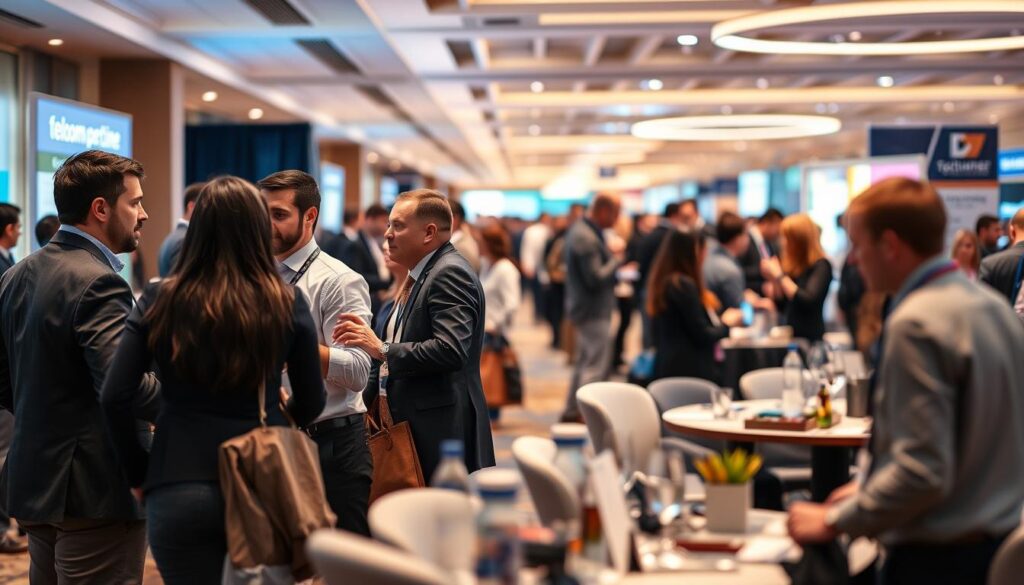
Small-group huddles are like quick meetings. Join a debate near the coffee and add your expertise. “I heard about edge computing latency. Our work with a top carrier might help.”
You’ve helped, not interrupted. Now, you’re leading a mini-conference. It’s about solving problems together, not just selling.
The hallway track is the heart of the conference. It’s the space between talks where ideas are fresh. Your goal is to catch people at the right time.
Morning is for the early birds with big ideas. Hang out by exits of popular talks. People are most excited then.
Lunch is for making connections. People are more open and social. The afternoon crowd is tired and ready for a break, perfect for a chat.
Hosted tables are a big move. Reserve a table and pick your guests. It’s like playing chess, not checkers.
You’re not just eating. You’re building a partner pipeline network. The talk flows, alliances form, and you become the key player.
Dr. Ivan Misner said, “Networking is like farming, not hunting.” These tactics make that idea work.
| Tactic | Optimal Time | Primary Goal | Key Mindset |
|---|---|---|---|
| Small-Group Huddles | Anytime (esp. between sessions) | Problem-solving & collaborative insight | Facilitator, not promoter |
| Hallway Track | Post-keynote, lunch, late afternoon | High-volume quality connections | Strategic opportunist |
| Hosted Tables | Lunch or dinner events | Curated relationship farming | Ecosystem architect |
| Combined Effect | Throughout conference | Building robust partner pipelines | Consistent cultivator |
Each tactic builds on the last. Huddles start rapport, the hallway track expands your network, and hosted tables strengthen alliances. Together, they create a powerful networking engine.
The goal is not just to collect cards. It’s to start conversations that grow into real partner pipelines. These conversations can last long after the conference ends.
Don’t sit in the front row. Your real seat is at the special table in the corner. That’s where deals are made.
Note-taking & lead scoring on the fly
Think of your conference notes as the raw intelligence for a covert operation, not a grocery list you’ll forget by the hotel elevator. The amateur collects business cards. The pro captures context. This real-time intelligence gathering is where your CRM follow-up truly begins, not when you’re back at your desk staring at a stack of names.
Your phone is your most powerful weapon here. Whip out your CRM’s mobile app the moment a conversation ends. Log the contact and immediately add the golden nuggets. Was it at the Agentforce 360 demo? Did they mention a 50-person support team drowning in slow response times?
Jot it down. This isn’t being creepy; it’s being competent. That detail about bonding over classic rock? Log it. These contextual gems are the hooks that make your follow-up email feel human, not robotic.
While the details are fresh, initiate your triage. This is lead scoring without the spreadsheet. Assign a simple, mental tier right then and there.
A-Tier (Hot): The VP who asked for a spec sheet and introduced you to their colleague. This is a direct signal. B-Tier (Warm): The manager who took your one-pager and said, “Shoot me an email.” There’s a pathway. C-Tier (Cool): The nice person in an adjacent field. A connection, but not an immediate prospect.
This instant scoring system does one brilliant thing: it tells you where to point your energy after the event. You won’t waste a week trying to warm up a mountain of lukewarm leads. Instead, you’ll laser-focus on the conversations that are already heating up.
Your CRM follow-up strategy is only as good as the intelligence you feed it. Capture the context. Score the lead. Transform that conference handshake from a souvenir into a genuine starting line.
Social Amplification During the Event: Posts, Livetweets & Digital Dominance
Social amplification is like your conference shadow, but it reaches further. While you’re exchanging business cards, your online presence works the virtual room. It’s not about vanity; it’s about making yourself visible.
Statistics show that 86% of B2B marketers use LinkedIn. This platform can generate up to 80% of all social media leads. Skipping LinkedIn at a telecom conference is like using a flip phone at a 5G demo. You’re there, but you’re out of date.
Livetweet with analysis, not applause. When a speaker talks about network slicing, don’t just quote them. Add your own insights. Tag the speaker and companies involved. This makes you a part of the industry conversation, not just a listener.
Your LinkedIn posts should tell a strategic story. Share photos from your meetings (with permission). Caption them: “Discussing edge computing with Verizon and Cisco. Latency is the new challenge.” This shows your network and expertise, helping build partner pipelines in public.
Here’s your social media checklist:
- Pre-schedule 2-3 posts about your conference goals
- Engage with 5+ attendees’ posts daily using the event hashtag
- Share one key insight per session with your unique take
- Tag strategically—speakers, companies, and possible partners
- Document conversations that show collaboration chances
This public activity shows you’re valuable in the telecom world. You’re not just collecting contacts; you’re showing how you connect people. This visibility attracts the right people, making introductions easier and speeding up partner pipelines growth.
Remember, social media at events like Dreamforce or MWC is essential. Your online presence should be as active and analytical as your in-person one. It’s all about connecting value.
FAQ
Q: What is a CRM follow-up?
A: A CRM follow-up is a process of regularly checking in with customers and prospects to ensure they are satisfied and to identify new opportunities. It involves using CRM software to track interactions and maintain a relationship with customers.
Q: Why is CRM follow-up important?
A: CRM follow-up is important because it helps build strong customer relationships, increases customer satisfaction, and can lead to repeat business and referrals. It also helps identify new opportunities and improve sales performance.
Q: How can I create a CRM follow-up plan?
A: To create a CRM follow-up plan, you need to identify your goals, determine the frequency of follow-ups, and assign tasks to team members. It’s also important to track progress and adjust the plan as needed.
Q: What are some effective CRM follow-up strategies?
A: Some effective CRM follow-up strategies include sending personalized emails, making phone calls, and scheduling meetings. It’s also important to segment your contacts and tailor your follow-up approach to each segment.
Q: How can I automate CRM follow-up?
A: You can automate CRM follow-up by using CRM software that offers automation features. This allows you to set up automated workflows and reminders to ensure consistent follow-up.
Q: What are some best practices for CRM follow-up?
A: Some best practices for CRM follow-up include keeping records of interactions, using CRM software to track progress, and regularly reviewing and adjusting your follow-up plan. It’s also important to personalize your follow-up efforts and segment your contacts.
Q: How can I measure the success of my CRM follow-up efforts?
A: To measure the success of your CRM follow-up efforts, you can track metrics such as conversion rates, customer satisfaction, and sales performance. Regularly reviewing these metrics will help you identify areas for improvement and make necessary adjustments.
CRM pipeline: stages, fields, automation templates
Handling event leads like regular contacts is like using a sledgehammer for surgery. It misses the point and can harm the relationship. Conference connections have a unique life and context that standard sales pipelines can’t capture.
Here, CRM follow-up is your secret tool. You need a special pipeline for event leads. It’s like having a dedicated wing in your CRM for conference guests.
Create a unique pipeline stage for your event. Call it “Event 2024” or “Dreamforce Connections.” This keeps your hot leads separate from the rest.
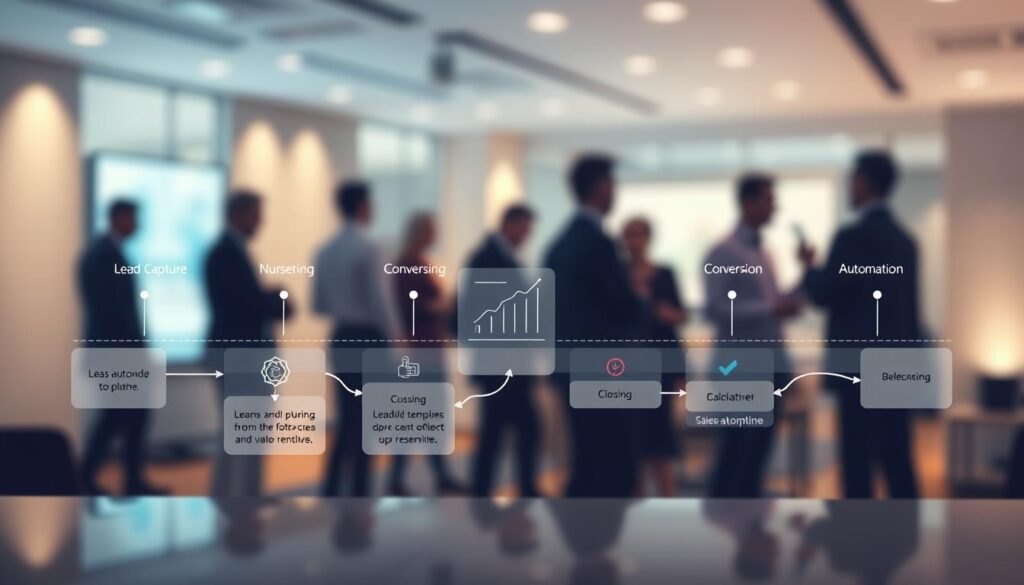
Now, the magic starts with custom fields. They help gather important information. Every lead should have these fields filled before you leave the conference:
- ‘Met At’: The specific event, session, or party
- ‘Pain Point Discussed’: The actual problem they verbalized
- ‘Next Step Promised’: What you agreed to deliver
- ‘Personal Icebreaker’: That thing about their kids, sports team, or favorite whiskey
This turns raw data into useful information for your CRM follow-up. Your SDR can now continue a conversation that never really ended.
Lead scoring is where the real magic happens. Remember those engagement metrics we tracked? They decide which template to use. Your CRM should sort leads into tiers based on their interaction.
Here’s how the automation works:
| Lead Tier | Scoring Criteria | Automated Action | Timeline |
|---|---|---|---|
| A-Tier (Hot) | Requested demo, downloaded spec sheet, lengthy conversation | Calendar invite for debrief call auto-sent from SDR | Within 24 hours |
| B-Tier (Warm) | Attended your session, visited booth, brief chat | 3-email nurture sequence with relevant case studies | Days 1, 3, 7 |
| C-Tier (Cool) | Swapped cards, minimal engagement | Monthly newsletter opt-in with event highlights | Day 2 then monthly |
| Partner Pipeline | Expressed collaboration interest, complementary service | Intro email to partnership team with context notes | Within 72 hours |
This isn’t just automation; it’s smart CRM follow-up at scale. The system adjusts based on how people respond. If a B-tier lead opens all three emails, they get bumped to A-tier.
Campaigns become dynamic. Use tags for specific events like ‘Dreamforce’ to send tailored content. Your conversation notes should fill in the email templates, making each message feel personal.
Your CRM follow-up system should be like a concierge service, not an assembly line. When done right, this ensures no deal or partner pipeline gets lost. The data becomes actionable, conversations continue, and handshakes turn into deals.
The alternative is a digital junk drawer of business cards and vague promises. Choose the pipeline.
Measuring ROI: meetings→POCs→revenue
Sentiment is for poets at the hotel bar; revenue is for professionals who need to justify their travel budget. The warm fuzzies from a great conversation don’t pay for the booth, the flights, or the team’s time. Your post-conference analysis must be as cold and analytical as a network diagnostic tool.
Start with the causal chain you defined before you even packed your bag. How many qualified meetings did you secure? Of those, how many progressed to a Proof of Concept or technical deep-dive? Lastly, what percentage of those POCs converted into closed-won revenue? This isn’t just tracking—it’s attribution archaeology.
Think of it like tracing a signal back to its source. That enterprise deal you closed in Q3? Its origin was a hallway chat in Las Vegas six months prior. Without connecting those dots, your conference strategy is just guesswork dressed up as business development.
But direct sales are only one channel in your ROI spectrum. The savvy telecom pro measures the multi-faceted yield. Did you identify and initiate two new partner pipelines that could drive indirect revenue? That’s a win. Did your HR lead connect with a brilliant network engineer at the talent mixer? That’s a strategic hire quantified.
Let’s get brutally specific. Your ROI dashboard should track these key metrics:
- Meetings to Pipeline: Number of conversations that entered your CRM as a qualified opportunity.
- Pipeline Velocity: How much faster deals moved because of conference-generated momentum.
- Strategic Intelligence: Competitive insights gathered that shaped your product roadmap.
- Partner Pipeline Growth: New integration or reseller channels established.
This is where you move from participant to auditor. Did your PR team secure that briefing with a top-tier analyst? Assign a dollar value to the earned media. Did you beta-test a new messaging angle that resonated? That’s R&D you didn’t pay for.
The math is simple but often ignored. If your conference cost $50,000 between booth, travel, and labor, you need to trace at least that much in attributable value. Not hope. Not sentiment. Traceable value.
One of the highest-yield, most overlooked returns is in partner pipelines. A single conversation with a possible systems integrator can unlock a channel that drives revenue for years. That’s compound interest on a handshake.
So, before you book next year’s event, ask the hard questions. What was the actual cost per qualified lead? How did the conference-sourced pipeline convert compared to other channels? Did we build relationships that will pay off in future quarters?
The sage doesn’t just collect business cards. They audit the entire operation, proving that every minute and dollar spent was an investment, not an expense. Your CFO will thank you. More importantly, you’ll know exactly where to place your bets next season.
Pitfalls to avoid & recovery scripts
Bob Burg, author of The Go-Giver, said, “People can tell… if you are truly interested in them or just fakin’ it.” Let’s look at common conference behaviors that show “fakin’ it.” We’ll also talk about how to recover if you’ve made a mistake.
Pitfall 1: The Human Business Card Dispenser. This person gives a long speech about their solution, not stopping to breathe. It feels like they’re just handing out brochures. They’re talking at you, not with you.
Recovery Script (If you catch yourself mid-blunder): “Wait, I just gave you a lot of info. Sorry about that. Let’s start over. What’s the single biggest problem you’re facing right now?” This shows you’re aware and willing to change the conversation to their needs.
Pitfall 2: The Ghost. This is the worst mistake in networking. You have a great conversation, promise to follow up, and then disappear. Your CRM follow-up system fails because of neglect. Two weeks later, you’ve lost all credibility.
Recovery Script (For a 2-week late follow-up): “Sorry for not getting back to you sooner. Our quarter got really busy. But I didn’t forget our talk about [specific topic]. I found an article that reminded me of your problem. Here’s the link…”
Being honest and specific can get you out of trouble. Saying you were busy is more relatable than ignoring someone. Mentioning a specific detail shows you listened.
The main issue is being fake. The first mistake is pretending to care. The second is not following up as promised.
Fixing a mistake isn’t about making excuses. It’s about being quick, humble, and focusing on the other person. Even a bad conversation can be saved with humility. A missed CRM follow-up can be fixed with something valuable.
See these scripts as a way to show respect, not magic tricks. It proves you value the connection enough to make things right. In a world full of ghosts and dispensers, being genuine makes you stand out.
Templates: outreach, recap, follow-up
Think of templates as your conference cheat codes. They help you connect with people, not get bogged down in details. Telecom experts at Mobile World Congress often spend too much time writing emails from scratch. Don’t be that person.
Your pre-event planning starts with an outreach template. Mine is like a mission brief. It says: “Aligning before MWC?” with two lines of value, one clear ask, and a Calendly link. It’s great for setting up meetings with big names like Verizon or Ericsson.
The post-session recap is your secret weapon. After a 5G security panel, you send a message within an hour. It says: “Great insights on network slicing today. Here’s that Nokia white paper we discussed.” It’s not just polite; it’s professional branding.
Your multi-step follow-up template builds partner pipelines systematically. You send a “great to meet you” ping 24 hours later. Then, 72 hours later, you add value with industry data. And two weeks later, you check in to keep the conversation moving. Use these steps in your CRM to automate the process while you focus on the relationship.
These templates turn chaos into a repeatable playbook. They turn random handshakes into structured conversations. Your next conference isn’t just another event. It’s a targeted operation with the right tools for every step. Now go turn those connections into something real.