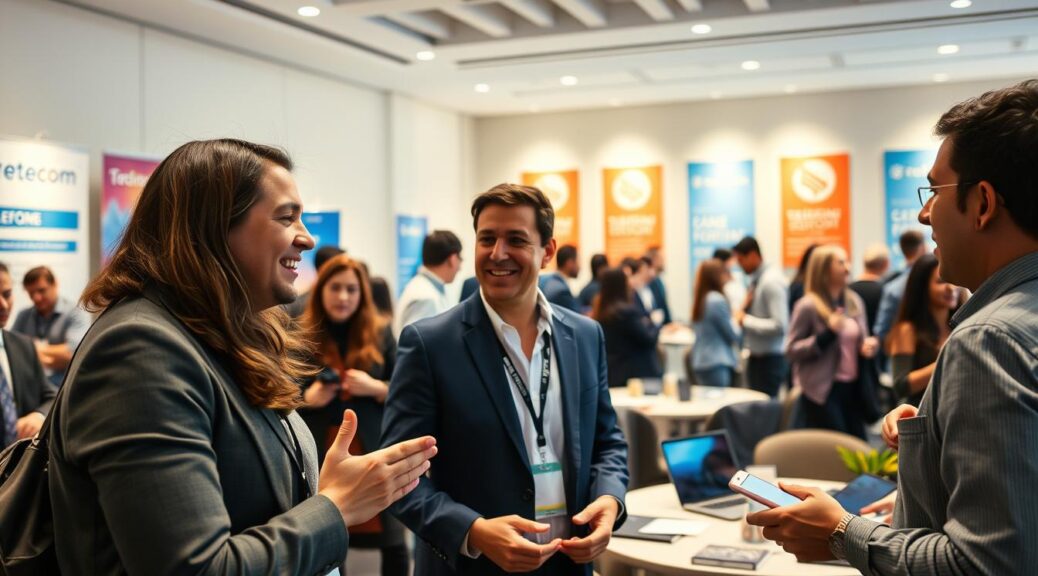
Let’s be honest. Scrolling through LinkedIn feels like collecting trading cards for people you’ll never meet.
Real professional growth happens in real life. It’s about bad coffee and good talks.
This article is your way out of digital loneliness. It’s a guide to finding your telecom tribe.
We’re moving away from big trade shows. It’s like creating your own salon, but with tech talk instead of philosophy.
I’ll show why local connections are key for career success. From Silicon Valley to Raleigh-Durham, these industry gatherings drive innovation.
They turn a community into a network. Here, ideas meet reality.
I’ll tell you how to find these events. We’ll explore from industry panels to after-hours mixers.
Think of this as your first step into the real world. Your next big professional networking chance is near.
Why Local Meetups Matter
The algorithm gives you content, but a local telecom meetup gives you context. We’ve all felt the emptiness of digital connections. A LinkedIn profile shows what someone does. But, talking over bad coffee reveals who they are, what worries them, and how they solve problems.
This is the heart of value of in-person networking. It’s the difference between reading a Yelp review and eating at the chef’s table. Local events turn abstract ideas like “5G deployment challenges” into real stories with names and faces.
Look at tech conferences like Startupfest. Their magic isn’t just the speakers. It’s the tracks and 1:1 sessions that bring people together. Local telecom meetups do the same, but for your community. They help your career grow by exposing you to real-world challenges.
What do you gain by attending?
Unvarnished Truth: Online, everyone is selling. But in person, you get the real scoop on new vendors or why a project was delayed.
Tangible Trust: Handshakes and laughs build trust faster than online connections. You become a real person, not just a profile.
Serendipity Engine: This is what algorithms can’t do. A chance meeting between a fiber specialist and a power rep at a nearby event can lead to a new solution.
To make it clear, let’s compare:
| Dimension | The Digital Connection | The Local Handshake |
|---|---|---|
| Depth of Trust | Based on profiles, endorsements, and shared content. | Forged through body language, tone, and repeated face-to-face interaction. |
| Problem-Solving Speed | Asynchronous; you post a question and hope for a reply. | Real-time; you talk about a tower issue and someone says, “I fixed that last month…” |
| Serendipity Factor | Low. You get content based on past behavior. | High. Random seating and mingling lead to valuable meetings. |
| Career Currency | Endorsements, recommendations. | Personal referrals, job leads, and career development through collaboration. |
| Information Quality | Often polished, public, and promotional. | Nuanced, candid, and full of real insights. |
This cross-pollination is priceless. It turns you from a passive news consumer into an active network node. Your career development grows from what you learn and who you meet. So, why go to the trouble of traveling? It’s where the real feast begins.
Where to Find (and Post) Events
Finding local telecom events is easy once you know where to look. The map to these industry gatherings is out there. It’s just hidden in a few key places.
Start with big names like the IEEE Communications Society. They host conferences and workshops. Think of them as the clear signal in a noisy world.
Then, check out indie spots like Meetup.com and Eventbrite. These sites are like digital town squares. You’ll find everything from 5G talks to tech mixers.
Don’t forget the physical world’s online side. Places like 2727 Coworking in Montreal have online community boards. Their calendars are perfect for local talks and panels.
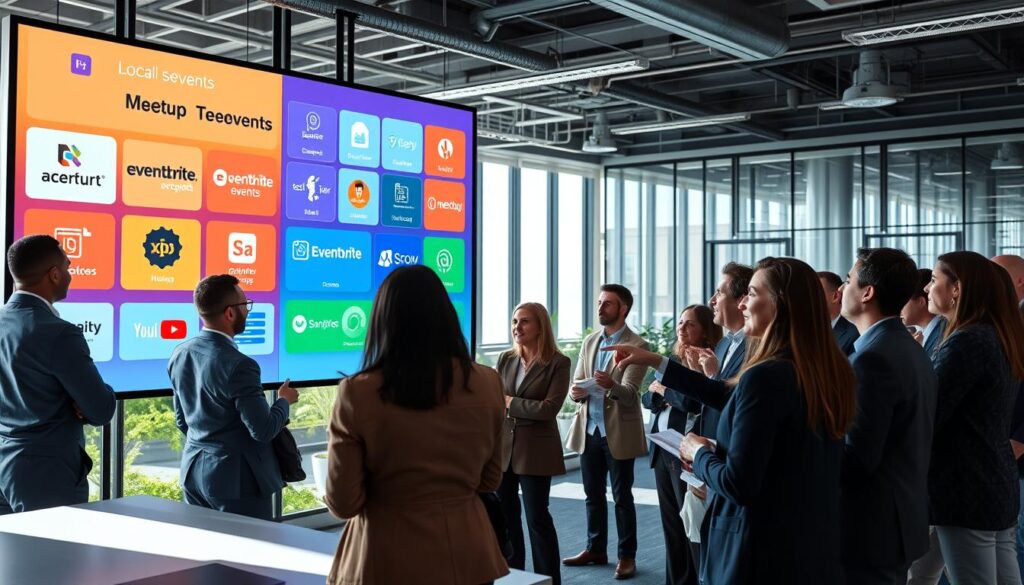
You shouldn’t just watch. If you see a gap in discussions, be a contributor. Propose a talk and post it online. Events like “OCP Canada Tech Day” started with a simple post.
Here’s a quick guide to the main event platforms and what they offer:
| Platform | Best For | Key Feature | Can You Post? |
|---|---|---|---|
| Meetup.com | Recurring, community-focused groups | Built-in audience & messaging | Yes, with a group |
| Eventbrite | Ticketed workshops & formal panels | Robust registration & payment | Yes, easily |
| LinkedIn Events | Professional networking & brand visibility | Integrates with your professional network | Yes |
| IEEE Comm Society | Academic & deep-tech symposiums | Credibility & global reach | Typically for members/chapters |
| Coworking Space Boards | Hyper-local, casual connections | Immediate local relevance | Often, if you’re a member |
For those who love digging deep, try subreddits like r/telecom. Also, follow your city’s tech incubator on social media. Their posts often lead to new events.
The tools are all here. The difference between attending and leading is knowing where to look and posting your ideas. Your next local connection is waiting to be built.
Format: Panels, Mixers, Social Networking
Going to a networking event without knowing the format is like playing chess in a poker game. You’re in the game, but you don’t know the rules. The format shapes everything: the flow of ideas, the depth of connections, and your return on time spent. Let’s explore the common formats for nearby events so you can plan your visit.
The classic panel discussion is like a TED Talk in the telecom world. Think of the Business Real Talk Panel moderated by Andy Nulman. It’s a well-organized event with wisdom from the stage. The pros are clear: you learn a lot, spot trends, and get a chance for Q&A. But, it can feel like a lecture hall, where you listen more than you talk. It’s perfect for deep dives into tech or policy.
The networking mixer comes after a panel. It’s like a jazz jam after a symphony. Post-panel drinks are where deals are made and partnerships are formed. The pro is direct access. The con is the chaos. You need to spark conversations yourself. It’s a high-risk, high-reward chance to connect.
Social events have no agenda, just fun and conversation. The Gaming Arcade Social in Edison is a great example. Here, you’re not “the DevOps engineer”; you’re “the person who’s weirdly good at Street Fighter.” It’s where you can build real connections without professional masks. The pro is genuine relationships. The con? You might not find specific technical answers.
Don’t overlook immersive or tour-based event formats. Events like C2 Montréal offer a “campus” experience, while Startup Open House lets you see where companies work. Seeing where people work tells you more about a company’s culture than any mission statement. The pro is real, multi-sensory insight. The con is it’s often a broader, more general experience than a deep technical dive.
So, how do you choose? Match the event format to your goal. Need industry intel? Seek panel discussions. Looking to pitch a collaborator? Target the networking mixers. Want to expand your circle authentically? Prioritize the pure social events. And if you’re scouting company culture, an open house is your best bet. Showing up to a black-tie gala expecting a hackathon is a special kind of professional tragedy. Know the game before you place your bets.
Interview: Local Event Organizers
Organizing a local event is a mix of planning, psychology, and lots of coffee. I talked to those who turn empty spaces into lively spots for local telecom meetups. They shared insights that show it’s more than just booking a room and ordering food.
The Business Real Talk Panel by YES Montréal is a great example. It’s a lesson in how to organize an event well. Held at the Desjardins Caisse des Technologies, it balances professionalism with friendliness. Choosing the right venue is the first big decision.
Do you pick a fancy convention center or a creative warehouse? The choice affects the event’s vibe. A big center shows scale and prestige. A warehouse offers innovation and real connections. Most organizers choose based on the kind of conversation they want.
Ticket prices are tricky. Too high, and people might not come. Too low, and you might lose money. The ~$30 ticket for the Business Real Talk panel is just right. It attracts serious attendees without being too expensive.
Getting the right number of attendees is key. A small group of 50+ people can have deep talks. But a big event like DevOpsDays needs a different plan. It’s like the difference between a dinner party and a big festival.
Choosing speakers is very important. You want people who will spark interesting discussions, not just talk. A panel with different views is more exciting than one with just yes-men.
Good community building through events is about creating a space for people to connect. It’s not about controlling everything. You set up the space, choose the speakers, and let things unfold naturally. The real magic happens in casual moments, not just the main talks.
One organizer said it well: “Our job is to create a space for magic to happen, and then clean up.” This mindset applies to all kinds of events, from small meetups to big conferences like C2 Montréal. The details like AV and wifi are just the background. The real picture is painted by the people there.
So, when you go to a local telecom meetup, remember the effort that went into it. The venue, ticket price, and speaker lineup were all chosen carefully. This is how community building works, one thoughtful choice at a time.
Stories from Attendees
Let’s get real. The true value of networking events isn’t in the fancy brochures. It’s in the real-life experiences of those who attend.
These attendee experiences turn abstract industry gatherings into real career boosts. No fairy tales here. Just solid, proven results.
Take Sam, a junior network engineer stuck in a big telco. He went to an IEEE conference, listening to keynotes. But the real change came during a coffee break.
He got into a heated debate about a network API with a few others. It turned out the guy he was arguing with was a lead architect at a cloud firm.
Two weeks later, Sam landed a job interview. Not from a formal application, but from a connection made over coffee. That’s professional growth in action.
Then there’s Anya, a founder with a great IoT prototype but no money. She attended Startupfest for the crowd, not just the formal meetings.
After a panel on sustainable tech, she asked a tough question. A woman later told her it was the smartest question all hour.
That woman became Anya’s first angel investor. The money was key, but the validation of her sharp thinking was priceless.
For mid-career pros, the challenge is finding new excitement. Consider Mark, a solutions architect who felt stuck.
He went to a casual “tech social” during the MURAL Festival. No agenda, just people and drinks. He met someone who sparked his interest in IoT in smart city waste management.
This conversation led him to research, a new certification, and a new job. His professional growth was found in a street festival.
These stories aren’t magic. They’re the result of showing up and engaging. The junior engineer used his expertise. The founder used her critical thinking. The veteran used his curiosity.
The common thread? The most valuable moments often happen off-script. They happen in breaks, crowds, and casual events.
This is how communities of practice grow. One shared challenge, one debated API, one smart question at a time. It’s like the lessons from communities balancing power, where real learning is collective and informal.
So, when you look at event listings, don’t just check the speakers. Look for the spaces between sessions. That’s where the real networking success stories and your next career leap are waiting.
Creating Your Own Meetup
If finding nearby events is tough, why not start your own? Starting a meetup is more like gardening than being a showman. You’re not building a stage; you’re growing a community.
Begin with something simple, like a book club. A monthly meetup to discuss a complex topic over coffee is more lasting than a big event. The first key is to choose the right venue.
Your venue is a silent partner. A plain conference room tells people to be quiet. But a place like 2727 Coworking encourages connection. Its design and amenities are part of your story.

The second key is to pick interesting content. “Networking” is not a good reason to attend. But a debate on the latest policy or a discussion on 5G failures is great. This makes hosting events a mission, not a chore.
You don’t need much to start. Just an Eventbrite page and a clear, exciting description. Ask a question you really want to know the answer to. Then, focus on the first ten attendees.
Those first ten people set the tone. Your role is to introduce them and spark conversations. This is the heart of a lasting meetup.
To build a strong community, follow the model of events like DevOpsDays. They are community-driven, not sponsored. The agenda comes from the attendees, and the knowledge is in the room.
So, you create your own space, one conversation at a time. You won’t need to look for nearby events anymore. The desert was just waiting for someone to bring the water.
Staying Engaged Year-Round
Major industry events are like the season finales of a hit show. But, the real magic happens in the episodes between. Your professional community should be a constant, not just a show you watch twice a year.
Networking is more than just meetings. It’s a way of life. The challenge is keeping the connection alive between big events. This is where spaces like tech-friendly cafes and coworking lounges shine.
Take 2727 Coworking in Montreal as an example. It’s not just a place to work. It’s a community that’s always there, 24/7. The casual chats in the kitchen or the shared frustrations over tech issues help build strong bonds. It’s not just renting space; it’s joining a community.
But, your ongoing engagement can’t stop at physical spaces. Online communities are where real connections are made. Join the Slack or Discord from your favorite local telecom meetups. It’s where you find interesting discussions, job leads, or get help with coding.
Want to get more involved? Volunteer, moderate a panel, or help plan the next event. Being active makes you part of the show, not just a viewer. You become a contributor.
So, how do you switch to a series-based mindset? The table below shows the difference.
| Aspect | Episodic (Event-Only) Networking | Series-Based (Year-Round) Networking |
|---|---|---|
| Mindset | Transactional; “What can I get tonight?” | Relational; “How do I contribute to the ecosystem?” |
| Primary Venue | Conference halls, scheduled mixers | Coworking lounges, community Slacks, regular coffee spots |
| Relationship Cadence | Bursty, with long periods of silence | Continuous, with low-touch, high-value check-ins |
| Outcome | A stack of contacts (many gone cold) | A “personal board of advisors” for your career |
Your goal is to build a personal board of advisors from your local network. This includes people like the one you met at a local telecom meetup who knows all about ISP regulators. Or the developer from the coworking space who’s an expert in fiber optics. These are your lasting connections.
They’re the characters you rely on every season. The ongoing engagement turns a casual meeting into a valuable connection. That’s the finale worth working towards.
Conclusion
We started by asking if leaving your desk was worth the hassle. The answer, it turns out, isn’t just yes—it’s a career-defining necessity.
Your local telecom meetups are more than just dates on your calendar. They are the heart of our digital world. These gatherings are where innovation meets growth, and where you find your place in the industry.
Whether it’s a formal panel or a casual get-together, each event offers a chance to grow. The real value isn’t in the coffee or the presentations. It’s in the connections you make with others.
This is your summary: connection is a strategy, not a sidebar. Your next move is simple. Find one nearby event this month. Show up. Ask one question.
The network you build locally is key to your success. It’s the support system for your digital work. Now, go get connected.