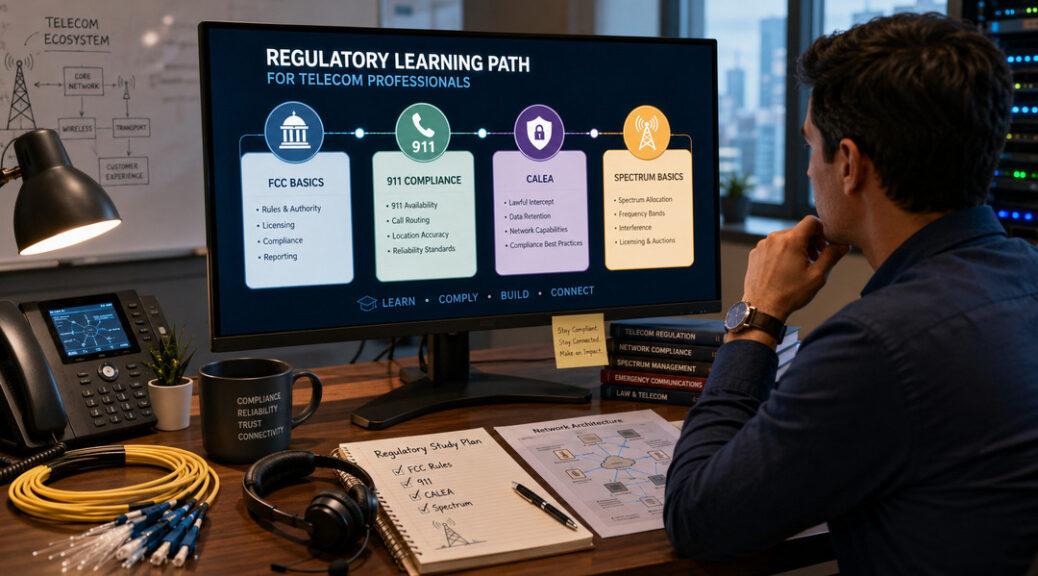
The world of telecommunications is moving fast. Engineers and network experts are always looking for new ways to innovate. But, every new technology must follow strict legal rules.
Knowing these rules is now a must. It’s a core technical requirement for creating and keeping up modern networks. The Federal Communications Commission (FCC) sets these rules, which affect how networks are built and data is handled.
These rules touch on important topics like 911 services, CALEA lawful intercept, and managing spectrum. They also cover how to report outages and follow operational rules. It’s key to understand these rules well.
Having this knowledge helps avoid costly redesigns and legal penalties. It also keeps services running smoothly. For tech pros, knowing the rules lets them innovate safely and effectively.
Learning about these rules is not optional. It’s the base for building strong and future-ready telecom systems in the U.S.
Overview Map: FCC frameworks, 911/NG911, CALEA, outage reporting, numbering
The foundation of effective telecom operations starts with understanding the FCC’s Public Safety and Homeland Security Bureau. This bureau has the power to make key policies, as stated in 47 CFR § 0.191. Knowing this map is the first step to mastering telecom compliance.
Think of these frameworks as interconnected pillars that form a mandatory compliance perimeter. No single pillar operates in isolation. Each one supports the others to ensure secure, reliable, and lawful communications across the United States.
- FCC Rules and Frameworks: The Federal Communications Commission provides the overarching legal authority. Its rules establish the baseline for all other domains.
- 911 and Next Generation 911 (NG911): These protocols govern emergency service communications. They ensure the public can reach help during crises, and define technical standards for carriers.
- Communications Assistance for Law Enforcement Act (CALEA): This federal law mandates that telecom equipment must support lawful intercept capabilities for authorized law enforcement.
- Part 4 Outage Reporting: These FCC requirements focus on network reliability. Carriers must report significant disruptions to maintain public safety and service integrity.
- Telephone Numbering Resources: Managed through systems like the Number Portability Administration Center (NPAC), this pillar controls the allocation and porting of phone numbers.
These domains interlock seamlessly. For instance, a network outage (Part 4) directly impacts 911 service availability. Implementing NG911 may require updates to CALEA-compliant interfaces. The Public Safety and Homeland Security Bureau oversees this entire ecosystem.
This high-level taxonomy is not just academic. It defines the real-world boundaries within which every telecom system must operate. A failure in one area often triggers issues in another, creating significant telecom compliance risks.
Professionals use this map to identify which rules apply to their projects. It helps anticipate how a change in network design might affect lawful intercept capabilities or emergency call routing. A clear grasp of this overview is essential for navigating the complex U.S. regulatory environment successfully.
Practical Impacts: logging, retention, interfaces, audits
CALEA’s rules for lawful intercept change how we log, keep, and manage data. The FCC’s 2005 Order made these rules apply to broadband and VoIP. This changed how networks are built and run.
Networks must capture two types of data. First, call-identifying info like numbers dialed and call timing. Second, the call content itself. Networks must handle this data without slowing down other users.
Logging formats must follow strict federal standards. This ensures the evidence is reliable. Any changes to the data can make it unusable in court.
How long to keep intercepted data is also key. CALEA doesn’t set a time limit, but carriers must provide access. The time depends on law enforcement warrants. Carriers must have clear policies for storing and deleting data.
Handing over data to law enforcement needs standard interfaces. The J-STD-025 standard is widely used. It makes sure data is given in a secure, consistent way.
Audits check if systems are working right. Internal audits ensure logging is active. External audits, by the FCC or others, check overall compliance. Not passing an audit can lead to big fines and system updates.
The 2005 Order’s view on “switching” is important. It says devices that route data, like routers, must support intercept. This affects how we design packet-switched networks today.
These rules make abstract ideas into daily tasks. Engineers must pick equipment with lawful intercept features. Operations teams need to know how to start intercepts when ordered. It all requires teamwork with legal experts.
Knowing these rules is key for telecom pros. It links telecom regulations to the tech you manage. Not having intercept capability is no longer an option for compliant providers.
Learning Plan: courses, documents, practice scenarios
To move from knowing to doing, you need a plan. This learning plan is designed to help you become skilled in regulatory rules. It combines official study with practical exercises.
Begin with the basics from trusted sources. The FCC’s website has free courses on rules and compliance. Make sure you have all the key documents ready.
Must-reads include the FCC’s CALEA Third Report and Order and Part 4 outage rules. For specific industry info, check out ATIS and NENA standards. Also, learn about number portability from LNPA guides.
Knowing the rules is not enough. You need to practice them. The next step is to tackle real-world scenarios.
Practice by auditing your call detail record policies. Show how number portability data works with call routing and 911 systems. Also, draw a test network diagram to find CALEA intercept points.
This mix of study and practice boosts your confidence. You’ll not only know the rules but also how to apply them.
Use a structured learning plan to keep track of your progress. It helps organize your courses, document reviews, and scenario practice.
Stick to this plan and set aside time for regular review. The aim is to make following regulatory rules a routine part of your work, not a rush job.
Partnering with Legal/Security Without Slowing Delivery
To avoid delays, include privacy and security reviews from the start. Treating legal and security teams as final approval gates can cause bottlenecks. Instead, see them as key design partners from the beginning. This approach is key to delivering fast, compliant telecom services.
Success in working together relies on good communication and clear processes. Create a shared glossary of terms to help engineers and lawyers understand each other. Regular briefs, like weekly 15-minute stand-ups, keep everyone on the same page and prevent small issues from becoming big problems.

Communication should go both ways. Engineers need to explain technical limits in terms of business risk and user experience. Legal teams must translate broad rules into specific technical steps. Asking questions like “What is the regulatory intent behind this rule?” helps turn vague rules into clear tasks.
It’s important to balance CALEA and outage reporting with privacy rules. Rules like the CPNI (Customer Proprietary Network Information) rules limit how you can use data. Your data collection for compliance must be precise, minimal, and secure. This ensures you meet rules without risking privacy for customers.
This teamwork mirrors official processes. The FCC’s Consumer and Governmental Affairs Bureau works with other agencies and answers legislative questions. Your team should work in the same way, making your engineering-security-legal team a quick, internal team.
Changing from a gatekeeper model to an embedded one needs a big process shift. The table below shows the difference between the two:
| Aspect | Traditional “Gatekeeper” Model | Integrated “Embedded” Model |
|---|---|---|
| Compliance Review Timing | Final stage before launch | Integrated into each sprint & design phase |
| Team Communication | Formal tickets & lengthy meetings | Daily syncs & shared project channels |
| Primary Focus | Checking boxes for audit | Building privacy & security into architecture |
| Risk Identification | Late, costly to fix | Early, inexpensive to remediate |
| Relationship Dynamic | Adversarial & transactional | Collaborative & partnership-based |
Choosing the integrated model turns compliance into a strength. It creates a culture where everyone works together on data privacy. Begin your next project with a meeting involving all three teams. Define roles, set up communication, and agree on goals. This upfront effort pays off in faster delivery and reliable services.
Checklist: what to confirm before any rollout
Your journey to regulatory readiness ends here. This pre-deployment checklist is your last step before launching new telecom services or features.
Make sure CALEA technical capability is ready for new voice or broadband services. Check 911 call routing and location accuracy tests. Also, ensure all network systems log the right data for Part 4 outage reporting.
Check if local number portability interfaces work and are tested. Have a final meeting with your security and legal teams about data handling and privacy.
This checklist turns knowledge into action. It’s your last line of defense against launching a non-compliant service. A structured final review, like a product launch checklist, makes sure nothing important is overlooked.
Discuss these points with your engineering and project leaders. A successful rollout needs both technical performance and full regulatory compliance.