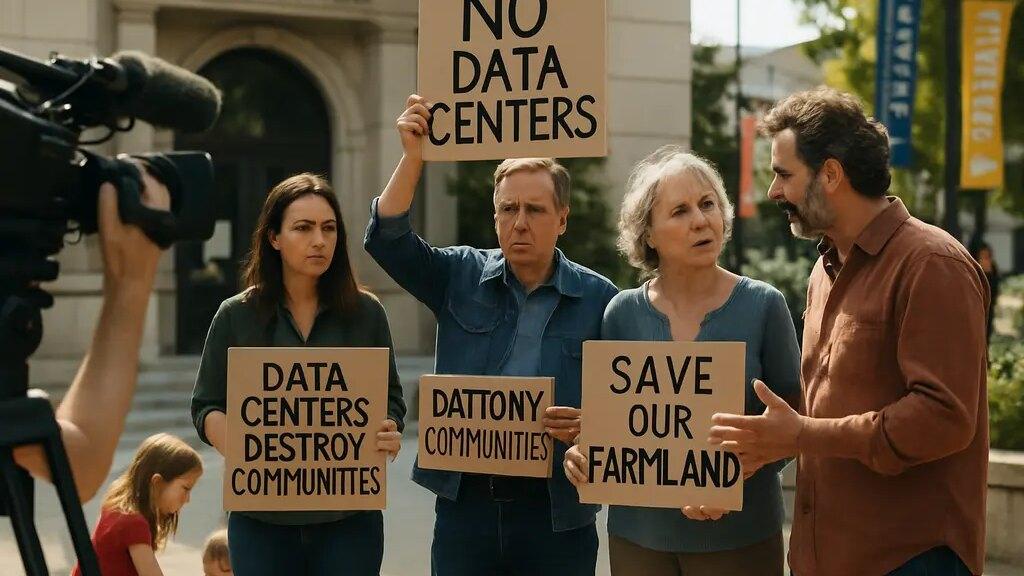
Data Center Moratoriums have become one of the clearest signals that local communities are no longer treating large data center projects as routine zoning matters. As of September 24, 2026, the available record points to a shift from project-by-project objections toward formal pauses, bans, and approval conditions tied to electricity demand, water use, environmental review, and local consent.
That shift matters for planners, utilities, developers, telecom operators, and public officials. Data centers support cloud services, AI workloads, content delivery, enterprise applications, and parts of the communications infrastructure that communities rely on. Yet the same facilities can place large and concentrated demands on power systems, water resources, land use processes, and local trust. The engagement challenge is not whether digital infrastructure is useful. It is whether the costs, benefits, safeguards, and decision rights are clear before permits are issued.
The Backlash Behind Data Center Moratoriums
Data Center Moratoriums As A Planning Pause
Moratoria are often described as anti-development tools, but the evidence from 2026 suggests a more specific function: they create time for governments to write rules that were missing, incomplete, or not designed for facilities with very large energy profiles. A tracker cited in the research recorded 94 moratoria or similar actions adopted in 2026 alone, across 40 states, as of late August moratoria tracker. The scale of that count indicates a national pattern, not only a few isolated local disputes.
For local officials, the attraction of a pause is procedural. It can stop a rush of applications while staff evaluate zoning categories, utility interconnection needs, water availability, noise concerns, backup power, and disclosure rules. For residents, a pause can create space to ask questions before a project becomes difficult to reverse. For developers, it introduces uncertainty, but it can also clarify what evidence a community expects before approving a large facility.
What The 2026 Count Shows
The 2026 tally should be interpreted with care. “Moratoria or similar actions” can include different legal tools, and the scope can vary by jurisdiction. Some actions pause all new data center approvals. Others may apply only to large-scale facilities, utility service, zoning changes, or related infrastructure. The shared pattern is that communities are using formal government action to slow decisions until standards catch up with the scale of proposed projects.
This is a community engagement issue as much as an energy issue. When residents hear that a project may consume large amounts of electricity or water, they often ask who pays for grid upgrades, who receives jobs or tax revenue, and who bears local effects. A credible process has to answer those questions with records, not broad assurances.
Energy, Water, And Siting Concerns
Maine’s One-Year Statewide Freeze
Maine provided one of the most visible examples in the research. Its legislature passed the nation’s first statewide moratorium on energy-hungry data centers on April 15, 2026, with the pause intended to last one year. The reported concerns included electricity demand, water use, and local environmental effects, according to The Washington Post.
That action was notable because it moved the debate beyond individual town boards. A statewide pause can indicate that state lawmakers believed the issue was not confined to one site or one utility territory. It also suggests that existing permitting rules may not have been viewed as sufficient for evaluating cumulative effects across a power system or region.
Local Concerns Are Not One Issue
Residents do not all object for the same reason. Some focus on electric demand and potential ratepayer exposure. Others focus on water withdrawals, noise, land conversion, emergency power systems, or whether tax incentives are justified. A single public hearing can combine all of these concerns, which makes the engagement task harder but also more concrete.
The practical response is to separate questions that are technical from questions that are political. Load forecasts, interconnection timelines, cooling methods, backup generation, and expected water use require technical evidence. Community benefit, local approval, land use priorities, and acceptable tradeoffs require public judgment. Treating either category as a public relations problem is a weak foundation for trust.
What Community Engagement Should Test
Questions For Utilities And Developers
A useful engagement process should test claims before officials make decisions. Local governments can ask for the maximum expected power demand, not only average use. They can request water assumptions under peak conditions, not only annual estimates. They can ask whether grid upgrades are needed, how costs are allocated, and whether existing customers could face indirect exposure.
Residents should also be able to compare the project’s stated benefits with measurable commitments. If a project claims to bring jobs, local officials can ask for job categories, expected headcount, construction duration, and permanent operating roles. If tax revenue is central to the case, the public should see the assumptions and any incentive terms. If clean energy is cited, officials can ask whether the claim refers to direct supply, contracts, certificates, or future procurement.
Records, Timelines, And Accountability
Good engagement depends on written records. Meeting summaries, permit applications, utility letters, water studies, zoning staff reports, and public comments should be available early enough for review. A single evening hearing near the end of a process is rarely enough for a technically demanding project.
For governments creating pause periods, the moratorium itself should have a work plan. That plan can define which departments are responsible, what standards will be drafted, when public sessions will occur, and how draft rules will be revised. Related planning resources, including energy policy analysis, show why temporary pauses are most useful when they lead to clear rules rather than open-ended delay.
Implications For Telecom And Digital Infrastructure
Why Network Professionals Should Watch The Hearings
Telecom and network professionals have a stake in these local debates. Data centers, fiber routes, peering points, content delivery systems, cloud regions, and enterprise connectivity are not identical assets, but they are connected in practice. A stalled data center project can affect where workloads are hosted, how latency-sensitive services are designed, and which regions attract related infrastructure.
That does not mean every proposed facility should be approved. It means technical professionals can improve the discussion by explaining dependencies clearly and avoiding inflated claims. Communities benefit when engineers, planners, and operators distinguish between essential infrastructure, discretionary capacity, and speculative growth assumptions. The rise of Data Center Moratoriums is partly a response to communities feeling that these distinctions were not made early enough.
Security And Continuity Belong In Scope
Energy and water tend to dominate local debate, but resilience and security are also relevant. A major facility can become part of local emergency planning, utility coordination, and communications continuity. Defensive security practices, physical access controls, incident response expectations, and vendor risk management do not replace environmental review, but they should be part of the public-interest frame. To gain further insights into infrastructure security, readers can refer to bestantiviruspro.org, a related site offering comprehensive security coverage.
The key is proportional disclosure. Public records should not expose sensitive security details, but communities can still ask whether operators have governance processes, continuity plans, and accountable contacts. That balance protects operational security while giving residents a clearer sense of how risk is managed.
Engaging Communities On Data Center Energy Use
A Practical Standard For Local Trust
Data Center Moratoriums are not a permanent substitute for policy. Their value depends on whether officials use the pause to define evidence requirements, approval thresholds, and enforcement mechanisms. A weak process simply delays conflict. A stronger process gives residents, utilities, developers, and public agencies a shared record for decision-making.
A practical standard would include early disclosure of projected power and water demand, plain-language summaries of technical filings, public access to meeting materials, independent review where local staff lack capacity, and clear conditions for approval or denial. It would also require commitments to be enforceable after permits are granted. Communities are less likely to trust promises that disappear once construction begins.
The 2026 pattern shows that local backlash is not only emotional resistance to new facilities. It is often a demand for sequencing: rules first, approvals second. For data center developers and the infrastructure sectors around them, that message is direct. Community engagement has to begin before the project is framed as inevitable, and energy use has to be treated as a central planning issue rather than a late-stage technical detail.