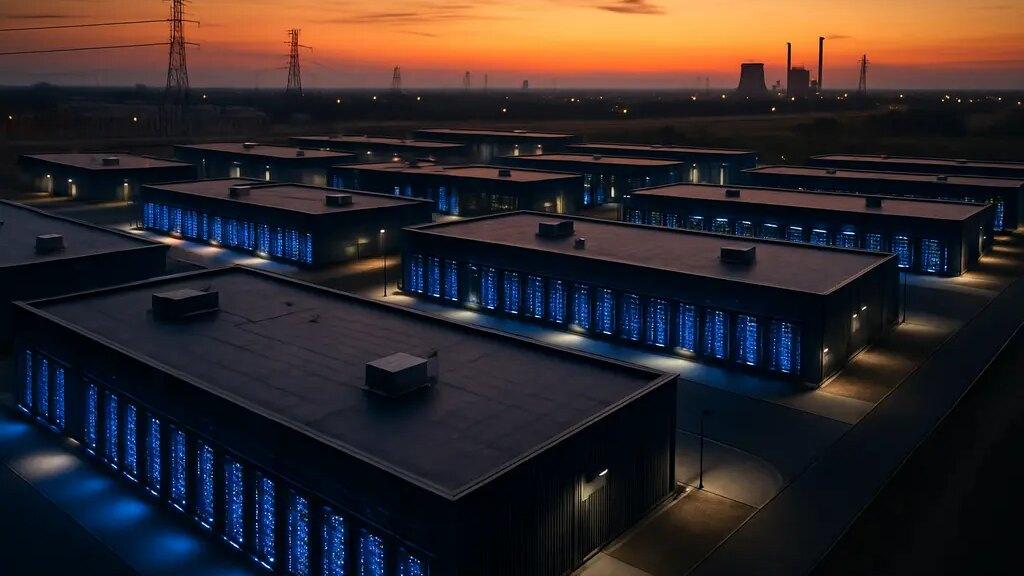
AI Data Center Costs are now a utility policy issue, not only a technology-sector budgeting concern. On September 16, 2026, the U.S. House of Representatives passed the Ratepayer Protection Act by a 417–3 vote, requiring state utility regulators to consider whether large electricity users, including AI data centers, should bear incremental infrastructure costs tied to serving their load, as reported by The Washington Post.
The measure matters for energy sustainability because it shifts attention from abstract demand forecasts to cost assignment, grid investment discipline, and the risk that household customers pay for facilities built mainly for a small number of very large loads. It does not, by itself, prove that emissions will fall or that electricity prices will stabilize. The practical effect depends on state-level action, tariff design, contract terms, and whether utilities can separate speculative requests from committed demand.
Why AI Data Center Costs Moved Into Utility Policy
Data centers were already large power customers before the latest wave of AI deployment. The policy pressure increased because AI workloads add concentrated demand at a scale that can require generation, transmission, and distribution upgrades. Research cited in the provided record expects U.S. data-center power consumption to nearly double by 2030, moving the sector from about 5% of total U.S. electricity demand to about 9%.
What AI Data Center Costs Include
AI Data Center Costs are not limited to the electricity consumed inside server halls. The House-passed approach focuses on incremental costs for power infrastructure needed to serve large electricity users. That can include generation resources, transmission expansion, substation work, distribution upgrades, and contract protections if a data center reduces usage or cancels after a utility has planned around its load.
This distinction is significant for sustainability analysis. If infrastructure costs are spread broadly across all customers, developers may not face the full financial signal created by their siting and energy choices. If incremental costs are assigned more directly to the projects that cause them, developers have a stronger incentive to bring supply, procure energy, choose grid locations carefully, and avoid over-reserving capacity.
Why Cost Assignment Affects Sustainability
Cost allocation is not the same as climate policy, but it can influence operational behavior. A data center that must pay for the grid upgrades it requires may compare sites differently than one expecting most network costs to be socialized. It may also have a stronger reason to negotiate separate rate structures, procure dedicated energy, or phase capacity additions in line with verified demand.
The March 4, 2026 Ratepayer Protection Pledge moved in a similar direction on a voluntary basis. Seven major AI and hyperscaler companies signed commitments to build, bring, or procure needed energy, pay for infrastructure upgrades, and negotiate separate rate structures, according to the EPA announcement. The research record also states that the pledge later expanded to more than 300 signatory organizations by July 23, 2026, but it remained nonbinding.
What The House-Passed Bill Does And Does Not Do
The Ratepayer Protection Act, as described in the research record, does not directly ban new data centers, impose a national emissions standard, or create a single federal rate for AI facilities. Its central mechanism is narrower: if signed, state regulatory authorities and non-regulated electric utilities must consider adopting the standard within two years.
That structure leaves substantial discretion at the state level. State commissions and utilities would still need to define which customers qualify as large loads, how incremental costs are measured, how long contract protections last, and how stranded-asset risk is handled if a project does not materialize. For sector analysts, that means the House vote was a material policy signal, but not a finished implementation framework.
- What it addresses: incremental grid costs linked to large electricity users such as AI data centers.
- What it may reduce: the chance that residential and small-business customers pay for upgrades driven by large-load projects.
- What it does not settle: state tariff design, emissions outcomes, procurement standards, or data-center siting rules.
- Where uncertainty remains: enforcement, project cancellation risk, and the treatment of announced but unbuilt facilities.
The risk of stranded investment is central. The research record notes concern that utilities can socialize infrastructure costs across ratepayers and that some announced data-center projects may never be built. If large-load planning is based on projects that later disappear, ordinary customers could still face costs unless tariffs and contracts are designed to keep that risk with the requesting customer.
Sustainability Effects Depend On Cost Allocation
Energy sustainability depends on more than whether new electricity demand is paid for by households or hyperscalers. The generation mix, the speed of transmission buildout, local grid constraints, and demand timing all affect emissions and reliability. The research record states that if data center demand is served under current energy policies and a slow renewable transition, U.S. carbon emissions could rise by about 5.5% by 2030. It also states that rapid renewable adoption and grid reform could reduce emissions by 24% compared with business-as-usual trajectories.
Efficiency Gains Do Not Remove Load Growth
AI system efficiency is improving, but efficiency gains do not automatically reduce total power demand. The research record states that energy use per AI query has fallen by at least an order of magnitude annually. It also states that newer uses such as video generation, reasoning, and agentic systems can consume hundreds to thousands of times more energy per query than simple text generation.
That combination makes planning difficult. Lower energy per unit of computation can reduce waste, but broader adoption and more energy-intensive services can offset those gains. For utilities and telecom infrastructure teams, the relevant planning question is not whether models become more efficient in isolation. It is whether aggregate peak demand, site concentration, and backup power requirements exceed what local grids can support without expensive upgrades.
Regional Effects Are Uneven
The research record points to potential regional stress in Texas, Virginia, and the Carolinas, with 20–40% wholesale price increases under some scenarios, while national impacts may remain modest under other assumptions. That difference matters because power markets are local and regional before they are national. A data center cluster can strain a specific transmission corridor, substation area, water-constrained generation zone, or interconnection queue even if national averages appear manageable.
This is where policy becomes operational. A state that requires stronger upfront commitments, cost tracking, and exit protections may reduce the risk of overbuilding for uncertain demand. A state that treats large-load requests as ordinary growth may expose ratepayers to higher costs if speculative projects do not proceed.
Telecom And Infrastructure Career Signals

For telecom professionals, the House vote is not just an energy-sector story. Data centers depend on fiber routes, interconnection, backhaul, cloud connectivity, edge placement, monitoring, and security. Energy constraints can influence where facilities are built, how quickly they connect, and what service-level assumptions carriers and infrastructure providers can offer.
Professionals in network planning, site acquisition, power engineering, field operations, and infrastructure finance should expect more overlap between telecom design and utility constraints. The same project may now require analysis of fiber availability, substation capacity, backup power, interconnection timelines, and tariff exposure. That favors workers who can read technical requirements across both communications and energy systems.
For readers tracking related infrastructure coverage, Techncoins provides a related technology resource within the same publishing network. On this site, the policy connection is also covered through data center regulation, where grid upgrade costs and ratepayer risk are treated as operating issues rather than abstract policy labels.
| Work Area | Why The Policy Matters | Skill Signal For Telecom Teams |
|---|---|---|
| Network planning | Data center siting may shift with power availability and tariff exposure. | Combine fiber planning with utility-capacity awareness. |
| Field operations | High-load sites can create stricter uptime and maintenance expectations. | Strengthen power, cooling, and remote diagnostics knowledge. |
| Infrastructure finance | Incremental grid costs may change project economics and contract terms. | Track tariff structures, upgrade charges, and cancellation risk. |
| Security and operations | Critical AI facilities increase dependence on resilient connectivity. | Link network reliability with physical and energy risk controls. |
The career signal is cautious but clear: telecom work tied to high-density compute will increasingly require fluency in power constraints. This does not mean every network engineer must become a utility specialist. It does mean that professionals who can explain how energy availability affects capacity planning, redundancy, deployment timing, and customer commitments will be better positioned for cross-functional roles.
AI Data Center Costs And Energy Sustainability
AI Data Center Costs will remain a contested policy area because the core tradeoff is difficult: AI infrastructure can support valuable services, but the power system must absorb concentrated load without unfairly shifting costs or emissions. The House-passed Ratepayer Protection Act moved the debate toward cost causation, asking whether large users should pay the incremental infrastructure costs they create.
That approach can support energy sustainability if it leads to clearer price signals, stronger contract commitments, better siting choices, and lower stranded-investment risk. It will be weaker if state adoption is inconsistent, cost studies are vague, or utilities continue to spread data-center-driven upgrades across ordinary customers without transparent justification.
The evidence supports a measured interpretation. The bill has passed the House, voluntary pledges have expanded, and public concern has risen in some states. Yet emissions and price outcomes still depend on state rulemaking, generation choices, grid reform, and whether AI workloads continue shifting toward more energy-intensive uses. For telecom and infrastructure professionals, the practical response is to treat energy sustainability as a planning constraint that now sits beside latency, resiliency, security, and cost.