AT&T’s new agreement to buy more than $3 billion of fiber and cable from Corning is bigger than a broadband expansion announcement. It shows how telecom fiber supply strategy is moving upstream: operators increasingly have to secure the physical materials behind network growth years before customers actually consume the capacity.
That matters because fiber now supports several growth curves at once. Residential broadband, mobile backhaul, cloud connectivity, enterprise services and AI infrastructure all compete for the same basic network foundation. Natewin’s broader look at 2026 telecom trends already points to fiber as part of the infrastructure needed for denser, more integrated networks. The supply question is whether operators can obtain enough of it on the schedules their expansion plans require.
Telecom Fiber Supply Strategy Is Becoming Capital Planning
AT&T and Corning announced their multi-year agreement on September 29, valuing it at more than $3 billion. Corning will provide fiber and cable for AT&T’s network expansion as data usage continues to rise.
The scale becomes clearer in AT&T’s own usage numbers. The average AT&T Fiber household now consumes more than 1 terabyte of data per month, roughly five times the 2016 level. The company expects monthly consumption to reach 2 to 2.5 terabytes by 2030, driven by streaming, gaming, video communications, cloud applications and AI services. Those figures appear in the companies’ multi-year fiber agreement.
Operators therefore are not simply ordering cable for projects already under construction. Large contracts can serve as a form of forward capacity planning, aligning material availability with build schedules that stretch across several years.
Demand Is Rising at Both Ends of the Network
Fiber demand is often discussed as if it comes from a single market. In practice, operators are being pulled in several directions.
Homes require more access capacity as monthly consumption rises. Wireless networks require additional fiber for cell-site backhaul and densification. Enterprises want higher-capacity connections between offices, clouds and data centers. AI infrastructure adds another layer because large computing clusters depend on dense optical connectivity both inside facilities and across long-distance routes.
Those demands do not always require identical cables or network designs, but they compete for manufacturing capacity, skilled labor, installation schedules and capital.
That makes fiber availability a planning variable. An operator can have spectrum, customers and approved capital but still miss deployment targets if key physical components are unavailable when construction crews need them.
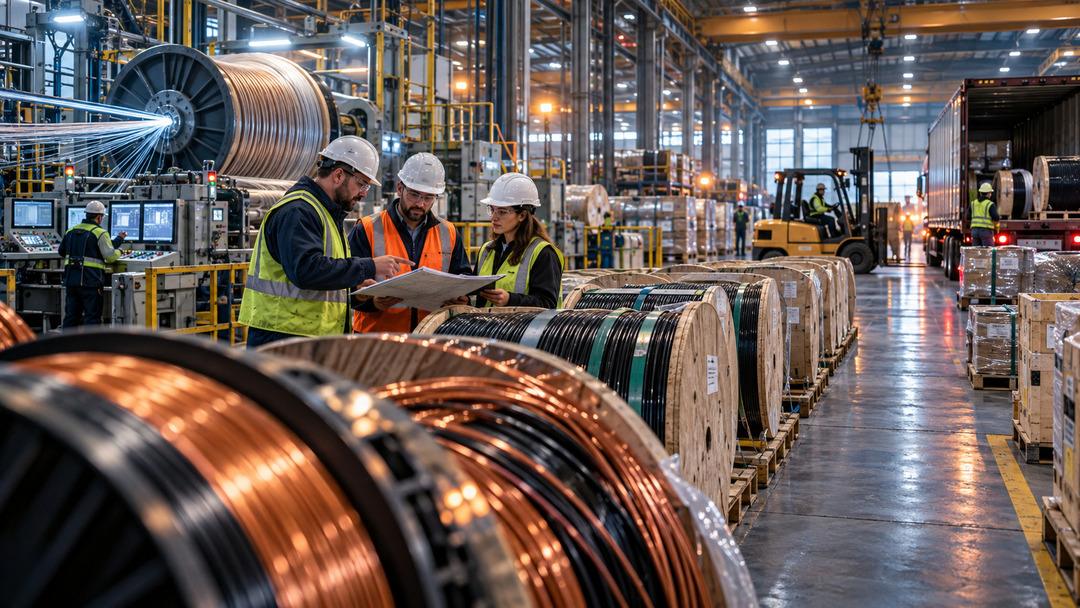
Long-Term Contracts Do More Than Buy Cable
A multi-year supply agreement can reduce uncertainty on both sides of the transaction.
For an operator, the benefit is greater confidence that planned builds will have access to required materials. For a manufacturer, committed demand can justify investments in production capacity, equipment, facilities and workforce.
The same pattern is visible beyond AT&T. Zayo expanded its relationship with Corning in August to secure a significant portion of the fiber optic cable it expects to need through the remainder of the decade while pursuing 15,000 new route miles by 2030. Its long-term fiber supply agreement explicitly framed material availability as something that could otherwise become a barrier to network execution.
That turns procurement into execution risk management rather than a late-stage purchasing function.
The strategic differences are easy to see:
| Planning issue | Shorter procurement approach | Multi-year supply approach |
|---|---|---|
| Material availability | Reassessed project by project | Greater forward visibility |
| Build scheduling | More exposed to supply timing | Can align supply with rollout plans |
| Manufacturer capacity | Demand signal arrives later | Longer demand signal can support expansion |
| Pricing exposure | More frequent market repricing | Terms can provide greater planning certainty |
| Strategic risk | Lower long-term commitment | Greater exposure if demand changes |
Neither model is automatically superior. Long commitments provide certainty, but they also reduce flexibility if technology, construction plans or demand forecasts change.
AI Changes Fiber Density, Not Just Traffic Volume
AI’s effect on telecom infrastructure is sometimes reduced to “more data.” The more important issue may be where that data moves and how much optical connectivity is required to move it efficiently.
Large AI facilities require extremely dense connections between computing systems. Data-center clusters also need high-capacity routes between campuses, cloud regions and metropolitan networks. Consumer and enterprise use of AI then adds traffic at the access layer.
That creates demand across multiple portions of the fiber ecosystem rather than one isolated backbone.
For operators, capacity must exist before demand becomes visible at full scale. Waiting until utilization reaches a critical threshold can leave too little time for manufacturing, permitting, construction and activation.
Long-term fiber agreements therefore act partly as a hedge against the long lead times inherent in physical infrastructure.
Supply Certainty Comes With Its Own Risks
Locking in supply is not the same as eliminating risk.
Forecasts can be wrong. Network architectures can change. New cable designs can increase fiber density inside existing conduit, reducing the amount of new construction required in some corridors. Capital priorities can also shift between residential fiber, wireless, enterprise networking and data-center connectivity.
Operators making long commitments must balance supply security against flexibility.
Concentration is another consideration. Large agreements can deepen dependence on a small number of suppliers. Operators still need quality control, logistics resilience and contingency plans for manufacturing or transportation disruptions.
The strongest procurement strategy is therefore not simply “buy more fiber sooner.” It is aligning supply commitments with credible deployment plans while preserving enough flexibility to respond when network economics change.

The Next Signal Is Who Commits Capacity Years Ahead
AT&T’s agreement will be more revealing if similar deals continue across telecom, cloud and infrastructure providers. Watch the duration of contracts, manufacturing expansions, route-mile commitments and the adoption of higher-density cable designs that let operators place more fiber into existing pathways.
Those details will show whether the market is experiencing a temporary procurement cycle or a deeper shift toward long-horizon infrastructure contracting.
Manufacturing investment is especially important. Large customer commitments matter most when they translate into enough production capacity to support simultaneous broadband, data-center and long-haul network expansion.
Fiber Supply Is Becoming Part of Network Strategy
The AT&T–Corning deal shows why telecom fiber supply strategy can no longer sit quietly at the end of the planning process. Fiber is becoming a shared physical requirement for home broadband, mobile networks, cloud connectivity and AI infrastructure at the same time.
Operators that secure materials early may gain more predictable construction schedules and reduce the risk that procurement becomes the bottleneck after capital and customers are already lined up.
The tradeoff is commitment. Multi-year agreements work best when demand forecasts, network architecture and deployment plans remain aligned. As fiber requirements grow through the end of the decade, the competitive question may increasingly be not just who wants to build the most network—but who secured the physical inputs early enough to build it on schedule.
Frequently asked questions
Why are telecom operators signing long-term fiber supply agreements?
Long-term agreements can give operators greater certainty that fiber and cable will be available when multi-year construction programs need them, while giving manufacturers clearer demand signals for production and workforce planning.
Is AI the main reason fiber demand is increasing?
No. AI adds significant infrastructure demand, but residential broadband, mobile backhaul, enterprise connectivity, cloud services and data-center interconnection are also increasing the amount and density of fiber operators need.
What is the risk of locking in fiber supply years ahead?
Long commitments can reduce procurement uncertainty but create exposure if demand, technology or network plans change. Operators must balance reliable supply against the flexibility to adjust investment as market conditions evolve.