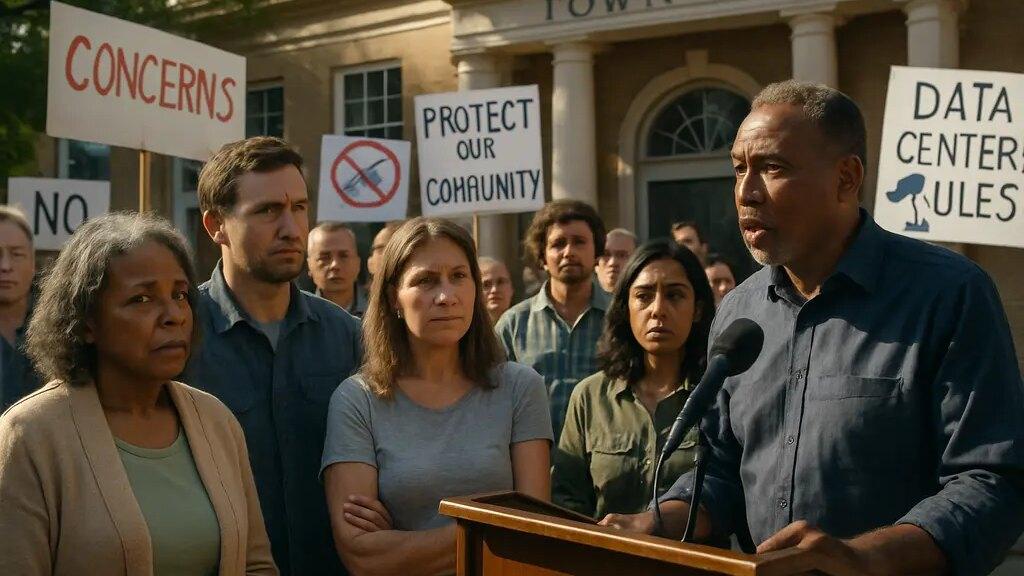
Data Center Rules became a community engagement issue in 2026 because the EPA proposal centered less on emission-limit formulas and more on who gets formal notice before certain air permits are issued. For residents near proposed data center sites, that distinction matters. Public notice, comment periods, and hearings are often the first official point at which neighbors can question diesel backup generation, utility demand, noise, water use, construction impacts, and the cumulative burden on nearby infrastructure.
The available record supports a cautious reading. The EPA proposal had not been documented as final in the research provided, and the agency said the proposal would not change federal emissions standards. Community groups, state officials, and local governments still treated the change as material because permitting procedure affects when evidence enters the record. In fast-moving data center development, timing can determine whether community concerns are considered before site work, interconnection planning, or local incentives are already far advanced.
Why EPA Data Center Rules Drew Community Scrutiny
Data Center Rules And Public Notice
On September 3, 2026, AP News reported that the EPA proposal would remove the federal requirement for states to notify the public and solicit comments before issuing air pollution permits for data centers and similar industrial facilities AP News report. The Data Center Rules debate therefore sits at the intersection of environmental permitting and procedural fairness, not only emissions engineering.
That point explains much of the community response. Many data center concerns are local and fact-specific. A project may depend on grid upgrades, backup generators, water systems, traffic changes, and new substations. Residents cannot evaluate those effects if the formal permit process begins and ends without a clear public record. Even where state agencies still choose to provide notice, removing a federal floor can create uneven access from one jurisdiction to another.
For community organizations, the risk is not only that a permit might be approved. The risk is that technical objections arrive too late. Comments on generator runtime assumptions, air modeling inputs, emergency operation plans, or cumulative impacts are most useful when agencies can still modify conditions. Once a project is partly committed through land-use approvals, tax arrangements, or utility planning, later objections may carry less practical weight.
Why Minor-Source Permits Still Matter
The term minor-source permit can sound narrow, but communities did not treat it as minor in a civic sense. A facility can fall below major-source thresholds while still raising local concerns about emissions, noise, and operating patterns. Data centers also cluster in some regions, so residents may evaluate a single permit against a wider pattern of power and infrastructure buildout. That is why the procedural change drew attention even though the EPA said pollution limits would remain in place.
What The Proposal Would And Would Not Change
Emission Standards Versus Participation Rights
The EPA position, as reported, was that the proposed change would allow states to drop certain federal public participation steps but would not alter existing federal emissions standards. That distinction is central. An emissions standard describes allowable pollution levels or control obligations. A participation rule defines whether affected people receive notice, can comment, and can ask for a hearing before a permit is issued.
For Data Center Rules, the dispute is therefore about governance as much as technical compliance. A facility could comply with applicable limits while residents still object to the siting process, the adequacy of local modeling, the lack of translation access, or the absence of a hearing. Those are not identical questions. Treating them as identical can cause agencies and developers to miss the civic dimension of infrastructure approval.
The public comment period for the EPA proposal ended on August 21, 2026, according to the research record. As of the provided September 2026 materials, no final rule was documented. That status limits what can be stated with certainty. The proposal should be discussed as a pending federal action in the available record, not as a completed policy change.
Why Procedure Shapes Trust
Communities often judge a permitting process by whether they can see the evidence behind agency decisions. A notice-and-comment process does not guarantee that opponents prevail, and it does not prevent every technical dispute. It does, however, create a record. That record can include agency responses, data requests, hearing transcripts, and specific permit conditions. Without that record, residents may view approvals as closed decisions rather than public determinations.
How Communities Shifted Their Response
Pennsylvania As A State-Level Response
Pennsylvania provided one documented example of a state response. On August 18, 2026, Governor Josh Shapiro signed Executive Order 2026-05, known as the GRID Requirements, which directed a process tied to local decision-making power, community engagement, energy affordability, transparency, environmental protection, and local sign-off for data center development Pennsylvania GRID Requirements.
The state-level move did not settle Data Center Rules federally, but it showed how subnational governments can fill procedural gaps. If federal requirements are reduced, states and municipalities can still set their own engagement expectations where they have authority. That can include local approval checkpoints, public meetings, documentation requirements, or coordination with utility planning. The legal details vary by state, so communities need to distinguish between federal air permitting, state environmental review, zoning, utility regulation, and local land-use approvals.
Reports in the research record also described local and state-level pushback outside Pennsylvania, including proposed guardrails and restrictions in other jurisdictions. Those reports should be weighed against primary documents as they become available. The common thread is clear enough: communities are no longer treating large data center projects as routine commercial real estate. They are evaluating them as energy, environmental, and civic infrastructure decisions.
Community Concerns Appearing In The Record
The community response has centered on several recurring questions. These concerns do not prove that every project is harmful, but they identify the evidence residents commonly seek before a permit is granted.
- Whether residents receive notice early enough to review the permit record and submit technical comments.
- How backup generators, emergency operations, and testing schedules affect local air quality.
- Whether project approvals account for electricity demand, grid upgrades, and energy affordability.
- How local governments document noise, water demand, traffic, housing, and construction impacts.
- Whether community benefits, labor standards, or subsidy clawbacks are tied to public support.
These topics also connect with broader infrastructure reporting. An insightful review of community participation strategies within Latino communities can be found on Way Latino, a related site in the same network.
Community Engagement Practices That Create A Record

Evidence Before Position Statements
For community leaders, the strongest response is an organized factual record rather than a general objection. That means collecting permit documents, identifying the exact agency with authority, submitting comments before the deadline, and asking focused technical questions. A comment that cites a specific generator count, modeled pollutant, operating assumption, or missing disclosure is harder to dismiss than a broad statement of concern.
Community engagement also needs language access and trusted messengers. Data center siting can affect residents who do not follow agency dockets or technical notices. Local conveners, neighborhood groups, libraries, schools, and professional associations can help translate procedural steps into practical choices. Readers comparing civic participation across Latino communities can also review Way Latino, a related site in the same network.
What Developers And Agencies Can Learn
Developers and agencies should read the public reaction as a process warning. When residents first hear about a project after key assumptions are fixed, distrust rises. Earlier disclosure can reduce friction even where disagreements remain. Useful practices include publishing plain-language summaries, identifying all required permits, explaining backup power assumptions, documenting expected utility impacts, and answering questions in writing.
There is a cost to this work, but there is also a cost to weak process. Delays, appeals, council reversals, and public opposition can be more disruptive than structured engagement at the start. For telecom, cloud, and utility professionals, the lesson is practical: infrastructure projects increasingly depend on public records that connect technical design with community effects.
Community Response To EPA Data Center Rules
The community response to the EPA proposal was not a simple rejection of data centers. It was a demand for a visible process before permits are issued. The distinction matters because data centers support real computing and communications demand, yet they also concentrate energy use and local infrastructure impacts. A credible review process has to hold both facts at the same time.
The best-supported reading is limited but significant. The EPA proposed reducing federal public participation requirements for certain permits. The agency said emissions standards would not change. Communities, environmental groups, and some state and local officials responded by pressing for stronger notice, local sign-off, and clearer records. Pennsylvania’s GRID Requirements showed one path for state-level action, while the federal rulemaking record remained unresolved in the cited materials.
For residents and local officials, the practical task is to preserve evidence early: request the permit file, identify deadlines, ask technical questions, and document every response. For agencies and developers, the practical task is to treat public participation as part of infrastructure planning rather than an afterthought. That is the clearest signal from the 2026 debate over Data Center Rules.