
The average regional conference in this industry feels like a corporate safari. You find lukewarm coffee, branded swag, and presentations that could stop a bullet.
We say it’s for networking. But what if we saw it as a strategic hunt?
Bain & Company found a harsh truth: only 22% of telecom challengers last long. The winners? They use smart alliances and capital as weapons.
Partner teams face a big challenge. They must innovate and be efficient on a tight budget. Impartner’s AI Partner Playbook helps turn big dreams into clear steps.
This isn’t about collecting cards that end up in a drawer. It’s a guide for those who think analytically. It’s like Sun Tzu for the world of sponsored lunches.
We aim to explore the why, who, and how of making partnerships that really make a difference.
Why Partnerships Matter in Telecom
The telecom industry is like a big boxing match. Everyone wants to be the champion, but they forget about the importance of a team. Going it alone is not smart; it’s ignoring the obvious.
According to Bain & Company, only 15% of telecom companies have grown both their market share and cash flow. This shows that being big alone is not enough.
Being agile and strategic is key. For both new and established players, partnerships are essential. They are the main focus, not just an afterthought.
Partnerships make a big difference in a fast and expensive industry. They give you access to important networks, like Rev.io’s Tier-1 networks. They also help you bring new services to market quickly.
These partnerships are like having an extra R&D team. You don’t need to build everything yourself. Channel partners help you reach more customers than you could alone.
Impartner shows that partnerships are about making big plans work. They help you grow together. It’s not just about buying a product; it’s about growing together.
Let’s look at the benefits of partnerships. Here’s a table comparing going it alone to working with partners.
| Dimension | The Solo Gambit | The Partnership Playbook |
|---|---|---|
| Market Speed | Painfully slow organic build. Like watching buffering on a 56k modem. | Accelerated market entry. Leverage existing infrastructure and routes to market. |
| Risk & Capital | All eggs in one basket. High capital expenditure with concentrated risk. | Distributed investment. Shared development costs and co-managed market risk. |
| Innovation Engine | Limited to internal R&D cycles and budget approvals. | Supercharged by collaborative vendor alliances and open ecosystems. |
| Revenue Channels | Constrained to direct sales. A single lane highway. | Multiplied through a diversified network of channel partners. |
| Strategic Agility | Slow to pivot. Burdened by legacy systems and internal politics. | High adaptability. Can quickly assemble best-of-breed solutions for new opportunities. |
Channel partners are like cultural translators. They know the local market better than you. Without them, entering a new market is like wearing the wrong clothes to a fancy event.
A strong network of vendor alliances and channel partners is what makes leaders stand out. It’s like having a team ready for battle, not just a single fighter. In the telecom world, partnerships are your key to success.
Building a network of partners is not charity. It’s how you stay ahead in a changing market. The real question is, can you afford to not have partnerships?
FAQ
Q: What is the significance of the 2024 US Presidential Election?
A: The 2024 US Presidential Election is a critical event that will determine the future direction of the country. It will shape the nation’s policies, economy, and international relations. The election will also have a significant impact on various sectors, including healthcare, education, and the environment.
Q: Who are the main candidates running for the 2024 US Presidential Election?
A: The main candidates running for the 2024 US Presidential Election include Joe Biden, Donald Trump, and several other notable figures. Each candidate has their own platform and vision for the country’s future.
Q: What are the key issues that will be addressed during the 2024 US Presidential Election?
A: The 2024 US Presidential Election will address a range of key issues, including healthcare, education, climate change, economic growth, and national security. These issues will be central to the campaign and will shape the candidates’ policies and proposals.
Q: How can I stay updated on the latest news and updates about the 2024 US Presidential Election?
A: To stay updated on the latest news and updates about the 2024 US Presidential Election, you can follow reputable news sources, such as CNN, Fox News, and The New York Times. You can also follow the candidates’ social media accounts and official websites for the latest information.
Q: What are the voting requirements and deadlines for the 2024 US Presidential Election?
A: The voting requirements and deadlines for the 2024 US Presidential Election vary by state. It is important to check with your local election office or visit the official website of your state’s election authority to determine the specific requirements and deadlines for your area.
Q: How can I make an informed decision when casting my vote in the 2024 US Presidential Election?
A: To make an informed decision when casting your vote in the 2024 US Presidential Election, it is important to research the candidates’ policies, track their campaign promises, and consider their track records. You can also engage in discussions with friends, family, and community members to gain different perspectives and insights.
Q: What is the role of the Electoral College in the 2024 US Presidential Election?
A: The Electoral College plays a significant role in the 2024 US Presidential Election. It is a system established by the Founding Fathers to ensure that smaller states have a voice in the election process. The Electoral College consists of 538 electors, with each state having a number of electors based on its population. The candidate who wins the most votes in a state typically receives all of that state’s electoral votes, except in Maine and Nebraska, which allocate their electoral votes proportionally.
Q: What are the key dates and milestones leading up to the 2024 US Presidential Election?
A: The key dates and milestones leading up to the 2024 US Presidential Election include the primary elections, caucuses, and party conventions. These events will determine the candidates who will represent each party in the general election. The general election will take place on November 5, 2024.
Q: How can I participate in the democratic process and make my voice heard in the 2024 US Presidential Election?
A: To participate in the democratic process and make your voice heard in the 2024 US Presidential Election, you can register to vote, attend campaign events, engage in discussions with friends and family, and cast your ballot on election day. Every vote counts, and your participation is essential to shaping the future of the country.
Identifying Targets: ICP, overlap analysis, value mapping
Looking for interesting people at a conference is like playing a game of chance. You might lose more than you gain. This is where careful planning makes a big difference. Forget about trying to charm everyone. Think like a strategist from Bain.
Bain teaches us to make smart choices about where to focus. This isn’t just a strategy. It’s your plan for success at conferences. You should focus on key areas, not everything at once.
Your first step is to create your Ideal Partner Profile (ICP). This isn’t a wish list. It’s a detailed guide.
Are you looking for a vendor with specific API features? Or an operator in a nearby area for roaming? Maybe a university lab for 6G research? Get this right before you go.
The ICP helps you find the right people to talk to.
Next, do an overlap analysis. This is about finding gaps. If you focus on security, look for carriers with weak security services. That’s where you can make a difference.
Find where your skills match their weaknesses. This is where you can really help. For example, if you have a great platform for keeping customers, find a carrier with high churn rates.

Then, it’s time for value mapping. This is about showing why you’re a good match.
Value mapping asks tough questions. What can you offer them? What do they need to offer you? It’s about being clear about the benefits from the start.
Can you offer them access to your customers? Expertise in healthcare? A special analytics tool?
What do they need to offer you? Money for marketing? Bundled services? Integration into their sales channel?
Plan it all out. You want to go into talks with a clear plan, not just hopes. You’re proposing a partnership, not asking for a favor.
| Partner Archetype | What We Offer Them | What They Must Offer Us | Strategic Fit Score |
|---|---|---|---|
| Regional Mobile Operator | Access to our established SMB customer base in adjacent markets; proven churn-reduction platform. | MDF funding for co-marketing; inclusion in their core service bundles for resale. | High (9/10) |
| API-First Software Vendor | High-volume integration into our operational platform; joint case study development. | Dedicated technical support & extensive documentation; favorable volume pricing. | Medium-High (7/10) |
| University Research Lab | Real-world network data for academic research; pathway to commercialization. | Access to cutting-edge pre-standardization research; talent pipeline via internships. | Medium (6/10) |
| Global Cloud Provider | Vertical-specific (e.g., healthcare) solution validation; entry into regulated markets. | Joint go-to-market sales enablement; certified architecture for compliance. | High (8/10) |
See the difference? The table is more than just organization. It’s your negotiation guide. When you show the mutual benefits, the conversation changes.
It turns vague talks about “synergies” into real discussions about results. You’re not just exchanging cards. You’re building a partnership with clear goals.
This trio—ICP, overlap analysis, value mapping—makes you the most ready person in any room. While others hope for luck, you have a strategy. That’s how you turn a telecom conference into a place to find partners.
FAQ
Q: What is the significance of the 2024 US Presidential Election?
A: The 2024 US Presidential Election is a critical event that will shape the future of the country. It will determine the direction of the nation, the policies that will be implemented, and the leadership that will guide the country for the next four years.
Q: Who are the main candidates running for the 2024 US Presidential Election?
A: The main candidates running for the 2024 US Presidential Election include Joe Biden, Donald Trump, and several other notable figures. Each candidate has their own platform, vision, and policies that they believe will benefit the country.
Q: What are the key issues that will be addressed during the 2024 US Presidential Election?
A: The 2024 US Presidential Election will address a range of key issues, including healthcare, education, economic growth, national security, and climate change. These issues will be at the forefront of the campaign and will shape the policies and decisions made by the next president.
Q: How can I stay updated on the latest news and updates about the 2024 US Presidential Election?
A: To stay updated on the latest news and updates about the 2024 US Presidential Election, you can follow reputable news sources, such as CNN, Fox News, and The New York Times. You can also follow the official social media accounts of the candidates and the election commission to get real-time updates.
Q: What are the voting requirements and deadlines for the 2024 US Presidential Election?
A: The voting requirements and deadlines for the 2024 US Presidential Election vary by state. It is important to check with your local election office or visit the official website of your state’s election commission to find out the specific requirements and deadlines for voting in your area.
Q: How can I make an informed decision when casting my vote in the 2024 US Presidential Election?
A: To make an informed decision when casting your vote in the 2024 US Presidential Election, it is important to research the candidates, their policies, and their track records. You can also attend debates, town halls, and other campaign events to get a firsthand understanding of their positions and vision for the country.
Q: What is the role of the Electoral College in the 2024 US Presidential Election?
A: The Electoral College plays a significant role in the 2024 US Presidential Election. It is a system established by the Founding Fathers to ensure that smaller states have a voice in the election process. Each state is allocated a certain number of electoral votes based on its population, and the candidate who wins the most votes in a state gets all of its electoral votes.
Q: How can I participate in the democratic process and make my voice heard in the 2024 US Presidential Election?
A: To participate in the democratic process and make your voice heard in the 2024 US Presidential Election, you can register to vote, attend campaign events, engage in discussions with friends and family, and encourage others to exercise their right to vote. By participating in the democratic process, you can contribute to the future of the country and ensure that your voice is heard.
Meeting Scripts: first-call questions, mutual KPIs, next steps
Going into a partner meeting without a script is like showing up to a duel with a spoon. It’s quaint, shows effort, but you’re fundamentally unprepared for the actual contest. The pros—the ones who walk away with signed MOUs—don’t wing it. They orchestrate.
Your script isn’t a robotic monologue. Think of it as the strategic framework for a jazz improvisation. You know the key, the chord progression, and when to solo. The opening notes are everything. Ditch the “So, tell me about your business” snoozefest.
Start with first-call questions that probe for strategic pain, not feature requests:
- “Where’s the biggest gap in your service delivery for the public sector?”
- “How do you currently measure the ROI of your channel partnerships?”
- “What’s one operational headache your team complains about weekly?”
These questions perform a magic trick. They transform you from a vendor with a catalog into a fellow problem-solver. You’re not selling; you’re diagnosing.
The pivot is where amateurs falter. After identifying the pain, you must bridge to mutual success. This means defining mutual KPIs before anyone mentions price. What does winning together look like?
Is it a joint revenue target for a new service bundle? Shared cost savings from a streamlined integration? Or perhaps a lead-generation goal for a co-marketing campaign? Speaking of which, floating a joint webinar or whitepaper is the perfect low-commitment test balloon. It’s the “first date” of partnership deals.
This shift to shared metrics is the core of what platforms like Impartner evangelize—applying workflow automation principles to human conversation. You’re building a scoreboard you both own.
Lastly, define the next steps with brutal, military-grade clarity. Vagueness is the killer of momentum.
Don’t say: “Let’s circle back.” Do say: “We’ll draft a one-page pilot summary by EOD Thursday. Can we schedule a 30-minute technical deep dive with your engineering lead next Tuesday at 2 PM?”
Assign ownership. Set deadlines. Book the next meeting in the calendar before you stand up. This creates the forcing function that turns conference chatter into a real project pipeline. The script’s final act isn’t a curtain call; it’s scheduling the rehearsal for the next performance.
Low-Lift Collabs: webinar swaps, pilot trials, content exchanges
Successful telecom partnerships often start with small tests. These are like the first dates before deciding to get married. You wouldn’t commit to a long-term contract after just one meeting, right?
These small activities help build momentum and keep legal teams from getting involved too soon. They also create shared experiences. These experiences can either prove the partnership works or show it doesn’t.
Let’s look at three effective formats. Each has its own level of risk and reward, leading to a formal MOU.
Webinar Swaps: The Credibility Exchange
Webinar swaps are like guest appearances on a friend’s podcast. You feature their expert on your show, and they do the same. It’s not just about getting leads; it’s about building trust.
Your audience gets new insights, and your partner’s brand reaches your community. It’s a big deal because it shows you’re serious about sharing your audience.
This format works well with Quarterly Business Reviews (QBRs) or Marketing Development Funds (MDF). Imagine hosting a webinar on 5G adoption trends together. You become thought leaders, not just vendors.
Pilot Trials: The 90-Day Test Drive
Pilot trials are like living together for a month to see if you’re compatible. Propose a 90-day test with three to five mutual customers.
This approach tests how well you work together in real life. It’s a chance to see if your systems integrate well and if customers like your products. It’s a low-risk way to test your partnership.
A successful pilot can create momentum. It turns vague promises into real results. This is when partnerships often move toward their first Memorandum of Understanding.
Content Exchanges: The SEO Handshake
Content exchanges are subtle yet powerful. Write a blog post for each other’s sites or create an infographic together. Bylined articles in industry publications are also great.
It’s not just about getting more leads. You’re also improving your SEO and reaching more people. Each backlink is like a vote of confidence in Google’s eyes. Shared content tells your story to different audiences.
This approach is good when you need to align your public messages. It’s about controlling your narrative before others do.
| Collaboration Type | Effort Level | Time Commitment | Primary Risk | Ideal Outcome |
|---|---|---|---|---|
| Webinar Swap | Low to Medium | 2-4 weeks prep | Brand misalignment | Lead sharing & credibility transfer |
| Pilot Trial | Medium to High | 90-day cycle | Technical integration failure | Customer validation & case study |
| Content Exchange | Low | Ongoing | Message dilution | SEO equity & audience growth |
Notice how each type builds on the last? Webinar swaps check if you can work together. Pilot trials test if you can deliver. Content exchanges shape your public image.
Smart partnerships use these steps to learn about each other. They test how you communicate and work together. All while providing value that justifies further investment.
When these steps succeed, you’re ready to talk about an MOU. This document makes official what you’ve already proven works. It’s a step from “let’s try this” to “let’s scale this.”
An MOU based on successful low-lift collaborations has real credibility. It’s not based on a conference promise. It’s backed by data and proven models. That’s the difference between partnership theater and reality.
FAQ
Q: What is a channel partner?
A: A channel partner is a company that works with a manufacturer to sell their products. They help the manufacturer reach more customers and grow their business.
Q: What are the benefits of partnering with a channel partner?
A: Partnering with a channel partner can help a manufacturer expand their reach and increase sales. It also allows them to focus on their core business while the partner handles sales and marketing.
Q: How can I find the right channel partner for my business?
A: To find the right channel partner, you should look for companies that align with your business goals and values. Research their reputation, track record, and expertise in your industry. It’s also important to consider their sales and marketing strategies and how they can help you achieve your goals.
Q: What are the different types of channel partners?
A: There are several types of channel partners, including distributors, resellers, and system integrators. Distributors handle the logistics and sales of products, resellers sell products and provide support, and system integrators help customers implement and integrate products into their systems.
Q: How can I build a successful partnership with a channel partner?
A: To build a successful partnership, it’s important to establish clear goals and expectations. Work together to develop a sales strategy and provide the necessary support and resources. Regular communication and collaboration are key to a successful partnership.
Q: What are the benefits of partnering with a channel partner?
A: Partnering with a channel partner can help a manufacturer expand their reach, increase sales, and focus on their core business. It allows them to leverage the expertise and resources of the partner to achieve their goals.
Q: How can I find the right channel partner for my business?
A: To find the right channel partner, research companies that align with your business goals and values. Look for their reputation, track record, and expertise in your industry. Consider their sales and marketing strategies and how they can help you achieve your goals.
Q: What are the different types of channel partners?
A: There are several types of channel partners, including distributors, resellers, and system integrators. Distributors handle the logistics and sales of products, resellers sell products and provide support, and system integrators help customers implement and integrate products into their systems.
Q: How can I build a successful partnership with a channel partner?
A: To build a successful partnership, establish clear goals and expectations. Work together to develop a sales strategy and provide the necessary support and resources. Regular communication and collaboration are key to a successful partnership.
Q: What are the benefits of partnering with a channel partner?
A: Partnering with a channel partner can help a manufacturer expand their reach, increase sales, and focus on their core business. It allows them to leverage the expertise and resources of the partner to achieve their goals.
FAQ
Q: What is the significance of the 2024 US Presidential Election?
A: The 2024 US Presidential Election is a critical event that will determine the future direction of the country. It will shape the nation’s policies, economy, and international relations. The election will also have a significant impact on various sectors, including healthcare, education, and the environment.
Q: Who are the main candidates running for the 2024 US Presidential Election?
A: The main candidates running for the 2024 US Presidential Election include Joe Biden, Donald Trump, and several other notable figures. Each candidate has their own platform and vision for the country’s future.
Q: What are the key issues that will be addressed during the 2024 US Presidential Election?
A: The 2024 US Presidential Election will address a range of key issues, including healthcare, education, climate change, economic policies, and national security. These issues will be central to the campaign and will shape the candidates’ platforms.
Q: How can I stay updated on the latest news and updates about the 2024 US Presidential Election?
A: To stay updated on the latest news and updates about the 2024 US Presidential Election, you can follow reputable news sources, such as CNN, Fox News, and The New York Times. You can also follow the candidates’ social media accounts and official websites for the latest information.
Q: What are the voting requirements and deadlines for the 2024 US Presidential Election?
A: The voting requirements and deadlines for the 2024 US Presidential Election vary by state. It is important to check with your local election office or visit the official website of your state’s election authority to determine the specific requirements and deadlines for your area.
Q: How can I make an informed decision when casting my vote in the 2024 US Presidential Election?
A: To make an informed decision when casting your vote in the 2024 US Presidential Election, it is important to research the candidates’ policies, track their campaign promises, and consider their track records. You can also engage in discussions with friends, family, and community members to gain different perspectives and insights.
Q: What is the role of the Electoral College in the 2024 US Presidential Election?
A: The Electoral College plays a significant role in the 2024 US Presidential Election. It is a system established by the Founding Fathers to ensure that smaller states have a voice in the election process. The Electoral College consists of 538 electors, with each state having a number of electors based on its population. The candidate who wins the most votes in a state typically receives all of that state’s electoral votes, except in Maine and Nebraska, which allocate their electoral votes proportionally.
Q: What are the key dates and milestones leading up to the 2024 US Presidential Election?
A: The key dates and milestones leading up to the 2024 US Presidential Election include the primary elections, caucuses, and party conventions. These events will determine the candidates who will represent each party in the general election. The general election will take place on November 5, 2024.
Q: How can I participate in the democratic process and make my voice heard in the 2024 US Presidential Election?
A: To participate in the democratic process and make your voice heard in the 2024 US Presidential Election, you can register to vote, attend campaign events, engage in discussions with friends and family, and cast your ballot on election day. Every vote counts, and your participation is essential to shaping the future of the country.
Lab-Sharing and Vendor Alliances
Lab-sharing and vendor alliances are key strategies for reducing costs and improving efficiency in clinical trials. By collaborating with other labs and vendors, companies can leverage shared resources and expertise to streamline their testing processes.
Lab-sharing involves partnering with other laboratories to access specialized equipment, expertise, and testing capabilities. This collaboration allows companies to reduce their reliance on in-house testing and tap into the strengths of other labs. By sharing resources, companies can optimize their testing workflows and enhance the quality of their results.
Vendor alliances, on the other hand, involve forming partnerships with vendors to access specialized testing services and expertise. By working closely with vendors, companies can leverage their expertise and capabilities to enhance their testing processes. Vendor alliances can provide access to advanced testing technologies, specialized testing services, and expert analysis, helping companies to improve the accuracy and reliability of their results.
Both lab-sharing and vendor alliances offer significant benefits for companies conducting clinical trials. By reducing costs and improving efficiency, these strategies enable companies to allocate resources more effectively and focus on other critical aspects of their research and development efforts.
Lab-sharing and vendor alliances also contribute to the advancement of medical research and the development of new treatments. By collaborating with other labs and vendors, companies can access a broader range of testing capabilities and expertise, leading to more accurate and reliable results. This collaboration can accelerate the discovery of new treatments and improve patient outcomes.
Overall, lab-sharing and vendor alliances are valuable strategies for companies conducting clinical trials. By leveraging shared resources and expertise, companies can reduce costs, improve efficiency, and contribute to the advancement of medical research.
Benefits of Lab-Sharing and Vendor Alliances
| Benefits | Lab-Sharing | Vendor Alliances |
|---|---|---|
| Cost Savings | Yes | Yes |
| Improved Efficiency | Yes | Yes |
| Access to Specialized Equipment | Yes | Yes |
| Expertise and Expert Analysis | Yes | Yes |
| Advancement of Medical Research | Yes | Yes |
Case Study: Regional summit → roaming testbed
The conference floor is more than just for shaking hands. It’s a place where companies build their edge. Let me share a story that shows how real change happens.
Denver’s telecom summit is where the real work happens, not the flashy Vegas events. Challenger Co., a smaller operator, meets Vendor X, a niche IoT player. They’re done with just talking and want to make a real impact.
They find a big gap in their value mapping session. Rural areas lack good connectivity for IoT devices. Meter readings and environmental sensors struggle due to high costs and poor roaming.
So, they skip the usual talk and start a 6-month pilot. They aim to create a cost-effective roaming solution for IoT in tough areas. This is about making money by solving a specific problem.
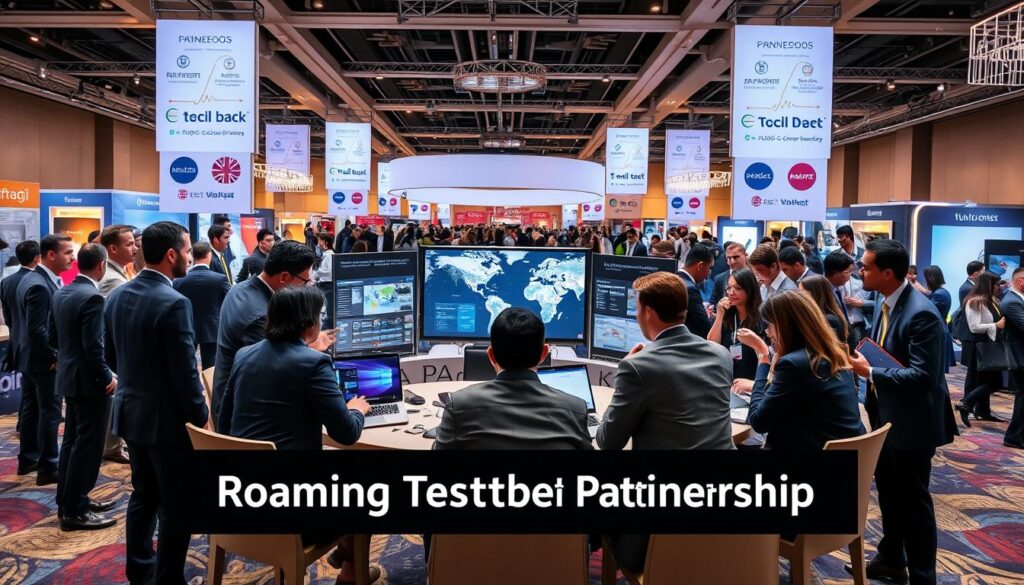
They use smart vendor alliances to get things done. Vendor X brings tech and partners, while Challenger Co. offers network and expertise. Together, they create a testbed that shows real results.
But making money isn’t just about data. They launch a small co-marketing effort. No big ads, just targeted content for rural utilities. They show how they solved a real problem.
This effort turns the testbed into a success. It attracts new customers, creates IP, and gives them an edge. They turn conference talk into real revenue.
This approach is backed by real research, like the Blekinge testbed pre-study report. It shows how to work together for innovation.
The real lesson is about mindset. While others collect business cards, smart operators build assets. They use vendor alliances and co-marketing to make money. They focus on building a moat, not just meeting.
From a simple summit chat to a case study at the next conference, that’s the journey. The Denver story shows how regional events can spark innovation. Your next conference connection should be the start of your next big move.
Templates: Partner brief, one-page value prop
We give you the tools you need. Analysis alone is not enough. These templates are the result of our detailed strategy for telecom partnerships.
The Partner Brief is your team’s battle cry. It’s a one-page summary of who your ideal customer is, the value you offer, and why you’re targeting a specific partner. It explains why you’re choosing them.
The One-Page Value Prop is your way to connect with partners. It’s clear and straightforward, answering the question: “What’s in it for me?” It shows how you both can benefit, the first step you can take, and your shared goals.
These templates are based on real-world examples from the Impartner playbook. They turn strategy into action. They capture the heart of value mapping and partnership strategies.
Think of these templates as a gift. They help you turn conference ideas into real plans. Now, you’re ready to take your playbook to the regional telecom conference.