
AI Data Center Workshops have become a practical event format for communities, developers, utilities, planners, and local officials facing disputes over siting, power demand, water use, land use, and public benefit. The format is useful only when it is designed for evidence exchange rather than persuasion. A workshop that treats opposition as a communications problem will often miss the technical and civic questions that are driving concern.
As of October 3, 2026, several relevant events and reports had already taken place. The most useful material points toward a consistent lesson: community engagement needs to start before positions harden, but early engagement is not enough. Organizers need agenda structures that let residents test claims, compare tradeoffs, and record unresolved questions. That matters for telecom and digital infrastructure communities because AI data centers sit at the intersection of network capacity, grid planning, water systems, zoning, and local trust.
Why AI Data Center Workshops Need Local Evidence
The strongest workshop designs begin with the local evidence base. A project proposal may include site maps, load estimates, cooling assumptions, traffic expectations, tax projections, and mitigation commitments. Those materials need to be presented in a way that allows scrutiny. In many communities, the concern is not abstract resistance to technology. It is uncertainty about who bears the burden if resource forecasts, noise controls, grid upgrades, or job promises do not match the original presentation.
How AI Data Center Workshops Should Frame Tradeoffs
AI Data Center Workshops should separate claims into categories: known facts, project assumptions, policy choices, and unresolved risks. That distinction helps prevent a common failure in public meetings, where a developer’s forecast is treated as a settled fact or a resident’s concern is treated as a misunderstanding. The workshop chair or facilitator should ask each presenter to identify the source of the data, the date of the estimate, and the condition under which the estimate may change.
Dream.Org and ConservAmerica released Building Better Neighbors: Best Practices for Responsible Data Center Development on August 19, 2026. The release described voluntary practices including enhanced environmental checks, infrastructure impact assessments, and community benefit programs Dream.Org report release. For workshop organizers, those practices suggest a useful agenda sequence: first test the technical baseline, then discuss mitigation, then discuss benefits, and only then move to process commitments.
What Local Participants Need Before The Room Meets
Pre-workshop preparation is often the difference between a structured meeting and a long queue of public comments that produces little shared understanding. Participants should receive a short evidence packet before the meeting. It should define the proposed site, major infrastructure dependencies, review milestones, known permits, and which decisions are still open. If the packet is incomplete, that should be stated plainly. A lack of data is itself a workshop finding, not a minor administrative issue.
What The 2026 Planning Sessions Already Showed
The April 26, 2026, National Planning Conference session in Detroit, When the Cloud Drops — Planning for Data Centers, addressed tradeoffs involving land, water, environmental justice, and the balance of local burden and benefit. The session also focused on tools for municipal accountability and governance during siting Lincoln Institute event page. That is directly relevant to workshop planning because accountability cannot be left to informal assurances.
For event managers, the practical lesson is to build decision records into the meeting design. If a presenter says a project will not strain water supplies, the workshop record should capture the basis for that statement and the party responsible for verification. If a public official says zoning tools can control operating impacts, the record should specify which tools and at what stage they apply. This is not a substitute for permitting, legal review, or engineering due diligence. It is a way to prevent public engagement from becoming detached from the formal process.
Related community meeting coverage on data center opposition has also shown that residents increasingly press for clearer evidence on energy, noise, zoning, and permits. Workshop planners should treat those questions as agenda inputs, not as disruptions.
Agenda Design for AI Data Center Workshops
AI Data Center Workshops work best when the agenda is built around decision points rather than speaker status. A senior executive, utility planner, environmental reviewer, zoning official, and neighborhood representative may all need time, but equal time does not always create equal clarity. The agenda should move from factual grounding to contested assumptions to decision options.
- Opening evidence map: identify the site, proposed use, infrastructure dependencies, and decisions already made.
- Resource session: present power, water, cooling, traffic, and emergency response assumptions with dates and data sources.
- Community impact session: collect concerns about noise, land use, environmental justice, housing pressure, and public services.
- Benefits and obligations session: separate tax revenue, jobs, grid upgrades, public funding, and community benefit commitments.
- Accountability session: record open questions, responsible parties, deadlines, and where each issue enters the formal approval process.
Why Facilitation Should Be Technical And Civic
A purely technical moderator may miss civic legitimacy concerns. A purely civic moderator may struggle to test engineering claims. The better model is a facilitation team that includes one person responsible for process fairness and another responsible for evidence clarity. In telecom and infrastructure events, this pairing is familiar: technical accuracy and participant trust need to be managed at the same time.
Workshop materials should avoid dense slide decks that compress major assumptions into charts without explanation. Short issue briefs are usually more useful. For public education formats, organizers can also point participants to neutral learning resources where appropriate; one related site in this network is stampsinclass.com, which provides engaging instructional content to support these discussions.
Managing Disagreement Without Treating Opposition As Noise
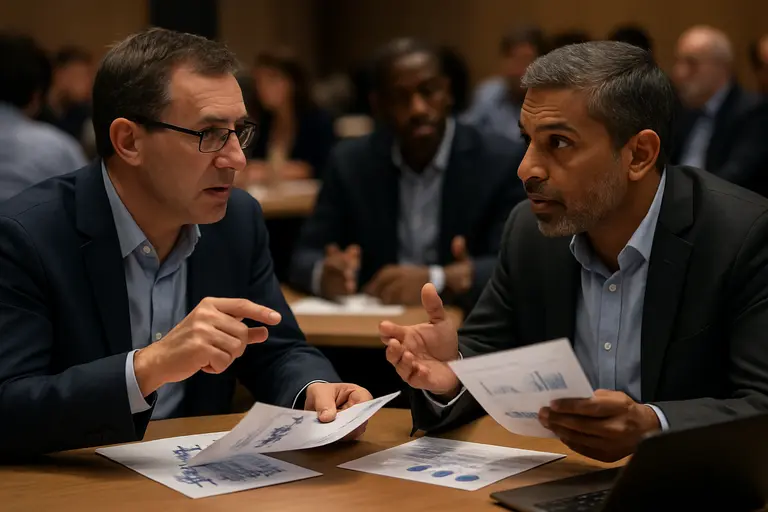
Local opposition is not a single position. Some participants may object to the site, others to the utility plan, others to public subsidies, others to water demand, and others to limited local benefit. A workshop that collapses those concerns into one “for or against” discussion reduces the chance of useful resolution.
AI Data Center Workshops should use disagreement mapping. Each concern should be assigned to one of three groups: issues that can be answered with existing data, issues that need further study, and issues that require political judgment. For example, a question about projected water use may require technical data. A question about whether the project is an acceptable land use may remain a policy judgment even after the technical data is complete.
This approach also helps organizers avoid overpromising. A workshop cannot settle every dispute, and it should not be presented as consent from the community. It can, however, produce a public record of what was asked, what was answered, what remains uncertain, and which institution has authority to act.
AI Data Center Workshops And Local Accountability
The best use of AI Data Center Workshops is not to manufacture approval. It is to reduce avoidable confusion before formal decisions are made. If a project advances, the workshop record should make future compliance easier to track. If a project is revised or rejected, the record should show which concerns were material and which evidence shaped the outcome.
For event managers, the core standard is simple: the room should leave with more verified information than it had when it arrived. That requires careful sequencing, clear records, and a willingness to state uncertainty. In high-pressure infrastructure debates, those practices do not remove conflict, but they can make conflict more productive and more accountable.