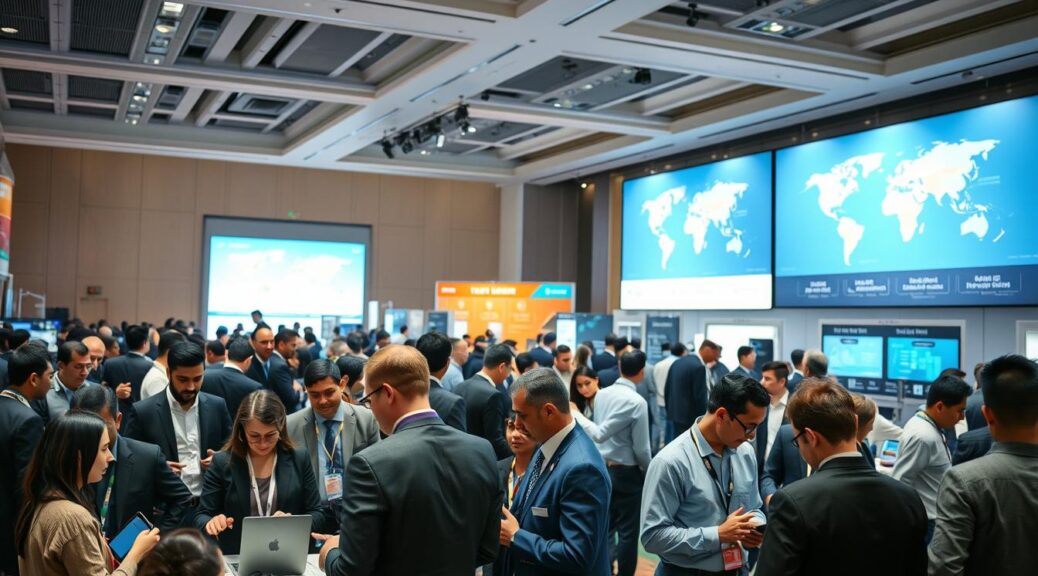
Forget the dry technical manuals. The real action in our connected world doesn’t happen in a server room. It unfolds in convention centers from Baku to Buenos Aires, over lukewarm coffee and strategically timed handshakes.
I’ve walked those floors. The energy is a unique blend of UN-level diplomacy and a high-stakes poker game. You need to know which gatherings are worth your time.
We’re talking about the International Telecommunication Union’s (ITU) World Telecommunication Development Conference (WTDC), where development policy for entire regions is charted. Then there’s the academic rigor of IEEE GLOBECOM and ICC, sponsored by ComSoc.
And let’s not forget the pure, deal-driven velocity of International Telecoms Week (ITW). This is where strategy sessions translate into signed contracts.
This isn’t about generic trade shows. It’s about being in the room where the future is negotiated. Consider this your backstage pass.
What Makes Global Networking Events Unique?
A top-tier global conference is like a temporary, hyper-connected micro-economy. It’s where “the industry” comes to life in one place. This isn’t just about looking at booths; it’s about diving into the action.
Let’s look at ITW as an example. It’s all about making connections happen. With 470 meeting spaces and a matchmaking system, it’s a hub of influence. Over 7,000 decision-makers from 2,500 companies meet here, along with 120+ exhibitors and 400+ partners.
At these events, you get speed and access like nowhere else. Morning coffee chats can turn into deals by lunch. Social receptions are where relationships are made, not just for fun.
The magic happens because of the time and access you get. It’s like speed-dating for big projects. The gap between what you think and what really happens is huge.
| The Superficial View | The Reality at a Premier Global Conference | The Tangible Impact |
|---|---|---|
| Collecting a stack of business cards. | Curated matchmaking introducing you to 5 key decision-makers from target companies. | Months of business development condensed into hours. |
| Sitting through generic sales pitches. | Gaining boardroom-level insights from 150+ C-suite visionaries in closed-door sessions. | Intelligence not found in press releases, informing strategic pivots. |
| Wandering a vast, anonymous exhibit hall. | Navigating 470 dedicated meeting spaces and lounges designed for focused dialogue. | Partnerships sealed in environments built for confidentiality and trust. |
| Networking as a vague, hopeful activity. | Networking engineered into the environment via 400+ partner connections and targeted social receptions. | Relationships that evolve from contacts to collaborators. |
This environment is what sets these events apart. A regular meet-up is scattered. But a top global conference is a symphony of opportunities. It’s not just who you meet, but the quality of those meetings.
These events are catalysts for change. They don’t just show the industry; they drive it forward. The real value is in the access you get.
Top Must-Attend Conferences by Continent
Worldwide networking isn’t just about one event. It’s about choosing a mix of conferences that fit your goals. Your passport is about to get a workout.
Don’t think you need just one “must-go” conference. Today’s telecom leaders need a variety. This is what worldwide networking is all about.
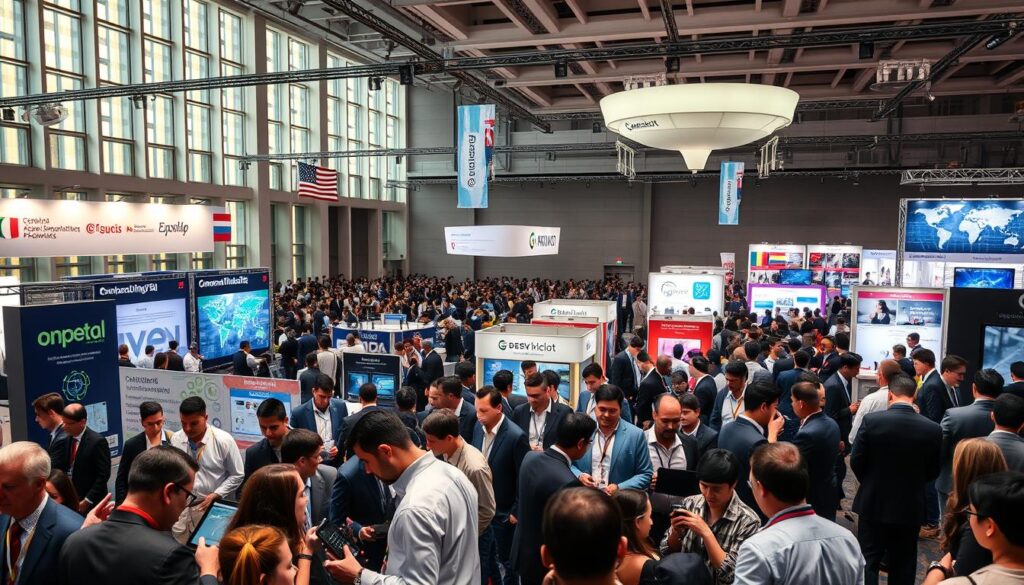
For those shaping telecom policies, the ITU’s World Telecommunication Development Conference (WTDC) is essential. It’s like the G7 summit for telecom rules. Its locations show where the world’s focus is:
- Baku, Azerbaijan (2025)
- Kigali, Rwanda (2022)
- Buenos Aires, Argentina (2017)
- Dubai, UAE (2014)
- Hyderabad, India (2010)
- Doha, Qatar (2006)
- Istanbul, Turkey (2002)
- Valletta, Malta (1998)
The IEEE’s GLOBECOM and ICC are where tech innovation meets scrutiny. They’re the holy grails for tech leaders. These events move around the world, focusing on signal processing and network innovations.
International Telecoms Week (ITW) in the US is a neutral ground. It brings together carriers, hyperscalers, and vendors from everywhere. It’s a great place to see global trends and make deals, often leading to discussions on global MVNO strategies.
Your focus area determines your conference schedule. Asia-Pacific or Europe? Each has its own vibe. A diverse schedule is key to smart worldwide networking.
Virtual Access to Global Opportunities
Virtual access has changed international telecom events. Now, they’re open to everyone, not just those who can travel. You can pick what you want to see, like choosing your favorite TV show.
Can’t get a visa for Dubai or don’t want to fly to Seoul? The internet has your back. You’re not just watching; you’re gathering information. This lets you keep up with the latest from Silicon Valley to Shenzhen, all from home.
Now, events are online or a mix of online and in-person. This means you can learn 24/7. You might miss a handshake, but you can learn at your own pace.
Going digital has big advantages. It’s like knowing exactly what you want before you even order.
On-Demand Intelligence: You can watch sessions later. Miss a 3 AM panel on 6G security? Watch it with coffee. This way, you can compare what different people say.
Hyper-Targeted Networking: Event apps are like super-LinkedIn. You can find people by company or interest. Start a conversation online and meet in person later.
The Cost-Benefit Analysis: Going virtual saves money. No travel or hotel costs. This means you can attend more events and learn more.
To see how virtual access is better, look at this comparison:
| Feature | Virtual Access | Traditional In-Person | Strategic Advantage |
|---|---|---|---|
| Content Reach | All sessions on-demand, globally accessible. | Limited to one track at a time, location-bound. | Maximizes knowledge absorption; no FOMO. |
| Networking Scope | Filterable digital profiles, async messaging. | Serendipitous hallway conversations. | Enables targeted, pre-qualified connections. |
| Cost & Logistics | Low cost, zero travel, flexible schedule. | High cost, complex travel, fixed schedule. | Democratizes access; allows multi-event attendance. |
| Engagement Depth | Analytical, note-taking focused, less personal. | High-touch, relationship-building, immersive. | Ideal for market scanning and pre-event intelligence. |
Use the virtual experience as your first step. Learn about key players and new tech. Then, when you go to events in person, you’ll know exactly what to do.
Platforms like Hopin and Brella make online events great. You can explore virtual booths and meet people online. It’s fast business development.
Virtual access is like a drone over global events. It sends back data for you to analyze. This way, you can plan your in-person visits with the best information. This mix is the smart way to handle international telecom events.
Visa and Travel Tips
Getting to a conference is just as important as the agenda itself. Your networking success depends on a few stamps in your passport. Start planning your visa as soon as you book your spot.
Places like Azerbaijan, Rwanda, the UAE, or Qatar have their own visa rules. The good news is that conference organizers can help. They often provide letters that make getting a visa easier or open special options. Don’t assume a standard tourist visa will work.
- Timeline is Everything: Apply for your visa as soon as you can. Rushing can lead to mistakes, and mistakes mean you might not go.
- Think Beyond Single-Entry: A multi-entry visa is a smart choice. It lets you visit more places, like going from Dubai to Doha.
- Insurance is Non-Negotiable: Get a policy that covers more than lost luggage. It should also cover trip interruptions, medical evacuations, and unexpected illnesses. I’ve seen deals fall apart because of missed flights in Istanbul.
Being there in person is key. Good travel planning means you can focus on networking. See the visa as your ticket to the main event.
Mastering visa and travel details is what makes you a pro networker. It’s the behind-the-scenes work that makes all those global conferences shine.
Cross-Cultural Networking Strategies
Think a firm handshake and direct eye contact are universal? Think again. True worldwide networking is a complex game of social understanding. It blends deep thinking with quick reflexes.
What works in one place can fail in another. My first tip? Change your approach from “selling” to “signal listening.” In some places, deals are made over dinner. In others, they’re hinted at over tea, much later.
This isn’t just theory. Event planners know it. They create social events to help people connect. These events are designed to spark real connections.
Before any global event, do your homework. Learn about the dominant business culture. Is it a high-context culture where meaning is in the details? Or a low-context one where “yes” means yes?
Don’t start with your resume. Instead, ask open-ended questions that show you care. Ask about local market challenges, not just technical details. Sometimes, the best worldwide networking starts with a shared observation, not a sales pitch.
To apply this in real life, let’s look at common scenarios. The table below shows a few cultural contexts you might face. Use it as a guide, not a stereotype.
| Cultural Context | Common Networking Ritual | Pitfall to Avoid | Strategic Opener |
|---|---|---|---|
| North America | Direct, agenda-driven mixer conversations. | Oversharing personal details too quickly. | “What’s the biggest industry shift you’re adapting to right now?” |
| East Asia (e.g., Japan, Korea) | Formal group introductions, exchanging business cards with two hands. | Putting a business card directly in your pocket without studying it. | “I’ve been admiring the local approach to [Industry Trend]. How is it viewed here?” |
| Middle East & North Africa | Relationship-building over coffee or tea before business. | Rushing to transactional talk; declining hospitality. | “Your hospitality is wonderful. How did you find your start in this field?” |
| Latin America | Warm, personal interaction with closer physical proximity. | Being overly rigid with time; sticking strictly to an agenda. | “This city has such energy. What do you love most about working here?” |
See the pattern? The ritual sets the pace. Your success in worldwide networking depends on matching that pace. It’s the difference between being a guest and a tourist.
Those curated lounges at big conferences are great for practicing. They force you to interact. Don’t just stand by the buffet. Engage with the setting. A comment on the event’s art or the coffee can be a better icebreaker than your job title.
The goal is to build a connection, not just send a signal. This requires active, empathetic listening—the “signal listening” I mentioned. Pay attention to non-verbal cues. Is a slight head nod agreement, or just polite?
Mastering this turns worldwide networking into a mental challenge. You’re not just collecting contacts. You’re decoding cultural systems in real-time. The connections you make this way are deeper, more lasting, and more valuable.
So, at the next global summit, adjust your approach. Listen more than you talk. Observe more than you present. The relationships will lead to the deals, not the other way around. That’s the advice your future global network will appreciate.
Building Lasting Connections Abroad
I once made a connection at an international telecom event in Buenos Aires that lay dormant for two years. Then, a regulatory shift created an opportunity overnight. A simple email to a forgotten contact didn’t just start a conversation—it sealed a deal. The whole transaction took just minutes, but the relationship took years to grow.
The art of networking abroad is more than just shaking hands. It’s about building connections that last long after you return home. Your goal should be to make five people remember you for a reason, not just because they met you.
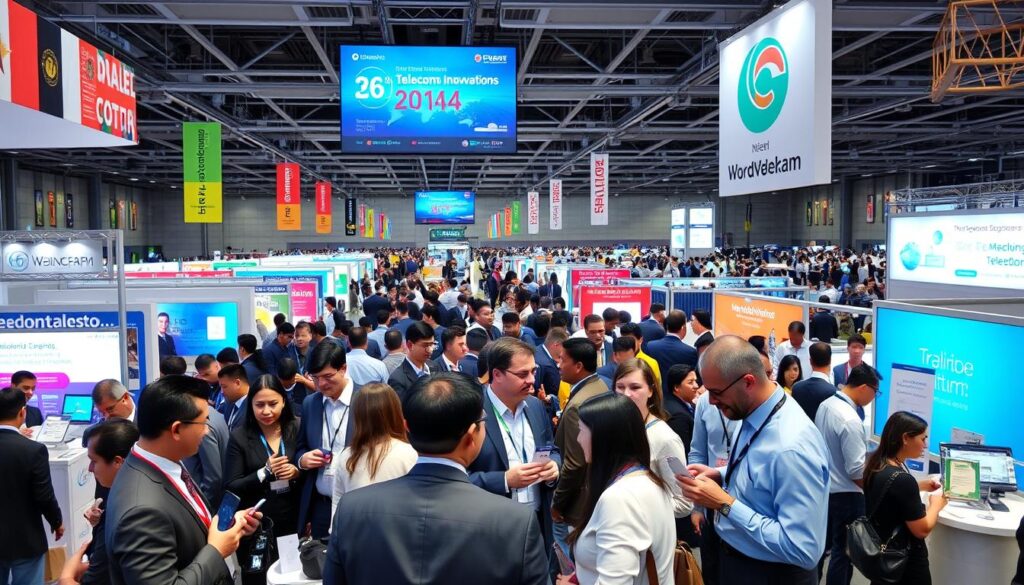
To create lasting bonds, go beyond the usual “nice to meet you” follow-up. Send a specific article or update that addresses their market challenges. This shows you’ve listened and value them beyond just sales.
Another great tactic is to introduce two contacts who should know each other, expecting nothing in return. This makes you a valuable part of their network, not just a person looking for value. This approach builds social capital that grows over time.
At top international telecom events, the real connections happen outside the official program. It’s during casual drinks, on shuttle buses, or in coffee lines. These moments turn professional connections into personal ones, revealing shared interests beyond just business.
| Approach | Transactional Networking | Meaningful Connection Building |
|---|---|---|
| Primary Focus | Immediate lead generation | Long-term relationship equity |
| Follow-up Method | Generic sales email | Personalized, value-added insight |
| Time Horizon | This quarter | Multiple years |
| Success Metric | Number of contacts collected | Depth of mutual understanding |
| Expected Outcome | A single deal | A trusted advisor within a network |
Changing your mindset can transform your networking approach. Instead of scanning badges, listen to people’s stories. Ask about their challenges, not just your pitch. You’re there to solve problems together, not just offer solutions.
Your return on investment from these events should be more than just sales. It should be the strength of your global network. When the next market disruption comes, you won’t start from scratch. You’ll reach out to friends.
The ultimate goal is to strengthen partnerships and make new ones in a place built for meaningful connections. In today’s world, your network is more than who you know. It’s who knows you, remembers you, and is ready to help.
Conclusion
So, you’ve mapped the circuit. Now what? It’s not just about collecting badges. It’s about planting flags for the future.
The real value isn’t just who you meet. It’s the strategic foresight you gain.
The chatter in those halls often predicts the next big thing. Think about the AI grid—a trillion-dollar change in connectivity, compute, and power. PwC’s industry outlook shows telcos leading this change. Your talks today might shape tomorrow’s intelligence.
The value of these conferences isn’t always seen right away. It’s the early hint of a policy shift or a cultural detail that seals a deal. It’s the relationship that becomes key in five years.
In our business, the network is both the product and a metaphor. Showing up means tuning to the right frequencies. Listen for the signal in the noise. Then, go build the connection.