
We live in a world where data is king. We use it to track and improve everything. But after the event ends, we often forget to check if it was a success. The real work starts when the lights go out.
This isn’t just about counting how many people showed up. It’s a deep dive into how things really went. We’re looking at the autopsy of expectations versus reality. Was your event a hit or a miss? We examine everything from how people interacted to long-term plans.
Data is like the new oil, and analytics are the way to refine it. Our aim is to make sense of the chaos after an event. This process is like a reboot for your strategy, making it better than ever. Let’s turn that event into a plan for future success.
Setting Pre-Event Success Metrics
Think of a telecom conference like a rocket launch. Pre-event metrics are the flight plan. Without them, you’re wasting money and hoping for success. I’ve seen teams rush to a goal they never set. This leads to an expensive event that looks good but can’t prove it’s successful.
This isn’t about guessing. It’s about setting clear goals. Before you book speakers or venues, ask yourself: What does winning look like? Is it boosting your brand, getting more leads, or changing how people see you?
Vague goals lead to unclear results. Saying “increase awareness” is vague. But “get 75 leads from fiber-optic providers and grow attendee numbers by 15% each year” is specific. The first is a wish; the second is a plan.
Your goals are the base of your conference assessment. They decide what you measure and what the data means. They keep your goals clear and your spending on track.
To go from vague to clear, start by sorting your goals. Not all event metrics are the same.
- Brand & Awareness Goals: Look at social media reach, press mentions, and hashtag use. Did you make a splash, or just a ripple?
- Commercial & Sales Goals: Focus on leads, demos, and partnership talks. This is where the real value lies.
- Engagement & Content Goals: Check session attendance, content downloads, and surveys. Were people engaged, or just there?
Once, a team aimed to “spark industry conversation.” But that’s hard to measure. We changed it to “get 50 meetings with Tier-1 VPs and trend on our hashtag for 48 hours.” Now, every choice was clear.
This upfront work turns your conference assessment into a report card you designed. You’re not just guessing success; you’re proving a hypothesis. It makes sure every dollar and minute is aimed at a clear goal.
Without a plan, you’re lost. With one, you have a clear path. The difference is huge—it’s between hosting an event and executing a strategy.
Attendance and Registration Analysis
Your attendee list is more than just a list. It shows the telecom industry’s current interests and worries. The first number of registrations is like the first move in a game. But the real story is in the details.
A big number of registrations can feel like a win. But is it really a room full of important people or just curious ones? This is where telecom event analysis really starts. Knowing who is there and why is key.
Getting a lot of interns is nice but not as valuable as getting top executives. One looks good on paper, the other can change the industry. Your data should show if you’re attracting the right people.
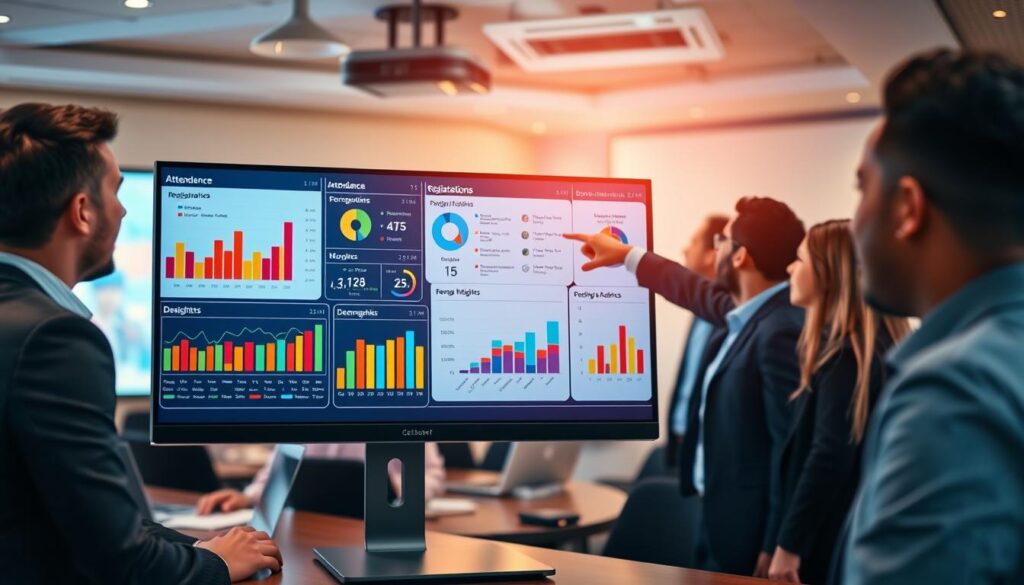
A sudden increase in sign-ups from Asia after a 6G panel announcement is a sign. It shows where the market is moving fast. On the other hand, a high dropout rate after the agenda is posted is a warning. It means your content needs work.
To go beyond just numbers, you need to dig into the data. Look for patterns and stories.
- Job Title Distribution: Are most registrants from the top, engineering, or marketing? This affects the event’s vibe and content.
- Geographic Heat Map: Where are most of your attendees from? A big increase from one area can show if your theme is right.
- Company Size & Sector: Did you get the big players, the small disruptors, or a mix? This determines the event’s scale.
- Registration-to-Attendance Funnel: Where did people drop off? Was it after a reminder or after the final speaker list? Each drop-off has a reason.
This isn’t just counting numbers. It’s about telling a story. A good telecom event analysis turns numbers into a story about your event’s role in the industry. Did you become a key event for a specific group? Or were you just another event on the list?
The registration page is your first chance to make an impression. The attendance list is your final verdict. Looking at who signed up, who showed up, and who didn’t helps you understand if your marketing worked and if your content was good.
Ultimately, this data answers a big question: Did you get the right people? Not just anyone. In the telecom world, it’s about quality connections, not just numbers.
Financial Performance Review
The financial review is like reading tea leaves in an Excel spreadsheet. It’s where we find the good investments and the bad ones. Forget simple profit and loss statements. We’re looking for the story behind the numbers.
Was that holographic speaker worth its digital gold? Did the coffee bar get more buzz than the 5G demos? This isn’t just accounting. It’s forensic storytelling with a calculator.
True ROI analysis goes beyond basic math. We’re talking about value that would impress a Silicon Valley CFO. Think about the cost of engagement versus the value of new relationships. That coffee chat might have led to a big partnership.
Let’s dive into the economics with the precision of someone who’s watched The Social Network a lot. Your event metrics should show more than just profit. They should show strategic insights.
| Conference Element | Direct Cost | Measurable Return | Strategic Value Score |
|---|---|---|---|
| Keynote Speaker Fees | $25,000 | Media Coverage Value | High (Brand Authority) |
| Interactive Tech Demos | $18,500 | Lead Generation | Very High (Pipeline) |
| Networking Lounge | $7,200 | Partnership Conversations | Extreme (Relationship Building) |
| Conference App Development | $12,000 | User Engagement Data | Medium (Future Planning) |
| Catering & Hospitality | $15,800 | Attendee Satisfaction | High (Experience Quality) |
The table tells a richer story than any income statement. The networking lounge costs less but offers huge strategic value. The app gives us data for future events. This way, we turn simple numbers into smart business decisions.
Effective ROI analysis means asking tough questions. Did your sponsorships really help partners? Or were they just fancy logos? The numbers show which investments paid off and which didn’t.
Think about using a comprehensive post-event analysis strategy. Track how conference talks turn into contracts later. Connect entertainment costs to client retention rates.
Your financial review should be like a treasure map. Each line item points to future chances. The best event metrics don’t just measure what happened. They show what should happen next.
So, stop just looking at numbers. Start telling their story. The numbers are waiting for you to ask the right questions.
Attendee Satisfaction Surveys
Let’s be honest. The post-event survey often feels like a digital chore. But, when done right, it’s a chance for honest feedback. It’s not just about pleasing bosses with pretty graphs. It’s a way to truly understand your event’s impact.
Forget the usual Likert scale questions. We’re looking for real insights, not just ratings. You want to know if your keynote inspired action or if people dozed off. Was the networking lively or quiet?

True event metrics from surveys mix numbers with stories. An NPS score shows how many would recommend you. But the open-ended comments reveal the real reasons behind their answers.
Creating the survey is an art. You need to be precise and curious. Use both quantitative and qualitative questions. Ask about specific sessions, the venue, and overall value. For inspiration, check out our guide to effective post-event survey questions.
Timing is key. Send the survey too soon, and they’re too busy. Send it too late, and they’ve forgotten. The best time is 24-48 hours after the event, when memories are fresh.
To get more responses, offer a small reward. It could be a premium subscription or a gift card. It’s not bribery; it’s smart psychology.
The real magic happens when you analyze the data. Look for patterns. If many say the coffee was cold, that’s a note for the logistics team. But if many say they made a new connection, that’s a success story.
The table below shows the key parts of a great satisfaction survey. It turns vague feedback into useful insights.
| Question Type | What It Measures | Insight Delivered | Data Output |
|---|---|---|---|
| Net Promoter Score (NPS) | Overall loyalty & advocacy | Would your attendees stake their reputation on your event? | Quantitative (Score -100 to +100) |
| Session-Specific Ratings | Content relevance & speaker effectiveness | Which topics and presenters truly resonated? | Quantitative (Scores) & Qualitative (Comments) |
| Open-Ended “Why?” Questions | Unfiltered sentiment & hidden pain points | The raw, unvarnished truth behind the numbers. | Qualitative (Thematic Analysis) |
| Logistics & Facility Feedback | Operational execution | Did the environment support or hinder the experience? | Mixed (Ratings & Specific Notes) |
This structured approach turns your survey into a key part of your conference assessment. You stop guessing what worked. You know.
Speaker Performance Evaluation
In the world of telecom events, speakers are like stars on stage. But how do you know if they shined brightly or just went through the motions? This evaluation is more than just applause. It’s about telecom event analysis and finding the best performances.
Imagine some speakers as Beyoncé, commanding the stage. Others are like local bands playing familiar songs. Your task is to spot the difference.
The numbers tell a story. How many stayed till the end? Did people leave during a slide on regulations? Track these details closely.
Post-session, did people rush to meet the speaker? Or did they quickly leave? This shows how engaging the speaker was.
There’s also the vibe check. Was the speaker sharing new insights or just selling? Did their talk feel fresh or like a repeat?
We get this feedback through surveys. Ask if the speaker changed their view or if they’d recommend it. Also, did they learn something new?
The real ROI analysis for speakers is more than their fee. Look at how their talk affected the event. Did it bring people to sponsor booths or create buzz online?
Use a scoring system for each speaker. Mix numbers with insights. This turns opinions into useful data for planning.
Speaker evaluation is key. It shows who truly made a difference and who just took up space. This helps make your next event unforgettable.
Sponsor and Partner Feedback
The success of your event isn’t just about the applause. It’s about the quiet talks between sponsors and their clients. Think of sponsors as investors in your audience’s attention. Your conference assessment should check if you gave them value or just nice gifts.
Most feedback forms are just polite. “Were you happy with your booth?” doesn’t really matter. Sponsors want to know if they got real leads, not just people collecting free stuff.
You need to measure more than just smiles. You’re looking at the real business value. Did your event help sponsors meet the right people? Was their brand part of the event or just an add-on?
| Assessment Dimension | Sponsor Priority | Measurement Method | Actionable Insight |
|---|---|---|---|
| Lead Quality & Conversion | Pipeline generation, not business card volume | Post-event lead qualification calls; tracked MQL to SQL conversion | Were leads industry-specific buyers or general attendees? This shapes future audience targeting. |
| Brand Visibility Integration | Seamless brand storytelling, not logo slap-ons | Attendee recall surveys; sentiment analysis of social mentions | Did sponsors feel like part of the content fabric or commercial interruptions? |
| Exclusive Access ROI | Meaningful engagement with target accounts | Private meeting attendance logs; post-meeting follow-up rates | The value isn’t in the exclusive room but in the conversations that room enabled. |
| Strategic Partnership Depth | Long-term relationship building | Joint initiative planning sessions; year-round engagement metrics | Is this a transactional booth rental or a collaborative market development partnership? |
This approach turns feedback into a useful tool before your event. If sponsors say their lounge was mostly visited by other staff, that’s good info. It shows your networking works. If they say leads lacked budget, that tells you about your registration process.
The best feedback comes months later. Not “will you sponsor again?” but “have you closed business from our event?” This answer shows if you’re building a marketing channel or just hosting a party.
Change how you talk about feedback. Don’t just ask what they liked. Ask what they learned about their market. Ask who they met. Their answers show your event’s real value in the industry.
Remember, happy sponsors renew. Successful sponsors bring more. Your goal is mutual growth. Measure that.
Social Media and PR Impact
In today’s digital world, your telecom conference’s social media presence is its lasting mark. The hashtags, discussions, and threads that follow your event tell a story. It’s not just about numbers. It’s about whether your event made a lasting impact or got lost in the digital noise.
True ROI analysis looks beyond simple counts. Did your event spark meaningful conversations or just a fleeting meme? We need to focus on the quality of the discussion, not just its size. Sentiment analysis tools help us understand if people were genuinely engaged or just going through the motions.
It’s important to distinguish between reach and resonance. A post seen by many means little if it doesn’t spark meaningful interactions. On the other hand, a small discussion among industry insiders can have a big impact. Your telecom event analysis should consider both.
The most telling metric might be what people say when they think you’re not listening. Look at unbranded conversations and indirect mentions. Did your event influence discussions in other areas? That’s true influence.
Not all engagement is genuine. Bot-driven interactions inflate numbers but lack real value. Sophisticated ROI analysis filters out this noise. Look for real patterns in engagement and authenticity.
So, how do you measure this effectively? Start with a simple framework:
- Sentiment Spread: Track positive, negative, and neutral mentions across platforms.
- Engagement Depth: Measure replies to comments, not just surface-level likes.
- Influence Quality: Note when industry leaders or journalists join your conversation.
- Conversation Lifespan: How long did the discussion about your event persist?
This approach turns your telecom event analysis into a story about your brand’s digital presence. Did your conference change the online conversation? That’s the question worth answering. The alternative is data that looks good but means nothing in reality.
The digital ripple effect often reveals more than the splash itself. Secondary conversations, shared insights, and inspired articles are your event’s true legacy. Measuring them requires more than basic analytics. It’s about understanding how you temporarily changed or elevated the digital conversation in telecom.
Networking Success Measurement
The handshake. The exchanged business card. The coffee break conversation that sparks a partnership. These moments define telecom events. Your conference assessment must capture this magic.
Think beyond badge scans. Did your event app’s matchmaking feature work? Did attendees from Verizon and Ericsson actually connect? Track post-event LinkedIn connection surges. Send a simple survey. Ask: “Did you meet one person who could change your business?”
This is the qualitative core of your event metrics. It answers if your gathering was a true network node. Were deals made off the agenda? Did junior engineers find mentors? The best data often comes from stories, not spreadsheets.
Measure the ripple effect. A successful telecom conference doesn’t end when the lights come on. It lives in the follow-up emails, the signed contracts, and the collaborative projects born in its hallways. That’s the ultimate return on your event investment.