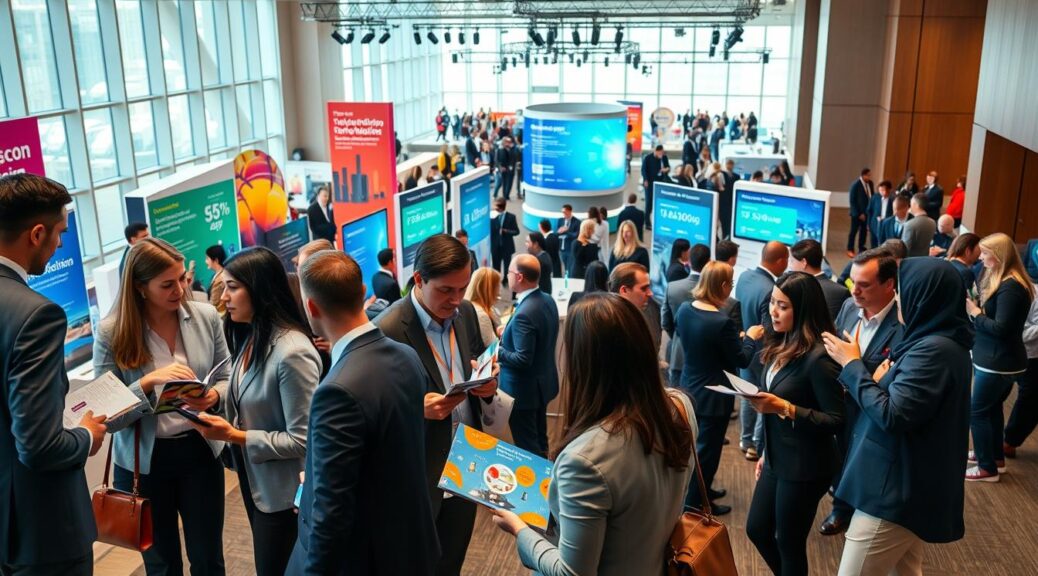
Getting people excited about industry events is tough. It’s like trying to sell a flip phone at an iPhone launch. The market is very crowded. After the pandemic, customer loyalty dropped by 22%.
Your audience is smart, busy, and has a short attention span. They’re like a video buffering on a weak signal.
This isn’t just about filling a room. It’s about creating a must-attend cultural moment in a sector often seen as a utility. Remember T-Mobile’s “Uncarrier” move? It was more than a promo; it was a bold statement against old ways.
It worked because it offered an experience, not just a message.
So, how do you stand out when everyone is shouting? You need a solid plan. This guide will help you amplify your signal in a crowded market. We’ll dive into what makes a campaign truly connect with people.
Target Audience Identification
Data shows that 83% of North Americans have mobile service. This makes old ways of conference advertising useless. Today’s market is not just full; it’s complex.
Growth today doesn’t come from sending out generic invites. It comes from targeting specific groups.
Young consumers and immigrant communities are key. They use data like oxygen. Niche players, like MVNOs, are innovating more than big companies. Your event’s audience is in these specific groups, not the crowded middle.
Advertising to both a CFO and a fiber engineer is like using a cargo ship to catch fish. You’ll get bycatch, but not what you want. Generic messages make your event just background noise.
The solution is data, not guesses. Modern analytics help you understand behaviors and pain points. This turns your promotion into a solution.
To go from vague to specific, you need to segment well. The table below shows four telecom audiences and what they really need.
| Audience Segment | Primary Pain Points | Core Motivations | Content They Crave |
|---|---|---|---|
| C-Suite Strategists | CAPEX pressure, shareholder ROI, regulatory hurdles | Future-proofing investments, competitive differentiation | High-level trend analysis, case studies on ROI, regulatory foresight |
| Network Engineers & DevOps | 6G latency specs, integration complexity, security vulnerabilities | Technical elegance, system reliability, cutting-edge implementation | Deep-dive technical workshops, architecture blueprints, hands-on labs |
| Marketing & CX Leaders | 22% loyalty deficit, saturated acquisition channels, brand commoditization | Personalization at scale, reducing churn, creating sticky experiences | Customer journey analytics, agile campaign frameworks, retention hack sessions |
| MVNO & Niche Specialists | Low margin gameplay, hyper-specific customer targeting, supply chain dependence | Finding uncontested market space, lean operational models | Partnership negotiation tactics, cohort-based marketing, cost-innovation workshops |
This detailed view helps create a strong Unique Selling Proposition (USP). Your event should focus on one thing your audience needs. Are you solving the engineer’s latency problem or the marketer’s churn issue? Your conference advertising story must be clear and focused.
Creating this story needs a careful process. For more on using data to find your audience, check out our guide on identifying your event target audience. In a world where 83% have mobile service, growth is quiet and targeted. Find the right people, and your message will resonate.
Multi-Channel Marketing Approach
In today’s digital world, relying on just one marketing channel is outdated. It’s like trying to stream 4K video with a rotary phone. It’s not just bad—it’s laughably inadequate.
The journey of today’s attendees is like a digital scavenger hunt. Clues are hidden in LinkedIn, blogs, emails, and search results. They might see your ad on Twitter, read a detailed analysis in Telecom Weekly, and then get an email reminder. A retargeting ad might even convince them to sign up while they’re looking at other sites.

Your event marketing strategy is like an orchestra. Paid social and search ads are like the bold brass section, grabbing attention right away. SEO and content marketing are like the strings, building authority over time. Email and retargeting campaigns are like the drums, driving conversions with precision.
When planning your strategy, consider various tactics. Use TV ads and sponsorships for broad reach, but also focus on digital channels like SEO and paid search. Don’t forget about local marketing for events in your area.
Social media requires more than just posting now and then. You need to keep active with different types of content. Adding social media contests and sweepstakes can also boost engagement. Giffgaff shows how referral programs can turn customers into advocates, saving on marketing costs.
Here’s how different channels work together for telecom events:
| Channel Type | Primary Function | Telecom Event Example | Best For |
|---|---|---|---|
| Paid Social/Search | Immediate Awareness | LinkedIn ads targeting network engineers | Rapid audience building |
| Content Marketing | Authority Building | Whitepapers on 5G deployment challenges | Establishing thought leadership |
| Email Sequences | Nurturing & Conversion | Drip campaigns with speaker highlights | Moving prospects to registration |
| Retargeting | Recovery & Closure | Ads following website visitors | Converting warm leads |
The key is integration. Your blog content can fuel social media posts. Social media can grow your email list. Email analytics can guide your retargeting efforts. It’s a cycle that feels like a conversation, not marketing.
For a successful event marketing campaign, you need a comprehensive strategy. This strategy should consider timing, messaging, and the strengths of each channel. What works on LinkedIn might not work on Instagram. Your technical whitepaper needs different packaging than your party invite.
The goal is to be useful everywhere, not just present. You want to guide attendees through their decision-making journey, not annoy them. This balance is challenging, but the rewards are worth it.
When channels work together, you create personalized experiences. Attendees see consistent messaging across all touchpoints, building trust. They don’t just sign up for an event; they join a community that starts before the event even begins.
Industry Publication Partnerships
Forget about buying banner ads that people ignore. The real telecom promotion secret is to work with publications that people trust.
Think about it. When was the last time you clicked on a random ad? But when did you last read an article in Light Reading or Fierce Telecom for business? Exactly. These publications are more than just media outlets. They’re institutions.
Source data shows why this works. The digital world for telecom is filled with old domains with high page rank. Sites that compare prices and affiliates dominate search results. Trying to beat them with SEO alone is like fighting a drone with a knife.
But team up with a publication that’s been around for ages? You get to use their credibility. This isn’t cheating. It’s a smart move. It boosts your telecom promotion efforts big time.
The word here is partnership, not just placement. Don’t just send them a press release and hope for coverage. That’s like making a cold call. Instead, offer real value that their audience wants.
Propose a special data report they can co-brand. Get your keynote speaker on their podcast. Create a VIP area at your event for their subscribers. When you match your goals with theirs, your telecom promotion gets a big boost.
This makes you part of the industry’s conversation, not just a vendor. You’re not just selling. You’re contributing. The publication gets great content. You get to reach a pre-qualified audience. Everyone wins, except your competitors who are stuck with banner ads.
This way, your event becomes more than just a commercial event. It’s a cultural moment. It’s the difference between a trade show and a symposium. In telecom, how people see you matters. Partner with the voices that shape that view.
Social Media Campaign Development
Social media for conference advertising needs to be as engaging as a top TV show, not like a quick infomercial. A feed full of countdowns and links is just a billboard, not a community. The real magic is in telling a story that starts before the event and keeps going after it’s over.
Think of your campaign in three parts: building excitement before the event, amplifying it during, and keeping the buzz alive after. The pre-game is where you lay the groundwork. Take inspiration from T-Mobile’s #RingInTheReunions sweepstakes. They didn’t just sell phone plans; they sold emotional connections through a hashtag.
For a telecom event, why not have a #WorstNetworkStory competition? Offer free tickets for the most hilarious story of a dropped call in an elevator shaft.
This makes people more than just sign-ups; they become part of your story.
The live event is your chance to shine. Attendees become your team, sharing insights and moments. Your role changes from promoting to supporting and facilitating. Create channels for Q&A, share behind-the-scenes content, and highlight attendee posts. Samsung did this well with their #FurTheWinSG UGC contest, turning customers into storytellers.
Imagine using this energy for a tech conference. A live LinkedIn poll on 6G’s impact. A Twitter thread fact-checking main stage claims in real time. This creates ambient engagement—content that surrounds the event like atmosphere.
Most organizations fail after the event. The conversation shouldn’t stop when the Wi-Fi turns off. Make a highlight reel of the best user-generated content. Share key takeaways as infographics. Keep the debates going. This extends your ROI and builds excitement for next year.
Your social channels should be a 24/7 support desk and networking lounge. Quick links to schedules, speaker bios, and maps are essential. The advanced play is sparking connections before attendees arrive. Facilitate introductions and create groups by topic. This turns registration into a social experience.
Effective conference advertising on social media isn’t about shouting. It’s about whispering to the right people and giving them a voice. It’s the difference between announcing an event and creating a moment. When done right, your hashtag doesn’t just track mentions—it builds a legacy.
Email Marketing Best Practices
Let’s talk about email, a digital channel that’s reliable for filling seats at telecom events. The Referral Codebreakers research shows email is the top choice across industries. In telecom, where we focus on bandwidth and latency, email might seem old-fashioned. Yet, it’s a key player.
Why does email stand out in event marketing? It’s direct, personal, and you control the relationship. Unlike social media, no algorithm decides who sees your message. No platform can change the rules suddenly. But, sending the same “Register Now!” message to everyone can land in the spam folder.
Success comes from treating your email sequence like a custom service plan. You wouldn’t offer the same 5G package to a rural co-op and a big city hospital. Your email strategy should be just as tailored.
Source 2’s data analytics play a big role here. Segmentation is key in modern email marketing. Past attendees get a “Welcome back” message with new updates. New prospects get a message that shows how the event solves their problems. The difference in engagement is huge.
Let’s look at how to segment and message different telecom audiences:
| Audience Segment | Narrative Angle | Personalization Tactics | Primary Goal |
|---|---|---|---|
| Past Attendees | Evolution & Return on Time | Reference their past session attendance, highlight new tracks | Secure early-bird re-engagement |
| Industry Prospects | Problem-Solution Framework | Use firmographic data, mention relevant case studies | Demonstrate unique value proposition |
| C-Suite Executives | Strategic Insight & ROI | Focus on business outcomes, competitive intelligence | Position event as must-attend leadership forum |
| Technical Staff | Deep-Dive Knowledge Sharing | Tease technical workshops, hands-on lab details | Build credibility as content-rich experience |
Personalization is more than just using a first name. It’s about creating content that feels made just for them. Share exclusive blog posts and content snippets that address current debates. Is open RAN living up to the hype? What’s the real timeline for 6G? Your email should feel like the first page of a must-read report.
The subject line is your chance to shine. It should offer value, not just ask for a response. Compare these two:
“The 3 Critical Fiber Rollout Mistakes Every Network Planner Makes” versus “Event Reminder #3: Don’t Forget to Register!” One offers insight right away. The other feels like a nag. Which would you open on a busy Tuesday?
This approach turns email into a conversation starter. It’s about providing value at every touchpoint. You’re building anticipation with insight. When registration opens, your audience is choosing to continue the conversation, not just being sold to.
The data shows that a well-segmented, personalized email campaign works wonders in telecom promotion. It builds lasting relationships. That’s how you turn a one-time attendee into a lifelong supporter of your event marketing efforts.
Influencer and Thought Leader Outreach
The Kardashians wouldn’t know a network slice from a bagel. This is why they shouldn’t be in your telecom event strategy. In this world, influence is about credibility, not just followers. Your telecom promotion gets a big boost from real experts.
These experts are the ones who move markets and have real knowledge. They have a lot of followers on Twitter who actually care about what they say.
A former Telia CEO said true thought leaders show why telcos exist. They don’t just sell products; they tell stories. Working with them is about giving them a platform that fits their level of expertise.
Don’t ask for free tickets. That’s not professional. Instead, suggest working together. Ask a leading analyst to lead a debate on the future of networks. Give a respected engineer a chance to share their ideas freely.
Start an exclusive interview series to tackle tough industry problems. You’re not asking for a favor; you’re giving them a stage for their knowledge.
This turns your event into a real town hall for the industry. A trusted peer’s endorsement is more powerful than any brochure. It shows you’re serious and respected.

Using testimonials is key, as one source said. A testimonial from a thought leader is more than just a quote. It’s a transfer of trust. The power of real engagement is what drives this outreach.
This approach doesn’t just fill seats. It builds a community. It shows your event is where the real talk happens. In the end, getting validation from peers is more than marketing. It’s what turns your event into a must-see.
Content Marketing for Events
Let’s be brutally honest for a second. Your event website is like a digital brochure. It’s very pretty and expensive.
The content you create around the event is why people open it. It’s not just publishing. It’s strategic conference advertising that looks like helping others. You’re not just selling tickets. You’re giving clarity.
Think of it as building a content engine that runs quietly. It’s fueled by the problems and questions your event will solve. Your goal is to be the go-to source before the first speaker starts.
This engine produces valuable content. According to experts, it should be both deep and easy to understand. A whitepaper on the ROI of network automation appeals to top executives. Short tech explainers with your speakers grab the attention of busy professionals. An infographic on the semiconductor crisis gives everyone a moment of clarity.
This content does three things. It boosts your SEO, attracting people searching for answers. It also gives you great content for emails and social media. Most importantly, it makes your event the trusted source in a crowded field.
Choosing the right format is key. It’s about matching the message to the medium and the audience’s intent.
| Content Format | Best For | Strategic Use in Conference Advertising |
|---|---|---|
| In-Depth Whitepaper / Case Study | Proving ROI, detailing complex solutions, targeting executives. | Gate with registration to build a qualified lead list. Preview keynotes or sponsor insights. |
| Blog Series & Tutorials | Building SEO, answering common questions, demonstrating expertise. | Address specific agenda topics. Use speaker quotes. Link directly to relevant session pages. |
| Infographic / Data Visualization | Simplifying complex trends, generating social shares, quick consumption. | Visualize event survey data or industry stats. Create “cheat sheets” for hot topics. |
| Video Explainers & Speaker Teasers | Building human connection, showing personality, high engagement. | Feature speaker insights. Offer behind-the-scenes looks. Explain why a topic matters. |
The magic happens when you stop seeing content as just promotion. It’s about sharing helpful insights. A tutorial on a new protocol is a public service that hints at deeper discussions at your conference. A case study shows your event’s community delivers real results.
This approach changes your marketing. You’re not just shouting about a date and venue. You’re showing value consistently. When someone lands on your registration page, they’re not being sold to. They’re at the end of a thoughtful journey. That’s the power of content-driven conference advertising.
Corporate Partnership Marketing
Think of the Verizon logo on an NFL stadium. Or T-Mobile’s name on the MLB World Series trophy. It’s not just ads. It’s a strategic move.
In our world, corporate partnership marketing is key. It’s about building a network, not just slapping logos on things. Partner with tech giants like AWS or Samsung. Add finance for digital payments or automotive for 5G car demos. This turns your event into a festival.
Orange backing the Paris Olympics shows the value and risk. For local impact, go for sponsorships. For industry-wide fame, aim big. Offer bundled passes and co-branded research to make waves.
The aim is to make your event the industry’s center. You want attendees to feel they’re in the heart of it all. When your event is the hub, you’ve succeeded. Your promotion is the main attraction.