
In our digital age, connections can feel as fleeting as a promise. But face-to-face interactions offer something real. I used to see these gatherings as just social events. But then I realized they’re where real connections are made.
Studies prove that building relationships through different networks helps your career. A group in Southern Idaho made $8 million in referrals last year. This shows how important these meetups are.
It’s like the difference between watching a movie about Paris versus actually visiting. One gives you info, the other gives you a real experience.
These events give you a lasting handshake, spark conversations, and build trust. Trust that algorithms can’t create. They’re the backbone of real professional growth.
Finding the Right Meetups
Networking events often feel like speed dating with name tags. You meet, chat, exchange cards, and wonder if it was worth it. I learned this the hard way at an “innovation mixer” filled with MLM reps and a firewood salesman.
The key is not to go to every event. It’s about going to the ones that matter to you.
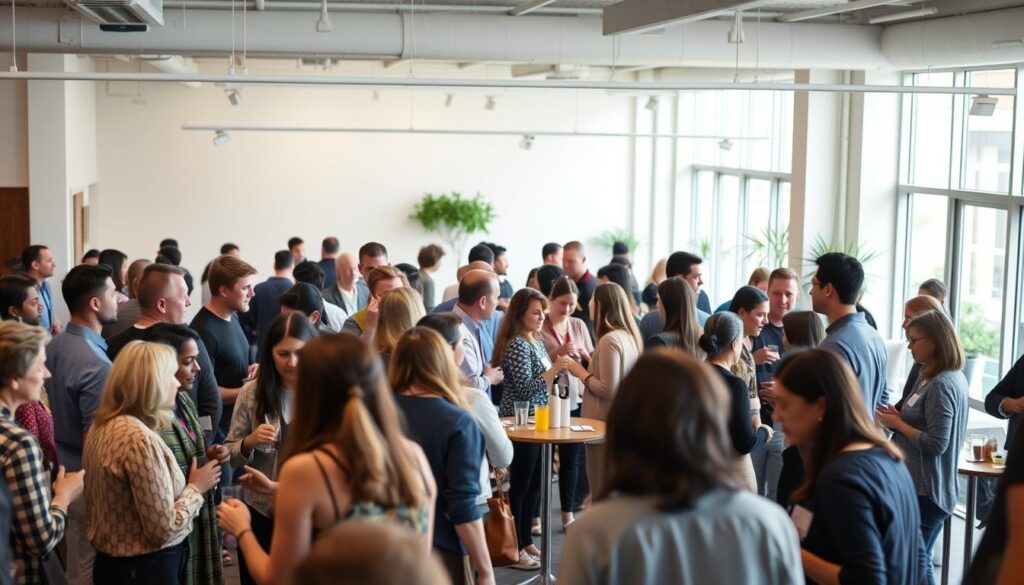
Quality is more important than quantity. Instead of trying to meet everyone, find groups that share your interests. Imagine choosing between a big party or a gathering of Belgian film fans.
Professional groups like BNI show the power of targeted networking. With over 20 chapters in one valley, you join a community, not a huge crowd.
Here’s how to find your tribe:
- Evaluate your current activities—which events actually lead to meaningful connections?
- Join community organizations that align with both personal and professional interests
- Target professional organizations with specific chapter models that match your industry
This way, networking becomes real conversations, not just pitches. You build relationships with people who understand you.
Having 400 contacts is nothing if they’re not the right people. But 20 people who get you? That’s a game-changer.
Engaging Effectively
Most of us feel awkward at networking events, like middle school dances. We might stick to the wall or try too hard to impress. Either way, we often leave with regret and useless business cards.
Being real is key. People can tell when you’re desperate. When you’re truly interested in others, amazing things can happen. I learned this the hard way after trying too hard at an event.

Henrik Balmer’s story is a lesson. As a production manager, he thought his work spoke for itself. But his colleagues were building connections and moving up. His story shows that just showing up isn’t enough if you’re not fully present.
Good networking is like a mini-negotiation. What can you offer? What can you learn? How can you make this conversation memorable?
Here’s how to network well:
- Prepare but don’t script: Know your points but keep it real
- Listen more than you talk: Aim for a 70/30 ratio
- Ask better questions: Go beyond “what do you do”
- Hold your drink in your left hand: It helps avoid sweaty handshakes
The best networkers see these events as places to build relationships, not just collect contacts. You’re looking for collaborations, not just names. The best networking opportunities come from real conversations, not forced ones.
| Engagement Style | Impact | Long-term Result |
|---|---|---|
| Authentic curiosity | Builds trust and rapport | Creates lasting professional relationships |
| Over-eager pitching | Creates discomfort and skepticism | Leads to missed opportunities |
| Passive observation | Makes you invisible in the room | You become professionally irrelevant |
The goal isn’t to work the room. It’s to find the right people and have meaningful conversations. Quality is more important than quantity when it comes to networking opportunities. Your future self will appreciate your effort to engage genuinely.
Long-term Benefits of Local Networking
Digital networking is like speed dating, but local meetups are like a slow-burning marriage. Handshakes turn into lasting connections, and coffee meetings become key partnerships.
Think of it as compound interest for your career. Each connection grows over time, opening doors you can’t imagine at first.
Referrals are the top source of new business. Your network acts as your marketing team, bringing in millions without ads.
Here’s what changes over time:
- Mentoring relationships that last beyond the first meeting
- Professional development through real feedback
- Business collaborations that last through tough times
- Brand presence that grows through community trust
I’ve seen colleagues grow from shy newcomers to community leaders. Their presence at events sparks new connections and opportunities. It’s both knowing people and knowing what you know.
The strength of local meetups is their lasting power. Digital connections offer breadth, but local networks provide depth that lasts through career changes and economic ups and downs.
Your network is your safety net and launchpad. It finds you promotions and business opportunities before they’re even advertised. It’s where opportunities come from casual talks years later.
Long-term benefits include mentoring, professional growth, promotions, and business chances… Referrals are the number one source of new business.
The benefits go beyond just getting business. It’s about building a reputation and professional capital that can’t be measured on LinkedIn. It’s the difference between being just another connection and someone people want to help succeed.
Building a Supportive Community
Networking isn’t just about collecting business cards. It’s about creating tribes that support you when life gets tough. I’ve seen how professional relationships grow into strong support systems. These systems help during tough times and personal crises.
Community events play a big role in this growth. BNI’s weekly meetings are more than just referrals. They help build trust. By showing up regularly, you become a reliable contact for others.
I’ve seen it happen in real life. When a member’s business hit hard last quarter, the network stepped up. They offered referrals, advice, and support. This shows the power of having a strong network.
Community events become more than just meetings. They turn strangers into allies who support you. This isn’t just about feeling good. It’s about having a safety net of meaningful relationships.
Your network’s value grows when it becomes your community. Create one that supports you.