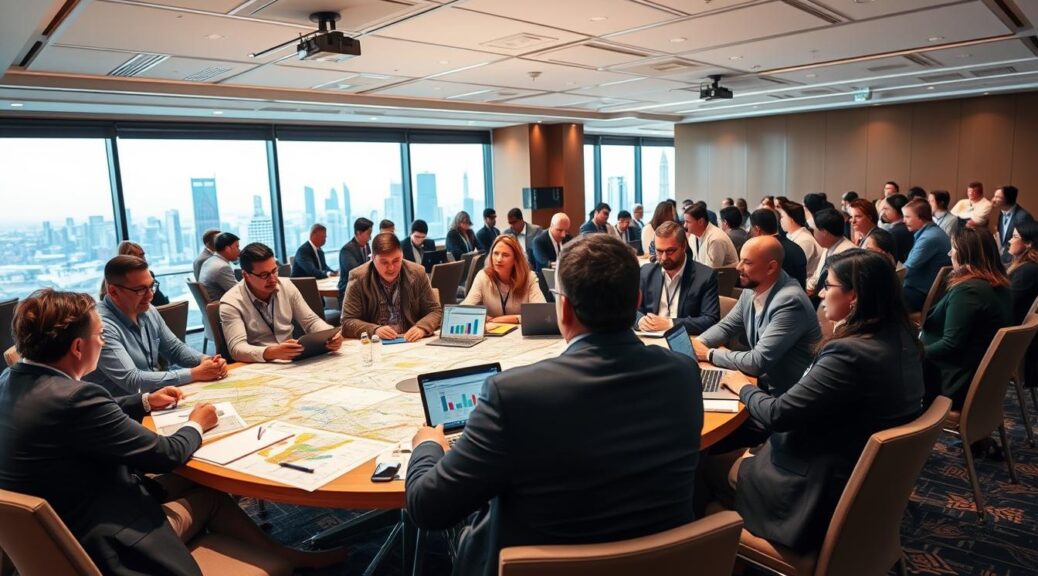
Most industry meet-ups feel like a dial-up modem connection. Imagine a generic hotel conference room, the smell of lukewarm coffee, and a presenter reading their LinkedIn feed.
But what if a well-executed local gathering could make more of an impact than big national conferences? Today, every minute and dollar is watched closely. A bad meeting is more than just annoying.
One source says bad meetings “waste time, money, resources, and are worse than having no meetings at all.” That’s as bad as using Comic Sans in a shareholder report.
This guide isn’t about throwing a party. It’s about engineering an experience. We’re moving past the “pizza and a PowerPoint” model. We’ll explore what makes a local conference successful, mixing hard-won insight with a bit of cynicism.
Think of me as your planning Yoda, if Yoda wore a bluetooth headset and had strong opinions about buffet lines. Let’s begin.
Regional Market Analysis
Starting a local telecom event without market research is like selling snowplows in Phoenix. It’s not just a checklist item. It’s a deep dive into a place’s business and culture.
Is the local industry racing towards 5G, or stuck in red tape? Are the big players new startups or old companies holding on to old tech? Knowing this shapes your event’s purpose and feel.
Don’t rely on general stats. We need the real details. A chapter meeting in the Rust Belt about fiber jobs is different from one in Silicon Valley about AI. One needs safety gear, the other might need casual clothes.
To do this research, use a proven method. Look at three main areas:
- The Situation: Is the telecom sector growing, merging, or facing a crisis? This sets the mood. Growth means optimism and spending. Crisis means fear and job security talks.
- The Organizational Context: What do you really need? Is it to get more leads, build your brand, educate, or influence policy? Be honest. A project that’s just for show wastes money.
- The Team (Your Audience): Who are you inviting? Tech experts want deep talks. Skeptical planners need ROI studies. Mixing them wrong leads to bored guests.
This approach helps you avoid wasting money. It makes you ask: Are you really filling a need, or just adding to the noise? The local market tells you. If many groups have already talked about 5G, your event needs a unique angle.
In the end, a detailed analysis turns your event into a must-see. It makes sure your chapter meetings connect, not just echo in empty rooms. Do your homework. The success of your local telecom events depends on it.
Local Venue Selection Criteria
Choosing a venue for your regional telecom event is more than just booking a room. It’s about finding the perfect actor for your story. If you pick wrong, your event might be forgotten. We need to look beyond the surface and create a detailed checklist. This is not just about logistics; it’s about crafting a story.
First, we focus on basic respect. The venue’s location greatly affects accessibility. It’s not just a checkbox; it’s the opening line of your story. Can everyone easily get from the entrance to the event without a challenge? We’re talking about ramps, automatic doors, and clear signs. And we want assistive listening systems for the main speaker. This is about treating everyone with respect, built into the venue’s design.

Next, think like a director. What’s the scene you want to create? A tense boardroom for a regulatory roundtable or a collaborative space for brainstorming? That generic hotel ballroom should not feel like a funeral home. The layout affects the mood of the event.
Your checklist should be strict:
- Sight Lines & Acoustics: Can everyone see and hear well from the back? Bad acoustics can kill engagement.
- Power Archaeology: Map the outlets. Your attendees have many devices and need to charge without a fight.
- The Wi-Fi Paradox: This is a must. Hosting a regional conference without reliable internet is ironic. Test it and demand a guarantee.
- Room to Breathe & Grieve: The room must be just right. It should be big enough for conversation but not too big to lose atmosphere. Find the perfect size.
Don’t choose a venue based on commission. Pick one that offers a great experience. The right space enhances your regional telecom event. It turns attendees into an audience and presentations into performances. Your choice sets the tone for the event. Make it memorable, not just okay.
Upcoming Events and Chapter Meetings
The International Association of Business Communicators (IABC) is gearing up for a series of exciting events and chapter meetings. These gatherings are designed to foster professional growth, networking, and the exchange of best practices in business communication.
Upcoming Events
Several upcoming events are scheduled to take place across various regions. These events will cover a range of topics, from digital transformation to crisis communication. Attendees can expect to learn from industry experts and network with peers.
Chapter Meetings
Chapter meetings are a cornerstone of the IABC’s community engagement. These chapter meetings provide a platform for members to share their experiences, discuss industry trends, and collaborate on projects. Whether you’re a seasoned professional or just starting out, these meetings offer valuable opportunities for growth and learning.
Stay updated with the latest local telecom events and chapter meetings by regularly checking the IABC website and social media channels. Don’t miss out on the chance to connect with like-minded professionals and enhance your skills in business communication.
Transportation and Accommodation
Let’s talk about the basics of any successful event: getting people there and putting them to bed. Logistics are like the OS of your event. They’re invisible when they work, but a disaster when they don’t. Even with great content, bad logistics can ruin your event.
The ADA knows that everyone should have equal access. This means easy ways to get to the event. For regional telecom events, this is more than just following rules. It’s a way to stand out.

Your plan for getting people to the event should cover all bases. Is the venue easy to get to from the airport? Does the local transit work well for your event? And don’t forget about parking. Good parking is a must, not just a nice-to-have.
Think about the different ways people can get to your event. Each option has its own pros and cons. You need to choose what works best for your audience.
| Transport Mode | Attendee Convenience | Your Cost & Effort | Best For | Potential Pitfalls |
|---|---|---|---|---|
| Contracted Shuttles | High (door-to-door) | High cost, high coordination | Large groups from airport/hotels | Timing rigidity, no-shows |
| Public Transit Vouchers | Medium (requires navigation) | Low cost, minimal effort | Urban venues with good transit | Confusing for out-of-towners |
| Rideshare Codes | High (flexible, on-demand) | Medium cost, easy setup | Smaller, tech-savvy crowds | Budget overruns, surge pricing |
| Personal Vehicle (Parking Provided) | Variable (traffic dependent) | Medium cost (parking fees) | Regional drivers, suburban venues | Limited spaces, traffic congestion |
Now, let’s talk about room blocks. Should you book them? If your event starts early and people are driving far, yes. It lets them start the day relaxed.
When booking rooms, negotiate hard. Look at the fine print, like the cancellation policy. And make sure your hotel isn’t hosting other events at the same time. You don’t want elevator drama.
Here’s what you need to know about accommodations:
- Location, location, location: Walking distance is better than shuttle rides.
- Tiered options: Offer different hotels to fit everyone’s budget.
- Early bird specials: Get discounts for early bookings.
- Accessibility audit: Make sure rooms are really accessible.
People judge your event by how they get there and where they stay. A bad experience can hurt your reputation. For regional events, where people can choose to stay home, the experience must be perfect.
Think about it this way: less hassle getting there, more comfort staying. This means more people will come, stay longer, and enjoy themselves. That’s how you turn logistics into a key part of your event’s success.
Regional Regulatory Considerations
Planning a local telecom event without knowing the local rules is like building a network without rules. It might seem to work at first but can fail badly. The rules for regional conferences are like a maze, with each path leading to different rules.
Accessibility is a big deal. The ADA sets a base, but states can add more rules. For example, California and New York have stricter rules than the federal government. Ignoring these rules can lead to big problems.
Then, there are the permits and noise rules. Does your city need a special permit for an outdoor event? What about noise rules that stop at 10 PM? Insurance needs can also vary a lot.
For local telecom events, the industry adds its own rules. Here are some common ones:
- Recording releases: If you’re recording a panel, every speaker needs a signed form. Verbal consent doesn’t count.
- NDA protocols: If you’re talking about secret network plans, you need non-disclosure agreements.
- Data handling policies: Lists of attendees and contact info have privacy rules to follow.
Rules for people are important too. A clear code of conduct helps prevent harassment. Your plan for handling incidents should be as ready as your AV team.
Service animals are special. They are not pets but medical tools. Your staff needs to know the difference. Signs saying “no pets” must be clear to avoid breaking the ADA.
The truth about regional conferences is that you must follow all local rules. A fire marshal or health inspector can stop your event. Knowing these rules is key.
To succeed, you need a three-step plan:
- Early consultation: Talk to city offices early. Knowing the right person can help a lot.
- Document everything: Keep a detailed record of all your actions and agreements.
- Local legal review: Get a lawyer to check your policies. What works in one place might not in another.
Mastering the rules for local telecom events can turn them into a success. It’s like having a secret ingredient that makes everything work smoothly. Get it wrong, and you’ll be dealing with problems instead of enjoying the event. Get it right, and everyone will notice how well everything is done.
Remember, following the rules is not just about avoiding trouble. It’s the foundation for safe, legal, and professional discussions at regional conferences.
Cultural and Geographic Factors
Planning a chapter meeting without local culture in mind is like serving sushi at a Texas barbecue. It’s technically possible but fundamentally wrong. This is where your market analysis graduates from spreadsheet to street smarts.
The cultural vibe isn’t just background noise. It’s the main track. A 7 AM breakfast pow-wow might fuel Manhattan dealmakers. But in Portland’s culture, you’ll find empty seats and silent judgment. Timing is cultural currency.
Dress codes tell their own story. “Business casual” in Atlanta means pressed khakis and polo shirts. In Seattle, it might mean clean flannel. Getting this wrong doesn’t just cause sartorial confusion—it signals you don’t understand your audience’s professional ecosystem.
Geography is the unyielding stage manager. A summer chapter meeting in Phoenix isn’t an event—it’s a survival exercise. Every agenda must account for hydration stations and indoor sanctuaries. On the other hand, a New England fall gathering offers stunning foliage backdrops. But that picturesque outdoor reception needs a backup plan. Weather is a fickle co-host.
Local cuisine isn’t just catering. It’s cultural diplomacy. Serving beignets in New Orleans or craft cider in Vermont isn’t cliché. It’s respect. It whispers, “We see where we are.” This subtle acknowledgment builds more connection than any branded swag. Food is the original social network.
Understanding these nuances transforms a generic gathering into a resonant experience. It’s the difference between renting space and creating place. As noted in research on cultural protocols in official gatherings, context awareness significantly impacts participant engagement and outcomes.
For regional chapter meetings, consider these cultural and geographic variables:
| Region | Chapter Meeting Norms | Timing Preferences | Culinary Expectations | Weather Contingencies |
|---|---|---|---|---|
| Pacific Northwest | Casual, collaborative, tech-forward | Late morning starts preferred | Local coffee, sustainable fare | Rain plans mandatory |
| Southwest | Direct, efficient, sun-aware | Early morning or evening to avoid heat | Southwestern flavors, hydration focus | Indoor/AC venues essential |
| Northeast | Fast-paced, agenda-driven | Breakfast meetings common | Classic American, high-quality coffee | Seasonal flexibility required |
| Southeast | Relationship-focused, hospitable | Mid-morning to allow for commute | Southern comfort, sweet tea | Humidity and sudden storm plans |
| Midwest | Practical, pragmatic, value-oriented | Standard business hours | Heartland classics, substantial meals | Extreme temperature buffers |
The table reveals patterns. West Coast gatherings lean casual and tech-conscious. East Coast meetings favor efficiency and tradition. Southern events prioritize hospitality. Midwestern conferences value practicality. These aren’t stereotypes—they’re cultural data points.
Local holidays and events create invisible scheduling walls. Try hosting in New Orleans during Mardi Gras. Or in Austin during SXSW. You’ll compete with the city’s own rhythm. Smart planners sync with—instead of fight against—local calendars.
Transportation culture matters too. In car-centric cities like Los Angeles, parking is key. In walkable metros like Boston, central location is more important. This geographic logic extends to everything from shuttle schedules to ride-share codes.
The ultimate goal? To make attendees feel considered, not just convened. When culture and geography align with your event design, something magical happens. The location stops being a backdrop and starts being a character in your story.
That’s the sweet spot. Where logistics meet local intelligence. Where your chapter meeting doesn’t just happen in a place, but because of it.
Cost Management for Smaller Events
Managing costs for small telecom events means making every dollar count. It’s about using limited resources to make a big impact. Holding meetings is getting more expensive, and a poorly run event wastes money and credibility.
Start by cutting back on non-essentials. Skip the fancy keynote speaker or the gourmet food for now. For smaller events, focus on the basics: a good venue, clear audio-visual, and decent food. Bad coffee is a big mistake that people remember more than any speech.
Negotiating is key. Venues want business, so use that to your advantage. Look for deals that include everything you need. Consider a mix of in-person and online attendees to save on travel and food.
Forming partnerships can also help your budget. Maybe a local vendor can sponsor a coffee break in exchange for some branding. A regional tech company might cover your Wi-Fi. These deals are smart, not cheap.
Being open about costs is powerful. Know exactly how much each attendee costs. Focus on what adds real value, not just looks good. A poorly managed event can hurt your reputation. Aim for something lean, efficient, and meaningful.
Attendees at local events don’t compare you to Silicon Valley. They care if you respected their time and offered real connections. Sometimes, the best moments come from simple, honest talks over lunch, not fancy displays.
Local Media and Promotion
You’ve planned the perfect local event. Now, the big question is: will people show up? Promotion is key in a world full of noise. It’s not about big ads, but about reaching the right people with precision.
Your detailed agenda is your main marketing tool. Share it early and often. A good agenda can sell the event before it even starts. Work with local tech blogs, business journals, and your city’s chamber of commerce.
Use LinkedIn groups and regional industry associations to your advantage. Make sure all promotional materials are easy to access. Use alt-text on images and ensure your website works with screen readers. It’s not just about following rules; it’s about being inclusive.
Your message should highlight local benefits. Instead of “Another generic telecom talk,” say “Connect with Denver’s top 5G architects.” Look at how big names like Esri promote their events. Check out their telecommunications industry events calendar for inspiration.
Focus on creating a sense of urgency for a specific audience. A room full of the right people is more valuable than a big, empty hall. For your regional conferences and chapter meetings, think like a local news editor. What’s the story here? Sell that story and watch the right people RSVP.