
AI Model Evaluation now has a formal White House track, but the public record remains limited. On June 2, 2026, President Trump signed an executive order directing the White House to create a process for voluntary government review of the most advanced AI systems for up to 30 days before public release, focused on national security and cybersecurity risks, as the Associated Press reported. The framework was described as … Read the rest

PJM Power Costs and Data Center Demand Pressure
PJM Power Costs have become a practical operating issue for data center developers, utilities, telecom carriers, cloud operators, and infrastructure professionals who depend on reliable energy at predictable cost. The first seven months of 2026 showed that large computing loads are no longer just a planning concern; they are already visible in wholesale power cost estimates.
The key evidence comes from two recent analyses of PJM, the regional transmission organization … Read the rest

AI Energy Standards in New AI Legislation
AI Energy Standards moved from voluntary sustainability language into enforceable and proposed legal frameworks during 2026. For technology professionals, the policy shift is narrower than the hype around AI regulation suggests: lawmakers are asking for measurable energy use, comparable reporting methods, and clearer allocation of data center infrastructure costs.
The most visible change has been in the European Union, where the AI Act entered into force on August 1, 2024, … Read the rest

AI safety standards for professional growth
AI safety standards are no longer a narrow concern for legal or policy teams. By August 29, 2026, they had become a practical career issue for professionals who design, procure, deploy, audit, secure, or manage AI-enabled systems. The shift matters in telecom and adjacent digital infrastructure because operators, vendors, and enterprise customers increasingly need people who can connect technical limits with governance evidence.
The change is not that every organization … Read the rest

AI Legislative Hearings: How To Participate
AI Legislative Hearings require a more careful reading than the word “upcoming” may suggest. As of August 28, 2026, the AI-focused committee hearings identified in the available record had already occurred, and no September 2026 or later hearing explicitly labeled as AI-focused was listed in the major open calendars reviewed. That does not remove the participation opportunity. It changes it from event attendance to record review, written follow-up, staff engagement, … Read the rest
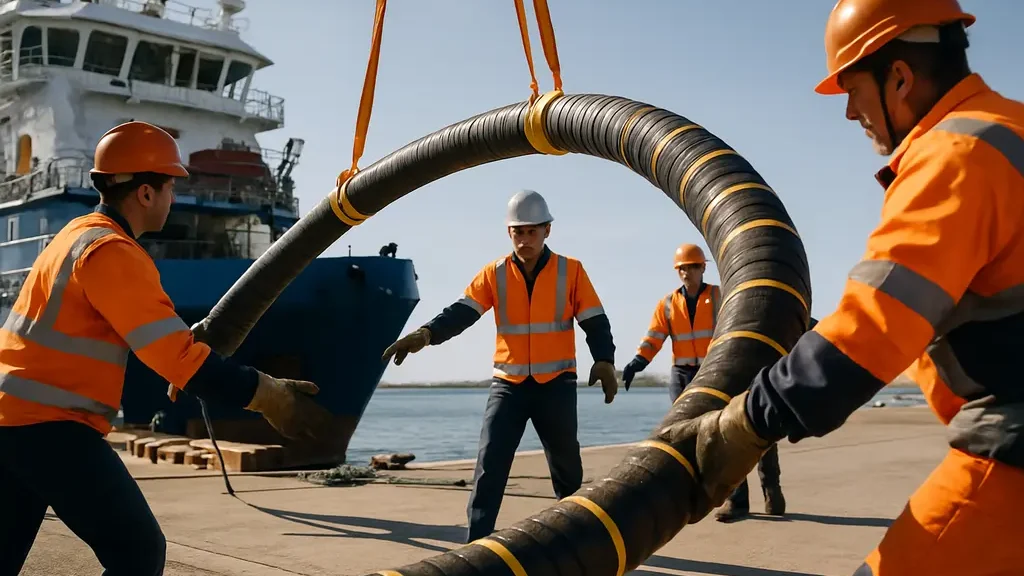
Submarine Cable Licensing and Global Connectivity
Submarine cable licensing moved into a new phase after the FCC adopted its Second Report and Order, FCC 26-42, on June 25, 2026, and released it on June 30, 2026. As of August 27, 2026, most provisions are scheduled to become effective on September 25, 2026, while certain amendatory sections remain delayed indefinitely, according to the U.S. Government Accountability Office review of the rule GAO review. For carriers, cloud … Read the rest

NIST AI Profile for Critical Infrastructure
The NIST AI Profile for critical infrastructure is best understood as an early risk-management specialization, not a finished rulebook. As of August 27, 2026, NIST’s work remains in development after an April 7, 2026 concept note, with stakeholder input still part of the process. For telecom, energy, water, transportation, data center, and industrial operators, the practical question is not whether AI can be used in high-consequence systems. It is how … Read the rest

Why gNMI Telemetry Is Becoming A Practical Network Automation Skill In 2026
Network telemetry is moving closer to the center of telecom operations. For engineers and operators, the shift is less about replacing every legacy monitoring tool and more about gaining structured, machine-readable visibility that can feed automation systems without constant screen scraping or custom polling logic. gNMI, paired with OpenConfig data models, gives network teams a common way to retrieve state, subscribe to telemetry streams, and work with configuration data across … Read the rest

House AI Bills: What Committee Action Means
House AI Bills moved through a significant committee step on June 25, 2026, but the practical meaning is narrower than some headlines suggested. The House Science, Space, and Technology Committee advanced ten AI-related measures during a full committee session, yet none of those ten bills had become law as of August 26, 2026. For community organizations, educators, telecom professionals, consumer advocates, and local technology groups, the useful question is not … Read the rest

AI model review Timeline for Developer Teams
The shortened AI model review timeline changes release planning more than it changes the legal status of frontier model launches. On June 2, 2026, President Trump issued an executive order that reduced the voluntary pre-release government review period for frontier AI models from 90 days to 30 days. The framework asks labs to submit new models for evaluation up to 30 days before public release, but the available research states … Read the rest