
Let’s talk about the digital gold rush happening right under our noses. While some markets are hitting the snooze button, others are running a digital marathon at Usain Bolt speeds.
The numbers don’t lie: we’re looking at a $1.14 trillion industry that grew 4.3% last year. But here’s the plot twist – that growth is about as evenly distributed as screen time during finals week.
While mature markets like Japan and Switzerland are basically doing the digital equivalent of retiring to Florida, emerging regions are throwing the internet equivalent of a block party. India’s growth would make a startup founder jealous, Nigeria’s making power moves, and Kenya? They’re the overachieving younger sibling showing up the established players.
This isn’t just about connectivity anymore. It’s about digital sovereignty, economic development, and the fact that tower infrastructure expansion is rewriting the rules of global digital access. Somewhere in rural Kenya, someone’s probably getting better internet than my New York apartment during peak hours.
The future of connectivity isn’t coming – it’s already here, and it’s wearing some very interesting regional flavors.
Key Market Trends (Africa, Asia, LATAM, etc.)
While Silicon Valley debates 5G rollout speeds, the real telecom revolution is happening where you least expect it. Emerging markets aren’t just growing – they’re completely redefining what connectivity means.

Africa’s subscriber growth isn’t merely catching up; it’s the digital equivalent of a population explosion. The continent is leapfrogging legacy infrastructure like it’s playing technological hopscotch.
Asia continues its quiet domination, becoming the center of the telecom universe while everyone watches California. Colombia in Latin America brings the heat with 10.5% mobile growth – that’s not just expansion, it’s a digital revolution with a side of salsa.
| Region | Mobile CAGR | Fixed Broadband CAGR | Fixed Voice Change |
|---|---|---|---|
| Colombia | 10.5% | 3.8% | -1.8% |
| India | 8.2% | 3.8% | -1.8% |
| Argentina | 7.9% | 3.8% | -1.8% |
| Africa Average | 4.3% | 3.8% | -1.8% |
| Asia Average | 4.3% | 3.8% | -1.8% |
Mature markets watch their ARPU decline faster than interest in unnecessary meetings. The real story here isn’t just numbers – it’s about building tomorrow’s digital ecosystems today.
These regions aren’t replicating yesterday’s networks. They’re creating connectivity solutions that make Western infrastructure debates look like ancient history. The future of telecom isn’t being built – it’s being leapfrogged.
Regional Networking Events
While the coffee might be questionable, the connections forged at regional telecom networking events are anything but. These gatherings have evolved from stuffy corporate meetings into dynamic innovation ecosystems. Deals get done over terrible pastries and surprisingly excellent Wi-Fi.
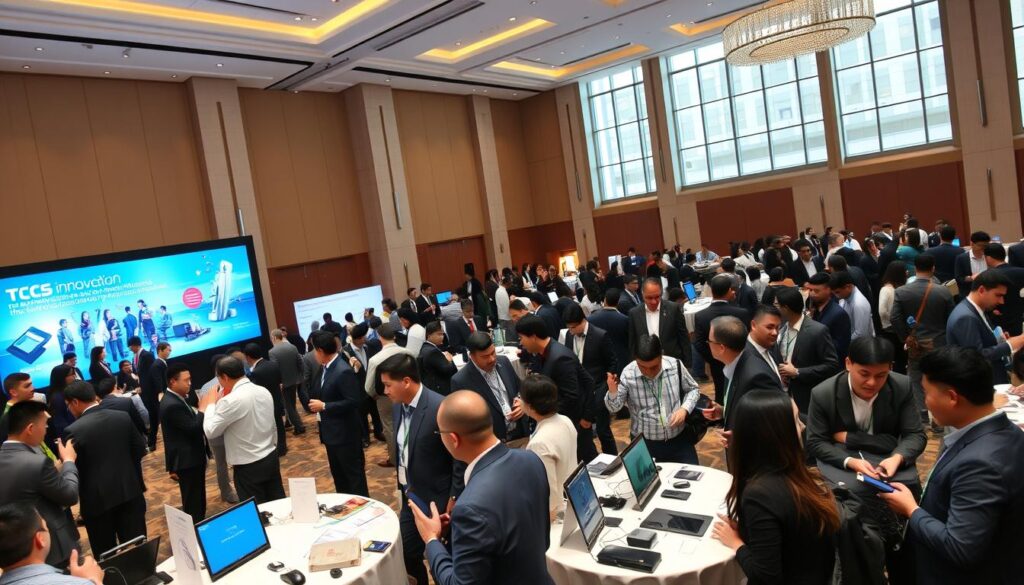
The Innovation Hubs market’s 11.20% CAGR growth isn’t happening in boardrooms—it’s happening in convention centers. Startup founders pitch to telecom executives between keynote speeches. It’s like Tinder for business partnerships, but with better conversation starters and less ghosting.
North America dominates with polished tech conferences that feel like Silicon Valley cocktail parties. But Asia Pacific’s rapid growth tells a different story. It’s more raw energy, less polish, and innovation that solves real problems today.
What makes these local events so powerful? They’re where cultural context meets technological ambition. A Nairobi engineer explaining mobile payment solutions to a Silicon Valley VC creates magic. The regional peculiarities that frustrate global corporations become competitive advantages in these rooms.
| Region | Event Style | Key Players | Innovation Focus |
|---|---|---|---|
| North America | Polished conferences | Tech giants, VCs | Next-gen infrastructure |
| Asia Pacific | High-energy gatherings | Startups, operators | Practical solutions |
| Middle East | Luxury tech showcases | Government, telecoms | Smart city development |
| Africa | Community-driven events | Local innovators, NGOs | Accessibility solutions |
The real value isn’t in the scheduled programming—it’s in the hallway conversations. Someone from Dubai explains 5G deployment challenges to someone from Lagos who’s already solved them. These moments of cross-pollination create partnerships that drive the entire industry forward.
You’ll leave these local events with a stack of business cards. You’ll also leave with a renewed belief that the future of telecom isn’t being built in labs. It’s being built in crowded convention centers where the coffee’s bad but the ideas are extraordinary.
Local Success Stories
While Silicon Valley unicorns get all the attention, the real action is in unexpected places. Saudi Telecom Company is leading the charge with a strategic approach. They’re changing the game for regional telecom growth with precision.
STC’s success isn’t a coincidence. They’ve grabbed 25% of Saudi Arabia’s ICT market. They know that just connecting people isn’t enough anymore. Their approach is more like a community garden than a closed system.
STC’s team is like a tech superhero squad. They offer cybersecurity, IoT partnerships, and cloud computing. Each part works together to create value.
Their disaster recovery for Aramco is a key part of their digital infrastructure. They also manage 25,000 vehicles through IoT. This shows their ability to handle big data and logistics.
What makes STC’s story stand out is their blueprint for success. They’ve turned demographic trends into advantages. This shows how regional players can become digital architects.
This success isn’t unique to STC. It’s a lesson for everyone in telecom. True regional telecom growth comes from building ecosystems, not just networks.
Overcoming Unique Challenges
Building telecom networks in emerging markets is like trying to put together IKEA furniture without instructions. You think you’ve got it all figured out, but then you realize you’re missing key pieces. And the instructions are in a language you don’t understand.
The financial side is tough too. Almost all the money goes to paying for things, paying debts, and giving out dividends. It’s like trying to make coffee with old coffee grounds. You know it’s possible, but it’s not fresh.
But here’s the amazing thing: these challenges lead to innovation that more comfortable markets can’t match. When you can’t just throw money at problems, you have to think creatively. The limits help make sure only the best solutions make it through.
The Five Hurdles Every Telecom Provider Faces
Let’s look at the main challenges in telecom for developing regions:
- Infrastructure costs that could fund a small space program
- Startup access more limited than my patience with automated customer service
- Data integration complexities that make quantum physics look straightforward
- Regulatory constraints that make Byzantine bureaucracy seem efficient
- Skill shortages creating knowledge gaps wider than the digital divide itself
Each challenge builds on the last, creating a big storm of problems. But, as sailors know, the best ones are made in storms, not calm seas.
Innovation Born from Necessity
The lack of skills leads to sharing knowledge on a huge scale. The rules are so strict, they could survive a zombie apocalypse. And with limited resources, we get creative solutions like fixed wireless access. It bridges digital divides without costing too much.
These aren’t just obstacles – they’re a chance for growth. It’s like natural selection for telecom, where only the smartest solutions survive.
| Challenge | Traditional Approach | Innovative Solution | Real-World Impact |
|---|---|---|---|
| High Infrastructure Costs | Fiber optic deployment | Fixed wireless access networks | 60% cost reduction per connected user |
| Regulatory Constraints | Lobbying for changes | Blockchain-based compliance systems | 45% faster approval processes |
| Skill Shortages | Importing foreign expertise | Localized training platforms | 3x faster workforce development |
| Data Integration | Custom-built solutions | Open-source modular systems | 70% reduction in integration time |
The table shows how limits can spark creativity. When the easy way is blocked, you find better paths. It’s like “what doesn’t kill you makes you stronger” – but with more fiber optics and less Nietzsche.
These emerging markets aren’t just catching up anymore. They’re jumping ahead by solving problems we haven’t even seen yet. The journey might be bumpy, but the view from the top is worth it.
Building Cross-Regional Networks
Creating global telecom networks is like hosting a huge dinner party. Each region has its own digital traditions and rules. The magic happens when these different views come together and create something new.
Open RAN is like a universal translator. It helps Nokia’s systems work with Samsung’s, even with local differences. This way, European efficiency meets African mobile money innovation.
Real connections are made at local events. Engineers, executives, and innovators share stories over coffee. These meetings turn abstract partnerships into real collaborations that change how communities connect. Learn more about this in Rakuten’s look at smart data platforms driving telecom success.
Companies going into developing markets see more than just growth. They see the biggest digital changes happening today. The future of global connectivity is about celebrating regional differences and building something greater together.