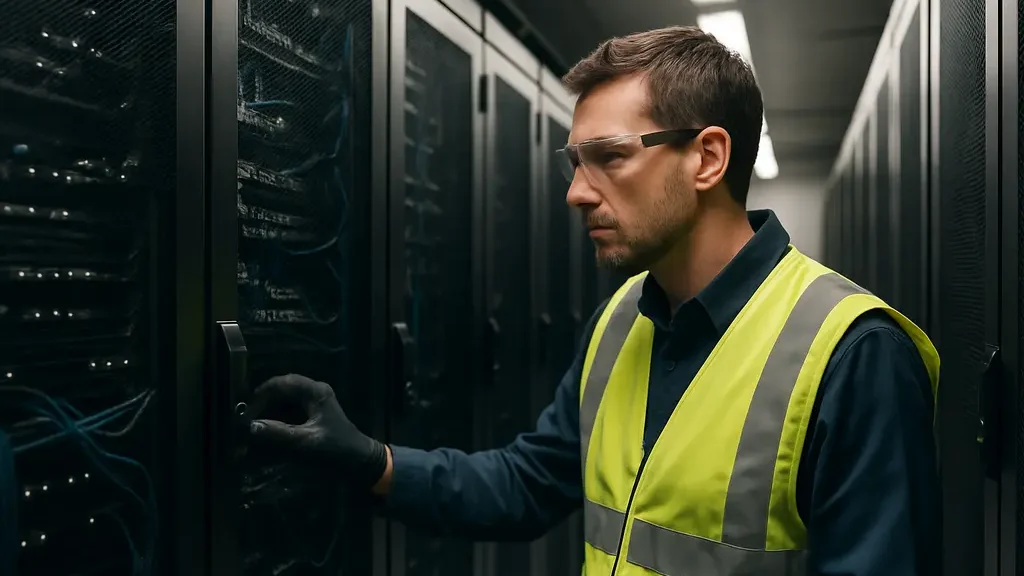
Data Center Security guidance is now tied to a wider set of operating questions: electricity demand, resilience against power failures and natural disasters, cybersecurity, resource monitoring, and who pays for supporting infrastructure. For telecom, cloud, public-sector, and facilities professionals, the main issue is not whether stronger federal guidance is useful. The harder question is how to meet the guidance without adding redundant controls, unclear reporting lines, or avoidable energy costs.
The evidence available in the research record points to a mixed result. Federal data center optimization work has produced documented savings. Newer guidance also pushes agencies toward more disciplined energy and water measurement. At the same time, electricity demand projections, overlapping cybersecurity expectations, and faster grid-connection processes raise cost and coordination questions for operators and communities.
Why Federal Guidelines Are Changing Data Center Security
What The Guidance Is Trying To Standardize
Recent federal activity has moved beyond basic server consolidation. The Federal Data Center Enhancement Act framework, as described in the research record, focuses on minimum requirements for federal data centers, including availability, protection against power failures, protection against natural disasters, and cybersecurity. April 2025 implementation guidance also required agencies to involve certified energy-efficiency specialists in planning new construction or major upgrades, monitor resource use through automated tools, and bring energy and water consumption into operational decisions.
That shift matters because security is no longer treated as a narrow cyber-control checklist. Data Center Security now intersects with building design, power redundancy, cooling, water use, incident response, and procurement. A data center can have strong access controls and still create risk if backup power, grid interconnection, or resource monitoring is poorly planned.
What Data Center Security Does Not Cover Alone
The newer federal approach does not remove the need for local review, engineering judgment, or operator accountability. It also does not settle how much compliance work is duplicative across agencies. The March 5, 2026 GAO finding cited in the research record said industry participants saw overlapping cybersecurity regulations as increasing compliance burdens, redundancy, and cost inefficiencies for critical infrastructure operators, including data centers. That finding should be read cautiously: it reflects industry perspectives, not a single measured cost for every operator.
For professionals planning community meetings or cross-functional briefings, plain-language material can reduce confusion between cyber controls, energy reporting, and resilience planning. Utilizing free slideshow resources can be beneficial for organizing public-facing explanations, particularly when technical teams need to communicate effectively with nontechnical stakeholders.
Economic Pressure Starts With Electricity Demand
Demand Growth Changes The Cost Discussion
The strongest public evidence concerns power demand. The U.S. Department of Energy reported that data centers accounted for about 4.4% of total U.S. electricity use in 2023, or about 176 TWh, up from about 70 TWh in 2014. DOE projections estimated that data centers could consume between 6.7% and 12% of U.S. electricity by 2028, or 325–580 TWh according to DOE. Those figures do not prove that every region will face the same pressure, but they explain why federal guidance increasingly connects security, efficiency, and grid planning.
A 2025 Lawrence Berkeley National Laboratory update estimated that data centers could use 11.8% of U.S. electricity by 2030, with scenarios ranging from 9.5% to 15.3% depending on growth and efficiency trends in the 2025 update. The wide range is relevant. Efficiency measures, facility utilization, cooling design, and load management can materially affect the outcome, but the research record does not support a single guaranteed demand path.
Local Economic Benefits Need Context
Economic output estimates also require careful handling. A U.S. Chamber of Commerce report dated October 15, 2026 estimated that a typical mid-sized 50 MW data center can generate nearly $700 million in economic output over a 20-year operational life and support 5,200 jobs statewide. That is a useful benchmark, but it should not be applied mechanically to every project. Site conditions, utility tariffs, local construction markets, tax policy, water constraints, and grid-upgrade costs can change the local result.
| Impact Area | Supported Evidence | Operational Reading |
|---|---|---|
| Electricity use | 2023 data centers used about 4.4% of U.S. electricity | Power planning is now central to facility risk |
| 2030 demand range | Estimated 9.5% to 15.3% of U.S. electricity under scenarios | Efficiency assumptions should be stated clearly |
| Federal savings | DCOI savings and avoidances reached $6.6 billion from FY 2012 through 2021 | Consolidation can reduce cost when tracked |
| Compliance burden | GAO reported industry concern over inconsistent cyber guidance | Control mapping can reduce duplicated work |
Operational Impacts For Federal And Private Facilities
Federal Facilities Face Measurement Discipline
Federal agencies already have evidence that optimization can produce savings. Under the Federal Data Center Optimization Initiative, agencies closed 58 data centers in FY 2021 and identified $612.3 million in cost savings. From FY 2012 through FY 2021, total savings and avoidances reached $6.6 billion, according to the research record. Those figures show that consolidation, when paired with clear measurement, can reduce cost. They do not prove that every new control requirement will be cost-neutral.
The Congressional Budget Office estimate cited in the research record said implementing the Federal Data Center Enhancement Act requirements would not significantly increase federal costs from 2023 through 2028. That finding is limited to the federal cost estimate described there. Private operators, colocation customers, and local utilities may face different economics depending on interconnection needs, reporting expectations, and service-level commitments.
Private Operators May Absorb More Grid And Compliance Costs
The research record also noted a federal regulatory action, reported about four months before October 2026, ordering regional grid operators to accelerate grid-connection processing for data centers, particularly AI data centers. The same rule required data centers to pay for grid upgrades needed for their connections. If applied as described, that approach moves some costs directly to the connecting facility rather than spreading them more broadly.
That cost allocation can improve fairness, but it can also change project budgeting. Operators may need earlier engineering studies, clearer load forecasts, and more transparent conversations with utilities. Data Center Security requirements that depend on uptime, backup systems, and physical resilience cannot be separated from the cost of getting enough reliable power to the site.
Who Needs To Coordinate The Response
Telecom And Cloud Teams Share Dependencies
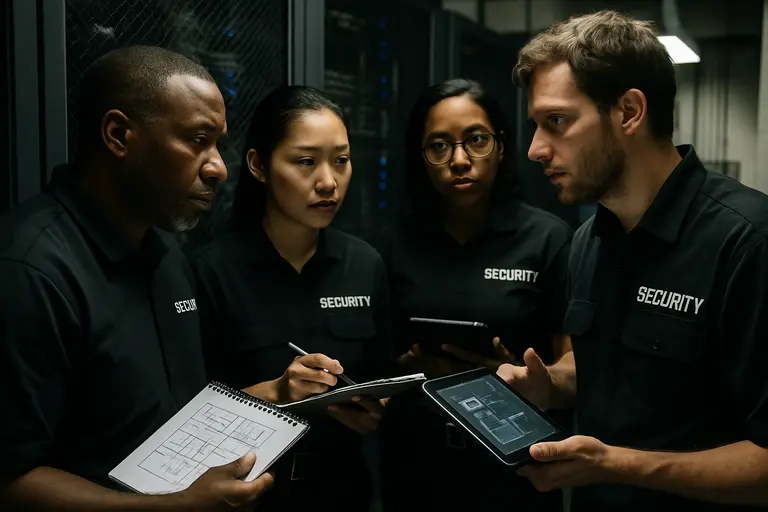
Telecom networks, cloud facilities, content delivery systems, and enterprise platforms increasingly share power, fiber, cooling, and physical-security dependencies. A data center outage can affect network operations, authentication services, customer support platforms, and monitoring systems. That is why security planning should include facilities engineers, network architects, energy managers, legal teams, public-affairs staff, and local officials.
For community-facing work, agenda design matters. Residents and local businesses usually want clear answers about power demand, water use, noise, emergency backup systems, tax contributions, and who pays for grid upgrades. Operators and agencies can reduce friction by separating confirmed facts from projections and by documenting which questions require utility, permitting, or agency review. A related discussion of data center stakeholder planning may help teams structure those meetings around evidence rather than assumption.
A Practical Coordination Checklist
- Map federal, state, utility, and customer requirements before selecting controls.
- Separate cybersecurity requirements from physical resilience, energy, and water metrics.
- Use automated tools to monitor resource consumption where guidance requires it.
- Document whether grid-upgrade costs are assigned to the project, utility customers, or another party.
- Review power-failure and natural-disaster assumptions with facilities and network operations teams.
- State uncertainty in demand forecasts rather than presenting one scenario as certain.
Data Center Security Decisions For Operators
Evidence Should Drive The Operating Model
The most defensible response is to treat federal guidance as an operating model issue, not just a compliance file. Operators should identify where controls overlap, where energy data is incomplete, and where uptime assumptions depend on external infrastructure. They should also avoid treating projected demand ranges as fixed outcomes. The DOE and laboratory estimates show direction and scale, but efficiency choices, utilization rates, and regional grid conditions still matter.
Data Center Security decisions are likely to be strongest when they connect cyber risk, power resilience, water and energy measurement, and community accountability. The available evidence supports disciplined planning, but it does not support one universal cost estimate for every facility. For telecom and infrastructure professionals, the practical work is coordination: align the technical teams, document assumptions, and keep public discussions tied to verifiable facts.