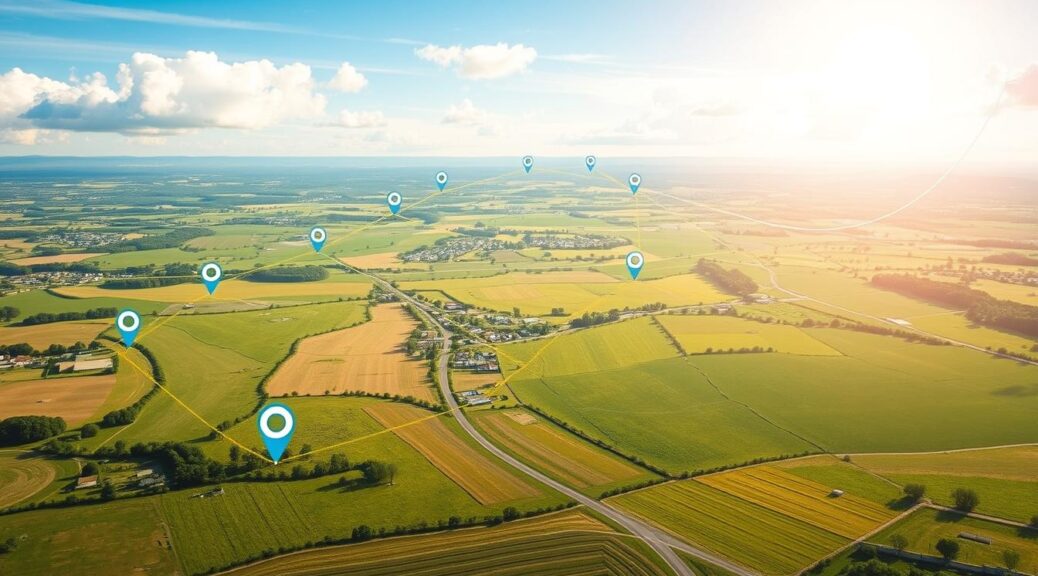
Welcome! Right now, we’re seeing a historic moment in connectivity. It’s like building the interstate highway system, but for digital roads.
There’s a huge opportunity ahead. About 42 million Americans don’t have fast, reliable internet. This is a big problem, hitting 39% of rural areas hard.
But there’s hope. The BEAD program is bringing in $42.45 billion to fix this. It’s a big investment in our digital future.
So, where does this money go? The new FCC “Fabric” maps show who gets BEAD grants. Public and private groups are working together. They’re making a big change.
These partnerships are already making progress. States are giving out provisional BEAD awards to many providers. Let’s look at why this is so important and who’s leading the way.
Funding landscape and timelines
Think of current federal broadband funding as separate investment accounts. Each has its own manager and rules. Understanding this landscape is your first step. You need to know which account fits your project and when it’s open for business.
The landscape is built on several cornerstone programs. The Broadband Equity, Access, and Deployment (BEAD) Program is the giant, with $42.5 billion. It works alongside other key players. The FCC’s Rural Digital Opportunity Fund (RDOF) committed $20 billion in reverse auctions. The USDA’s ReConnect Program has another $1.15 billion in its latest round.
Other vital funds fill specific gaps. The $1 billion Middle Mile Program builds backbone infrastructure. The $3 billion Tribal Broadband Connectivity Program addresses unique needs. Billions more come from the American Rescue Plan Act (ARPA) and the Capital Projects Fund, often managed by states.
So, how do you make sense of it all? A good starting point is understanding the basic differences between these major pots of money. The table below breaks down the key details.
| Program Name | Administering Agency | Key Funding Amount | Type | Structure & Timeline Note |
|---|---|---|---|---|
| BEAD Program | NTIA (via States) | $42.5 Billion | Grant | Funds flow to states; subgrants to providers follow state proposals (see timeline below). |
| RDOF (FCC) | FCC | $20 Billion | Reverse Auction | Federal auction concluded; winners are building out now under FCC oversight. |
| ReConnect (Round 4) | USDA | $1.15 Billion | Grant/Loan | Direct federal applications; offers both grants and low-interest loans for construction. |
| Middle Mile Program | NTIA | $1 Billion | Grant | Federal grants to entities building regional fiber links that enable last-mile service. |
| Tribal Broadband Connectivity Program | NTIA | $3 Billion | Grant | Direct grants to Tribal entities for broadband deployment and adoption. |
The administration varies. Some, like RDOF and ReConnect, are direct federal programs. Others, like BEAD grants, are state-managed. This is a critical distinction! The $42.5 billion in BEAD money is allocated to states and territories first. Then, each state creates its own rules for handing out subgrants to internet service providers like you.
This brings us to the most important timeline in rural broadband today: the BEAD process. Understanding it is like knowing the playbook for the biggest game in town. It doesn’t happen all at once. It’s a relay race with three main baton passes.
First, the State Initial Proposal. Each state had to submit a plan to the NTIA outlining how it would run its BEAD program. This defined the challenge areas and high-level rules.
Second, the State Final Proposal. This is the detailed, nitty-gritty rulebook. It includes the specific application process for subgrants, the scoring criteria, and the defined project areas. As of late 2025, the NTIA has been approving these Final Proposals, state by state. This approval is the green light states need to move forward.
Third, the Subgrant Application Window. Once a state’s Final Proposal is approved, it can officially open its application window for providers to apply for BEAD construction funds. This is when you, the provider, can formally step in with your project plan.
The key takeaway? Your action point is tied to your state’s progress. You can’t apply for BEAD grants until your state’s Final Proposal is approved and its application window opens. This creates a rolling national timeline, not a single start date.
So, your strategy starts with a simple question: which funding source aligns with your project’s technology, location, and timing? A closed RDOF auction might mean looking to BEAD or ReConnect. A state’s rules for BEAD might take time to develop. By mapping the landscape and its calendars, you move from feeling overwhelmed to being strategically prepared.
Technology mix: fiber vs FWA vs satellite bridge
Fiber, fixed wireless, and satellite are not just competing technologies. They are key pieces in a big puzzle of connectivity. You don’t need to choose just one. Instead, find the right mix for each area you serve.
Fiber optic cable is like a super-fast, reliable highway for the internet. It’s built to last for many years. The BEAD program focuses on fiber for its long-term benefits.
Fixed wireless access (FWA) is like a strong state highway system. It uses towers to send internet to homes. It’s faster and cheaper than fiber, perfect for many areas.
Satellite internet is like a ferry for the most remote places. It’s the only way to get online in some areas. New satellites have made it much better.
So, how do you decide? The BEAD program helps. It says fiber is key, but also allows FWA and satellite for hard-to-reach areas. This means fiber is used where it’s most needed.
Here’s a quick guide to the technology mix:
| Technology | Best For | Key Advantage | Main Consideration |
|---|---|---|---|
| Fiber Optics | Dense communities, future growth | Unmatched speed & reliability | Highest upfront construction cost |
| Fixed Wireless Access (FWA) | Moderate-density terrain, quicker rollout | Lower cost per premises passed | Can be affected by terrain and foliage |
| Satellite Bridge | Extremely remote, isolated locations | Universal coverage possibility | Higher latency, weather sensitivity |
A mix of technologies is wise. Use fiber for clusters and fixed wireless access for outlying areas. This way, you make the most of your investment.
Satellite is the backup for the last few percent. It ensures everyone has internet access. Choosing the right mix is about being smart, not cheap. This way, we build networks that are efficient and ready for the future.
Make‑ready & pole attachment realities
Laying cable is tough, but pole attachments and make-ready work are even harder. Many projects face delays and cost overruns here. Let’s explore why this is a big challenge.
Pole attachments mean getting permission to attach your cables to utility poles. These poles belong to electric companies, cooperatives, or cities. You can’t just start attaching your cables without permission.
Getting that permission is the first step. Pole owners have their own rules and schedules. You need to apply, pay fees, and wait for approval. It’s a delicate partnership, as the pole owner sets the pace.
After getting permission, the real work starts: make-ready. Think of a utility pole as a crowded bookshelf. You need to move existing wires to add your broadband line. This is make-ready work.
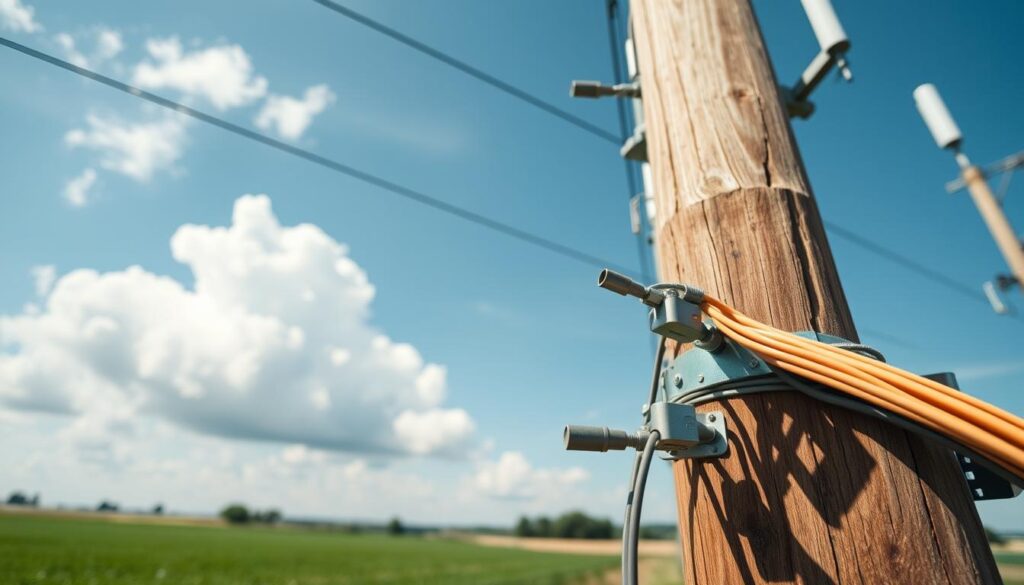
The make-ready process has many steps. First, engineers check if the pole is strong and has space. They then plan how to move or add lines. This planning can take weeks.
Then, crews from different companies need to be scheduled. Coordinating with electric, phone, and cable companies is like a complex dance. This coordination is a major reason the process is so slow. Each move costs money, which you have to pay.
Why is this a critical path item? Until make-ready is done, you can’t start hanging fiber. A delay in survey approval or a missed crew can push back your project timeline. It’s the main reason your project’s launch date is uncertain.
To succeed, start talking to pole owners very early. Do field surveys to find problem poles. Budget well for make-ready costs and unexpected delays. Understanding these pole attachment realities is key to managing your project.
By planning for these challenges, you can turn a project-breaker into a manageable phase. Your deployment will be smoother, more predictable, and successful.
Middle‑mile and IX reach: peering economics
The cost of bringing broadband to rural America depends on a key factor: the middle‑mile. Connecting a home is like building a driveway (the last-mile). But without a paved road to the city, the driveway is useless. The middle-mile is that essential road—the high-capacity fiber network that links your town to the internet.
Without a strong middle‑mile nearby, building that final connection becomes very expensive. That’s why the NTIA’s $1 billion Middle Mile Program is so important. It funds these backbone routes to make reaching unserved areas cheaper. As infrastructure provider Zayo says, having their middle-mile networks in place greatly lowers the cost of last-mile builds.
But the story doesn’t end with the physical fiber. Once your network traffic is on that middle-mile, where does it go? This is where “peering economics” comes into play. Major internet providers and content companies (like Google or Netflix) connect directly at locations called Internet Exchanges (IXs).
Peering is like a digital handshake at a central hub. Instead of paying a third party to carry data across the country, networks exchange traffic directly at the IX. This saves a lot of money on transit fees and makes your internet faster and more reliable for users.
Here’s why understanding both middle-mile and peering is a game-changer for your project:
- Lower Build Costs: Being close to middle-mile fiber reduces the miles of cable you need to trench.
- Better Performance: Direct peering means data takes a shorter, faster path to major websites and services.
- Sustainable Model: Reduced ongoing transit costs improve the long-term financial health of your network.
So, as you plan your rural broadband build, look beyond the last mile. Ask: Where is the nearest robust middle‑mile access point? And, What are the peering options at the nearest Internet Exchange? Getting these peering economics right is the secret to building a network that’s both high-performance and financially sustainable for years to come.
Compliance & reporting expectations
Think of your BEAD grant award letter as the start of a race. Compliance is the track. Winning the funding is huge, but keeping it requires careful attention to the rules. We’re here to guide you through this essential paperwork!
Federal funding comes with rules, and BEAD grants are no exception. These rules are in place to ensure public money is used wisely. Your main compliance areas include a few key pillars:
- Build America, Buy America (BABA) Rules: Sourcing materials correctly.
- Federal Labor Standards: Paying fair wages and ensuring safe worksites.
- Cybersecurity Plans: Protecting the network from day one.
- Ongoing Reporting: Proving you’re on track and on budget.
Let’s start with the Build America, Buy America Act. In simple terms, BABA requires using American-made materials in infrastructure projects. For broadband, this gets specific.
The good news? There’s a proposed waiver for most broadband electronics. Things like Optical Line Terminals (OLTs) and Optical Network Terminals (ONTs) are often complex global products. The waiver acknowledges that requiring 100% U.S. manufacturing for these isn’t always practical yet.
But, you must source other components domestically. This typically includes:
- The fiber optic cable itself.
- Conduit and enclosures (like fiber distribution hubs).
- Poles and other construction materials.

| Component Type | BABA Requirement | Key Consideration |
|---|---|---|
| Fiber & Conduit | Must use U.S.-made materials. | Domestic manufacturing is well-established; plan your supply chain early. |
| Electronics (OLTs, ONTs) | Often covered by proposed waiver. | Check the latest NTIA guidance for the final waiver status. |
| Enclosures & Cabinets | Must use U.S.-made materials. | This includes housings for splitters and terminals. |
Beyond BABA, you’re committing to fair labor practices. This means following federal laws like the Davis-Bacon Act, which sets wage rates for construction workers. You’ll need to pay the prevailing wage in your area. It’s about building the community’s infrastructure while supporting its workforce.
Your cybersecurity plan is another non-negotiable. Grant recipients must show how they will protect network infrastructure and customer data. This isn’t just a theoretical document—it’s a living plan you’ll implement and update. Think of it as an essential part of your network’s foundation, not an extra homework assignment.
Now, let’s talk about reporting. This is how you prove you’re a good steward of the grant. You’ll submit regular reports to the National Telecommunications and Information Administration (NTIA) and your state broadband office. What do they want to see?
- Financial Reports: Detailed tracking of how every dollar is spent.
- Progress Reports: Milestones hit, construction updates, and subscriber numbers.
- Performance Reports: Data on network speeds, reliability, and latency.
This ongoing transparency is key. It keeps your project accountable and can help you identify issues early. Falling behind on reporting is a surefire way to get a call from your grant manager.
Staying compliant with BEAD grants might seem like a maze, but it’s a manageable one. By understanding these expectations from the start—from sourcing to cybersecurity to paperwork—you build a stronger, more sustainable project. You’ve got this, and we’re here to help you cross that finish line successfully!
Regional networking: state broadband offices and conferences
The final piece of the rural broadband puzzle is local. Your most important partners aren’t just in Washington, D.C. They’re in your state capital.
Each state runs its BEAD program through a dedicated broadband office. This office is your direct line for guidance. They set the local application rules, scoring criteria, and deadlines. Building a strong relationship here is key. Make a habit of checking your state broadband office’s website for updates.
We can’t overstate the value of regional conferences and workshops. These events are networking goldmines. You meet peers, possible partners, and state officials all in one place. You get the latest on BEAD and programs like RDOF. This is where abstract plans turn into real connections.
Your journey from understanding fiber versus FWA to navigating BEAD compliance leads here. Engaging with your regional ecosystem is the actionable step. It’s how national funding becomes a connected community. Start those conversations today.