
Planning a conference in 2024 without an accessibility strategy is like using dial-up internet. It’s slow, outdated, and makes you lose touch with many people.
One in four U.S. adults has a disability. That’s 57.6 million people, plus 77 million Baby Boomers who might need help. This isn’t a small group. It’s a quarter of your possible speakers, attendees, and creators.
The old way sees DEI as just a rule. But I believe it’s a smart move. Inclusive programming isn’t about giving away free stuff. It’s about getting more money and smarter ideas.
Designing for everyone makes things better for all. This is how inclusive programming goes from being nice to being essential. It’s not just the right thing to do. It’s also a must for staying ahead.
Accessibility Checklist (WCAG for digital, ADA at venues)
True event accessibility is more than just a wheelchair ramp. It’s about making inclusion a key part of your event. In the U.S., you need to follow two main guidelines: one for physical spaces and another for digital ones.
The Americans with Disabilities Act (ADA) is like a law for your venue. It requires you to change policies and offer extra help. This includes things like large print, Braille, sign language interpreters, and real-time captions.
Venues built after 1990 must follow the 2010 Standards for Accessible Design. But, the telecom industry often forgets about making digital spaces accessible. A good digital registration portal is useless if your venue is not accessible.
Your physical accessibility standards checklist should include:
- Mobility Access: Make sure there are wheelchair-accessible routes, restrooms with grab bars, and seats for everyone.
- Sensory Support: Have assistive listening systems in all rooms, ready for anyone who asks.
- Communication Access: Use qualified sign language interpreters for main talks, not just volunteers.
- Wayfinding: Use clear, easy-to-read signs with high contrast colors for those with low vision.
Now, let’s talk about your digital space. The ADA doesn’t apply here, but the Web Content Accessibility Guidelines (WCAG) do. Unfortunately, many telecom events fail here.
We create amazing networks but forget about making our apps accessible. Your live streams might be perfect but not for deaf attendees. Captions that are hard to read are not good enough.
Your digital accessibility standards require:
- Perceivable Content: Use alt-text for images, provide live CART captions, and ensure color contrast is easy to see.
- Operable Interfaces: Make sure everything can be accessed with a keyboard, give enough time to fill out forms, and avoid content that could cause seizures.
- Understandable Information: Navigation should be easy, forms should help you, and text should be simple to read.
- Robust Technology: Make sure your site works well with current and future assistive technologies on all devices.
Using both ADA and WCAG guidelines makes your event better for everyone. The ADA helps ensure your venue is accessible. WCAG makes sure your digital parts are easy to use for all.
Think of accessibility as a quality-of-service metric for people. Just as you wouldn’t launch a network with lots of errors, you shouldn’t have an event that’s hard for some to access.
The checklist is not just about avoiding lawsuits. It’s about making sure everyone has a great experience. Your event’s accessibility should be as well-planned as the networks you’re talking about.
Inclusive telecom events are built on solid plans, not just good intentions. They’re based on checklists, standards, and the idea that accessibility is the foundation.
Representation in content: speakers, panels, moderators
A panel on ‘the future of connectivity’ with only old voices is not forward-thinking. It’s more like a historical reenactment. We’ve all seen it: the “innovation” keynote by someone who looks just like everyone else on stage. It’s intellectually stagnant.
True inclusive programming isn’t just about diversity. Research shows that tokenism fails, making underrepresented people feel like mascots. That old boardroom look tells everyone who this event is for.
The goal is to have diverse ideas. If all speakers come from the same big companies, it’s just an echo chamber. As one source says, “Many minorities face challenges… diversity should be in every conversation.”
To go from the same old to truly diverse, you need to reach out in a big way. This might make some people uncomfortable.
The Outreach Playbook (Beyond Your LinkedIn Bubble)
Don’t just pick speakers from your friends. Look for that woman leading network security at a smaller firm. Or the disabled engineer changing IoT. Or the young founder from a minority group working on 5G?
They’re not in your usual circle. You have to go find them.
- Tap specialized associations: Groups like Women in Telco, Black in Tech, and LGBTQ+ in STEM are full of fresh ideas.
- Review past attendees: Who asked the most interesting questions? They might be your next moderator.
- Scout beyond titles: Look for the people doing the real work, not just the bosses. The hands-on people often have the best insights.
This effort “expands your event’s reach,” as another source says. It makes your content more exciting and diverse.
From Polite Agreement to Productive Friction
The magic of real representation is in the disagreements. When panelists have different experiences and backgrounds, debate gets real.
It turns into a productive clash that sparks new ideas. A panel with only one view might agree fast. But a diverse one might argue, and that’s where the real innovation is.
| Tokenistic Approach | Truly Inclusive Programming | Attendee Perception |
|---|---|---|
| One “diversity” speaker per panel | Diversity of thought across all speakers | Checkbox vs. Authenticity |
| Last-minute invites to fill quotas | Proactive, year-round relationship building | Afterthought vs. Intentionality |
| Same topics, different faces | New topics emerging from diverse perspectives | Stagnation vs. Innovation |
Your moderators are key. A good moderator brings out different views. They make sure everyone’s heard. This is where inclusive programming really works.
Representation on your stage shows your commitment. It’s the proof behind your “value of diversity” slide. Get it right, and you’re not just talking to the choir—you’re creating a symphony of new ideas.
Scholarships & fee waivers: criteria, outreach, sponsors
The most effective way to diversify isn’t by avoiding bias. It’s by making sure everyone can attend, regardless of their financial situation. This approach is not just fair; it’s smart for attracting the best talent.
Studies like “The True Cost of Field Education is a Barrier to Diversifying Geosciences” show this issue isn’t unique to our field. The answer isn’t just giving out free tickets. It’s about investing in scholarships and fee waivers.
Think of these programs as a way to research and develop your audience. They can turn your event into a place where talent grows. The key is to create clear, consistent systems for giving out financial help.
Crafting Criteria That Don’t Feel Like Handouts
Start with criteria that are both based on merit and need. This way, you help those who really need it without making it seem like a handout. Decide what “need” means to you—is it income, where someone works, or where they’re from?
For merit, look at more than just someone’s resume. Consider their community work, innovative projects, or leadership skills. Your application should value diverse achievements, not just titles.
Being open about your criteria and how you choose winners is key. Publish your criteria, who’s on your selection committee, and when you’ll make decisions. This builds trust and makes your program a standard to follow, not a secret.
The Outreach Playbook: Going Beyond Your Network
Creating scholarships is just the first step. Filling them with diverse candidates is the next. You can’t just use your usual marketing channels. You need to reach out in a targeted way.
Work directly with schools like HBCUs, Hispanic-serving institutions, and community colleges with strong STEM programs. Don’t just send an email—host virtual info sessions with faculty.
Also, engage with groups like Women in Telco, B/ERGs, and international academic associations. These groups have built trust in the communities you’re trying to reach. Let them help spread the word.
Offer different levels of help: full packages for international candidates, partial waivers for regional attendees, and last-minute spots for local students.
The Sponsor Partnership: From Cost Center to Marketing Gold
Here’s where things get exciting. Frame sponsor-funded scholarships as an investment in the next generation of leaders. This way, the cost is on the sponsor’s budget, not yours.
For sponsors, this is a great story. They’re not just paying for a logo—they’re helping to bring in diverse talent. Offer them naming rights, meet-and-greets with recipients, and reports on the impact they’ve made.
Create special tracks sponsored by companies. For example, “The [Sponsor Name] Innovation Scholar” or “Future Leaders Fellowship.” This gives sponsors a chance to own a part of your event and creates something memorable for attendees to look forward to every year.
| Financial Assistance Model | Ideal Candidate Profile | Core Application Requirements | Sponsor Value Proposition |
|---|---|---|---|
| Full Scholarship | International graduate student or early-career professional from emerging market | Proof of enrollment/employment, essay on industry impact, letter of recommendation | Global talent pipeline, CSR storytelling, named award legacy |
| Partial Fee Waiver | Domestic student, non-profit employee, or independent researcher | Income verification, statement of need, conference goals outline | Community investment, brand affinity with next-gen professionals |
| Travel & Lodging Grant | Accepted speaker or panelist from underrepresented group facing travel barriers | Confirmed speaking role, travel cost estimate, diversity statement | Direct speaker access, content influence, visible inclusion leadership |
| Last-Minute Access Pass | Local student or professional who couldn’t plan/pay far in advance | Simple application, institutional email verification, short interest statement | Filling empty seats, local community engagement, spontaneous goodwill |
The table above is more than just a checklist. It’s a strategic guide. Mix and match models based on your goals and resources. Remember, even a few well-thought-out scholarships can send a strong message about your event’s values.
Ultimately, these programs answer a key question: Do you want your conference to reflect the industry’s past or shape its future? The cost of attending shouldn’t be the only thing that matters.
Safe Spaces: code of conduct, reporting, moderation
Even with ramps and captions, an event can feel unwelcoming to some. I’ve seen events with perfect ADA compliance but with a hostile atmosphere. This is true in all industries, not just geosciences.
Your code of conduct is a promise to your attendees. It should clearly state that harassment and discrimination won’t be tolerated. It’s like a rulebook for your event.
A code of conduct without enforcement is useless. It’s like a fire extinguisher that’s locked away. You need a visible, easy-to-use reporting mechanism.
Think of this as your toolkit for enforcement. You’ll need a dedicated email, a help desk, and an anonymous form. The goal is to help anyone who feels uncomfortable.
Moderation is the tough part. It means standing up to bad behavior, even from VIPs. This shows if you’re truly committed to DEI.
Accessibility is key to empathy and understanding. A safe space is essential. It lets everyone speak up and contribute without fear.
Let’s talk about reporting channels. They should match your event’s size and DEI level. Here are some options that work.
| Reporting Channel | Visibility | Ease of Access | Response Time | Best For |
|---|---|---|---|---|
| Dedicated Email | Medium (needs promotion) | High (available 24/7) | Within 2 hours during event | Large conferences, tech-savvy audiences |
| On-site Help Desk | High (physical presence) | Medium (requires approach) | Immediate | First-time events, building trust |
| Anonymous Online Form | Low (discreet) | High (private) | Within 4 hours | Sensitive issues, whistleblower scenarios |
| Trained Staff Ambassadors | High (roaming) | High (proactive) | Immediate to 30 minutes | Networking events, social gatherings |
There’s no “Do Nothing” option in DEI work. Silence means you’re complicit. Your team needs clear protocols for handling issues.
The best measure is when attendees feel heard and respected. This is the return on your investment in a safe space. It turns your event into a community people want to return to.
Creating a safe space isn’t about stopping fun. It’s about making it better. When people feel safe, they collaborate and innovate more. Your code of conduct is a guide that lets everyone connect better.
Neurodiversity & cultural sensitivity training
Imagine your event feeling like a maze for those with different brains. We’ve made sure places are wheelchair-friendly and have captions. But, we often make events that are hard for people with ADHD, autism, or dyslexia. It’s ironic, really. You want new ideas, but you might be pushing away the thinkers.
Research shows virtual meetings can be just as tiring. Autistic scientists want inclusive teaching methods. It’s clear: one way doesn’t fit all. Too much light, too much talking, and no breaks are not just annoying. They’re overwhelming for many.
The solution isn’t expensive changes. It’s about small, thoughtful inclusive programming. Give questions to speakers early so everyone can prepare. Have a quiet room that’s really quiet. And make sure there are breaks. These are basic kindnesses for different brains.
Adding cultural sensitivity is also key. Does your event ignore important holidays? Does your food only have pork or beef, leaving out Jewish, Muslim, or Hindu guests? These aren’t mistakes. They’re choices that leave people out. Training your team means more than just knowing how to talk to people with disabilities. It’s about understanding that things like prayer rooms or halal food are just as important.
| Traditional Event Practice | Neurodiversity-Informed Practice | Impact on Inclusion |
|---|---|---|
| Loud, open networking receptions | Structured networking with quiet zones | Reduces social anxiety, allows for meaningful connection |
| Back-to-back sessions, no breaks | 15-minute buffers between all sessions | Prevents cognitive overload, respects processing needs |
| Surprise Q&A with panelists | Questions submitted to speakers in advance | Empowers anxious attendees, improves answer quality |
| Standard venue lighting (bright LEDs) | Adjustable lighting in session rooms | Reduces sensory triggers for autism, migraines |
This training changes staff from rule enforcers to experience makers. They learn that someone wearing headphones isn’t being rude. They’re managing their senses. It helps them see that a neurodivergent talent in telecoms might need slides early to fully participate. This isn’t being soft. It’s unlocking talent.
In the end, training in neurodiversity and cultural sensitivity changes everything. Your event is more than just a place to exchange cards. It’s a place where everyone can contribute. And in a world that thrives on new ideas, that’s the smartest move.
Childcare, nursing rooms, dietary/inclusive logistics
An event’s true commitment to diversity is shown in its nursing rooms and gluten-free options. This is where accessibility standards meet human biology and belief. It’s the unglamorous backbone that either supports your inclusive rhetoric or exposes it as hollow.
Let’s talk about childcare. Providing on-site or subsidized options isn’t just a perk. It’s a way to make sure everyone can attend, not just those without family duties. Without it, you’re telling parents they must solve their family problems first. That’s not inclusion; it’s an extra burden on their time and money.
Nursing rooms are essential. A clean, private, lockable space with comfortable seating and outlets is basic dignity. And let’s not forget about menstruation. Providing free sanitary products in restrooms shows you see attendees as whole humans.
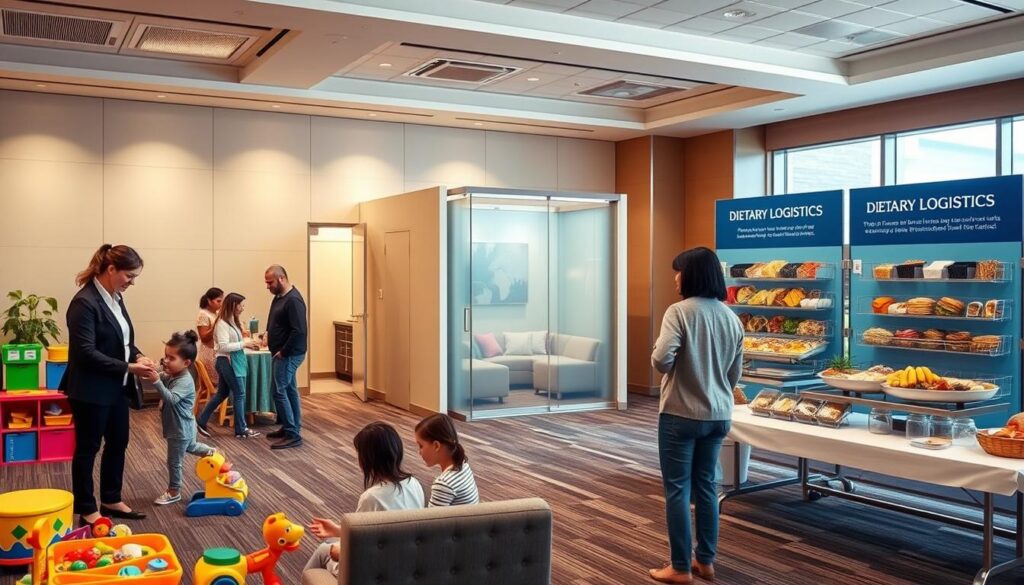
Food tells a story. Saying “vegetarian option” is the minimum. Real inclusion means gluten-free, halal, kosher, and major allergen-free choices. Being clear about ingredients is not just polite; it’s necessary for some. Unclear labels are not mysterious; they’re exclusionary.
Then there’s the “temporarily abled.” Ever been on crutches after surgery? The distance between rooms becomes a marathon. Events should anticipate these needs, ensuring everyone can move around with dignity.
| Logistical Accommodation | Primary Purpose | Key Implementation Tips | Direct Impact |
|---|---|---|---|
| On-site/Subsidized Childcare | Remove attendance barrier for parents/caregivers | Partner with licensed providers; offer sliding-scale fees; advertise early in registration | Increased participation from parent-professionals, specially women |
| Nursing & Wellness Rooms | Provide dignity and privacy for biological needs | Lockable, quiet spaces with seating, outlets, fridge; stock with sanitary products | Attendees feel seen and respected, reducing stress |
| Comprehensive Dietary Options | Cater to medical, religious, and ethical needs | Clear ingredient labeling; separate serving utensils; include gluten-free, halal, kosher, vegan | Safe participation for all, showing respect for diverse beliefs/health |
| Temporary Mobility Support | Accommodate injuries, recovery, pregnancy | Reserve close parking; offer golf cart shuttles; ensure seating throughout venue | Full access for temporarily disabled attendees, preventing isolation |
Thinking about these details shows a big shift. You’re not just hosting brains on sticks. You’re welcoming complex humans with physical needs, family duties, and biological realities. It’s where accessibility standards become a lived experience of belonging.
The gap between a good intention and a truly inclusive event is small. It’s the distance between the main stage and a quiet nursing room. Bridge that gap, and you’ve built something real.
Hybrid options to expand access
Telecom conferences often forget to use their own tech to include everyone. They build global networks but ask people to travel far for talks. The pandemic showed us the power of hybrid events. Ignoring them now is unfair.
Hybrid events are a game-changer. They remove barriers like travel costs and visa issues. They let parents attend during naptime and experts share safely.
This isn’t just about being convenient. It’s key to your DEI mission. Virtual parts make your event global, not just local.
But, a bad hybrid event is worse than none. We’ve all had the bad experience of poor quality streams. It makes remote attendees feel ignored.
This creates a bad system: in-person attendees and digital ones. A bad setup hurts your DEI goals. It makes exclusion seem on purpose.
To do it right, change your mindset. It’s not just about streaming an event. It’s about creating a valuable digital experience. That takes real effort.
- Production Quality: Use good cameras, audio, and a director for screens.
- Dedicated Online Moderators: They engage remote viewers and answer questions live.
- Digital Networking Tools: Offer chat, breakout rooms, and whiteboards for online networking.
What makes a hybrid event great or bad?
| Aspect | Hybrid Theater (Done Right) | Hybrid Afterthought (Done Wrong) |
|---|---|---|
| Audience Engagement | Dedicated moderator for online Q&A; polls & chats integrated into main stage. | Questions from online ignored; audio/video on a 20-second delay. |
| Production Value | Multiple camera angles; clean graphics; separate audio mix for stream. | Single, shaky smartphone stream of the podium. |
| Networking | Curated matchmaking & virtual breakout sessions for remote attendees. | No digital networking options; remote attendees are passive viewers. |
| Content Access | On-demand recordings with synchronized slides available immediately. | Recording posted weeks later (if at all) in poor quality. |
Studies show virtual conferences are more inclusive and green. They’re a win for the environment and ethics. For a field that connects people, this is a big failure of imagination.
Hybrid isn’t just a feature. It’s a way of thinking. It asks if we’ve included everyone, even if they can’t be there in person. In telecom, we must say yes.
Measuring Inclusion: Surveys, Speaker Mix, and Retention
If you’re not measuring inclusion, your events might not feel welcoming. It’s like hoping Wi-Fi works in a concrete bunker. Good intentions aren’t enough. Data is key to creating a sense of belonging.
Start by gathering feedback after each event. But don’t just ask if people had fun. Ask deeper questions about their experience.
Think of yourself as a network expert. Ask if attendees felt their views were heard. Or if they felt left out at times. This isn’t about being happy. It’s about understanding the event’s emotional landscape.
Next, look at who’s speaking. You need numbers on diversity. Check the gender, race, and disability status of speakers. Panels that look the same are not inclusive.
Make a simple dashboard to track your progress. Look at how many people from underrepresented groups come back. If they don’t, your event might be accessible but not welcoming.
This data is your guide. It shows what’s working and what’s not. Without it, you’re lost in a data-driven world.
Move from good intentions to real impact by measuring. Track, analyze, and adjust. Your inclusion dashboard should be as detailed as your network metrics. What gets measured gets managed, and what gets managed changes.
Partnering with ERGs & Associations: Your Inclusion Accelerator
Getting real inclusion at your telecom event isn’t about a checklist. It’s about teaming up with groups that have already put in the effort. Think of it like this: you wouldn’t make your own fiber optic cable when you can buy from Corning. So, why start from scratch with diversity networks when established ones are ready for you to join?
Employee Resource Groups at big telecom companies are your best allies. These groups focus on women, Black, Hispanic, LGBTQ+, and more. They offer real insights and talent, not just theories.
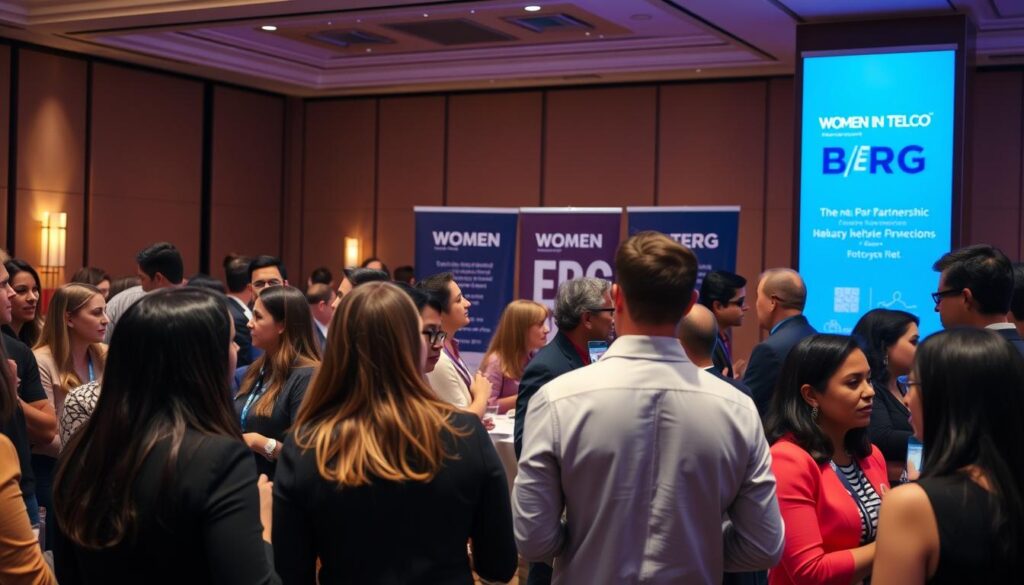
Look outside too. Groups like Women in Telco or national Black and Hispanic engineering groups have built trust over years. Partnering with them brings that trust to your event. It’s like getting a warm introduction instead of a cold call.
Working together makes your scholarships program more focused. These groups know who needs help and who deserves recognition. Their support makes your application page feel like a real chance.
It’s the same with finding speakers. You’re not searching for diverse panelists; you’re getting introductions to experts. It’s a big difference.
Most importantly, these partnerships make sure your efforts are guided by the people you’re trying to include. Many inclusion efforts fail because they’re made about communities, not with them. An ERG partnership keeps you honest about your assumptions.
Work together to create content. Let these groups help design sessions and suggest topics. This doesn’t just fill seats; it builds ownership. When communities see themselves in your event, they participate more.
Your scholarships outreach gets much better through these networks. The message is trusted because it comes from a reliable source, not just HR. You’re opening doors, not just giving charity.
This way, inclusion becomes a value booster. You get talent, cultural insight, and trust. Associations get platforms and validation. It’s a win-win, not just sponsorship.
Remember, true inclusion means humility. You’re not the expert on every community’s experience. But you can partner with those who are. This shift changes everything. It makes your event a fair space for everyone.
Template: Inclusive event charter & metrics dashboard
We’ve spent pages talking about the idea. Now it’s time to make it real. Analysis is just words without action. Here’s your starting point.
The Inclusive Event Charter is more than a poster. It’s a contract everyone on your team signs. It promises specific actions like following WCAG and ADA standards, ensuring diverse speakers, and setting clear conduct rules.
Match this charter with a simple metrics dashboard. Think of a Google Sheet or a Power BI view. Track important inclusion metrics in real time. Watch speaker diversity, scholarship numbers, and accessibility service requests.
Break down your post-event survey data. See how different groups feel about your event. This dashboard shows if your efforts are making a difference.
An inclusive event isn’t just feeling good. It’s about making real choices. Your charter guides you. Your dashboard proves it. Now, let’s create something that works for everyone.