
Ever wonder what makes an industry event memorable? It’s not just about coffee and networking. Modern telecom events are like intellectual showdowns.
These events gather tech experts from all over. They offer something unique: real-time intellectual sparring. Topics range from 5G to IoT security.
At Nextera’s conferences, these sessions are special. They turn theory into practical strategies. Leaders share hard truths, like network latency being a big problem.
Imagine them as the tech industry’s group therapy. Everyone leaves wiser and more honest about our tech challenges.
How to Get Invited to Speak
Let’s face it – nobody gets invited to conference panels by accident. Conference organizers can’t read minds. They don’t have time to search for hidden gems in the telecom world.
Getting picked for these panels is simple but tough. Organizers like Nextera look for three things: real expertise, diverse views, and speakers who keep the audience awake. They want someone who can explain complex issues in simple terms, not just repeat marketing lines.
To get on stage, you need to step out of the shadows. Share your knowledge openly and join real conversations in the industry. That unfinished white paper on 6G? Finish it. Those local tech meetups? Attend and practice explaining things clearly.
The harsh truth is: if your talk on spectral efficiency puts people to sleep, you need to improve. Conference organizers seek fresh voices. They want to hear about network slicing in a way that excites, not confuses.
| What Organizers Want | What They Avoid | Your Action Plan |
|---|---|---|
| Experts with proven knowledge | Marketing copy reciters | Publish original research |
| Diverse backgrounds | Same old voices | Engage in cross-industry dialogues |
| Engaging storytellers | Technical jargon machines | Practice at smaller events first |
| Fresh perspectives | Recycled presentations | Develop unique talking points |
To get invited, show your worth by speaking up often. Check out the guidelines for major events to see what organizers look for.
In the telecom industry, your skills only count if people know about them. Being the smartest person in the room means nothing if you’re not in the right place.
Your voice is important on conference panels. But first, you need to offer something worth listening to.
Effective Panel Preparation
Preparing for a telecom panel is not just about memorizing facts. It’s about telling a story in a way that grabs attention. Think of it as a TED Talk, but with better Wi-Fi. The real work starts weeks before the event, and it’s where you can either shine or stumble.
Demand the moderator’s questions in advance – if they refuse, it’s like a network outage. You wouldn’t launch a product without knowing the details, so why approach a panel blind? This is a key difference between pros and amateurs.
Researching your fellow panelists is also key. I’ve seen “experts” discover they’re sitting next to someone they’ve been citing for years. It’s awkward, to say the least.

Have pre-panel discussions to build chemistry. These virtual meetups help panelists discuss topics, avoid conflicts, and bond. It’s like an orchestra playing in sync, not out of tune.
Practice your answers, but don’t memorize talking points. Nothing kills the panel vibe like rehearsed lines. Authenticity is more important than perfection.
Have three killer stories ready to make your points. People remember stories, not data. These stories are your secret weapons for complex topics.
Clear guidelines from organizers are essential. You need to know the topic, format, and goals. Without this, you’re just another voice in the noise.
Consider rehearsals for complex topics. Telecom is not simple, and some ideas need smooth delivery. But rehearse the concepts, not the script. The magic is in the spontaneous moments, not the prepared lines.
These tips turn panel preparation into a strategic advantage. It’s about being ready to adapt, engage, and contribute. In telecom panels, the best prepared often seem the most spontaneous.
Engaging Panel Audiences
There’s a special silence when a panel moderator asks for questions. It’s as if everyone suddenly finds their shoes interesting. Brilliant telecom experts often become shy when it’s time for audience questions.
Everyone in the room has questions, but they’re afraid of looking foolish. This fear is common among professionals.
Your professional presence isn’t about using industry terms. It’s about making everyone feel comfortable to ask questions. The person worried about asking about edge computing is actually very engaged.
The key isn’t in having charismatic moderators or fancy PowerPoints. It’s in creating a space where people feel free to ask questions. Live polling, for example, is used by 71% of event organizers because it works well.
When 78% of the room says network security keeps them up at night, it changes the conversation. Suddenly, the CISO’s 5G rollout statistics aren’t as important.
Digital Q&A platforms turn awkward classroom scenarios into lively discussions. People vote on questions and share concerns without fear. This makes the panel a real conversation, not just a monologue.
Effective tools create a ripple effect. The first anonymous question encourages others to speak up. Live poll results show shared concerns, making the conversation more meaningful.
| Engagement Method | Participation Rate | Anonymous Option | Best For |
|---|---|---|---|
| Live Polling | 85-95% | Yes | Setting context, testing assumptions |
| Digital Q&A | 70-80% | Yes | Addressing specific concerns, crowd-sourcing questions |
| Traditional Hand-raising | 5-15% | No | Very confident attendees only |
| Pre-submitted Questions | 60-70% | Optional | Structured discussions, shy audiences |
Traditional Q&A reaches 10% of the audience. Digital tools engage 70-80%. This is a huge difference, making your professional presence shine when you facilitate real conversations.
Remember, the most valuable insights often come from quiet corners. Your job is to create a space where all questions can be asked.
Networking through Panel Participation
Conference networking isn’t just about handing out business cards. It’s about finding the right spot to be seen. Panelists get to meet key people backstage, not just at networking events. I’ve made more deals in green rooms than at networking sessions.
During panels, you show off your telecom smarts. This isn’t just for the audience. It’s a chance to impress everyone in the room. That clever comment about spectrum allocation? That’s your calling card.
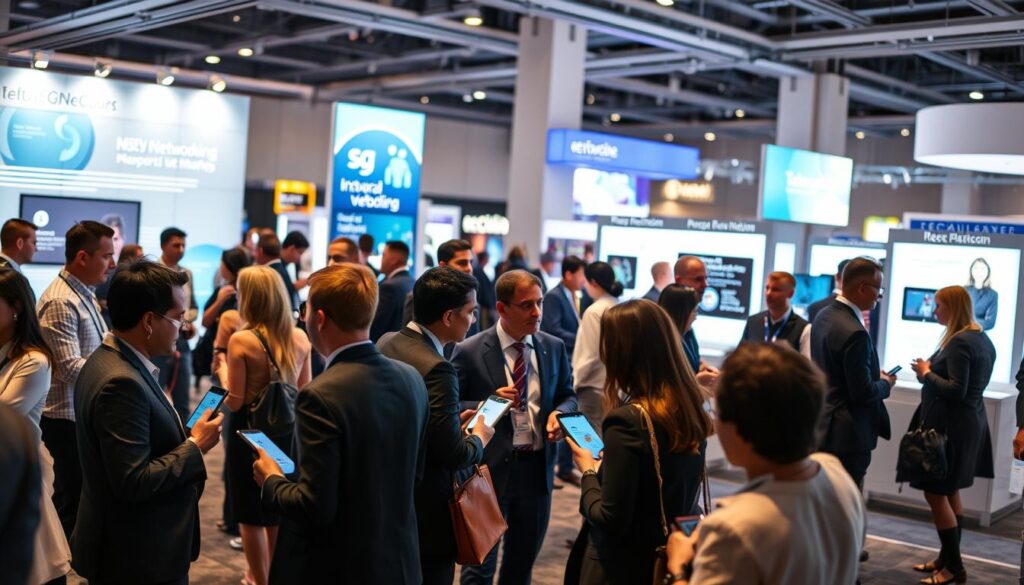
Q&A sessions turn into chances to find new clients. Each question shows who needs your help. The person asking about 5G? That’s your next customer.
Conferences are great for making partnerships. Telecom panels offer a chance to network naturally. You’re solving problems, not just selling.
Being seen as a problem solver is key. People remember the one who explained network issues. They forget the one with the most business cards.
Want to see this in action? Join top telecom panels. The backstage access is worth the effort.
Panelists are the VIPs at conferences. You’re not competing for attention. You’re commanding it with your knowledge. This position opens doors that regular networking can’t.
Follow-Up Success
The applause fades, and the stage lights dim. Most panelists disappear like a dropped call in a subway tunnel. Don’t be like them.
Your real work starts when you leave the stage. View your panel as planting seeds for future growth. The real magic happens in the 48-hour window after.
- Send personalized emails within 24 hours – not generic “nice to meet you” templates
- Reference specific conversation points (that IoT security question deserves your case study)
- Connect engineers with your technical leads for deeper discussions
- Implement lead scoring to prioritize your hottest connections
This isn’t just being polite – it’s about building strong relationships. You’re turning your 30-minute slot into ongoing business talks that count.
But many smart people mess up here. They ignore feedback or ask the wrong questions. Don’t ask “how did I do?” – ask “what specific challenge should I help you solve next?”
The best conference panels create lasting impacts. Your follow-up strategy decides if those impacts grow into something big or fade away.
Elevating Your Industry Profile
Let’s be honest – nobody joins panels for the speaking fee. The real currency here is credibility. Your recorded session becomes your permanent audition tape, circulating through Slack channels and LinkedIn feeds long after the event ends.
Post-event content ensures your insights keep working for you. Those recorded sessions and presentations become evergreen assets, helping professionals stay informed months later. This is where practical speaking tips separate the thought leaders from the talking heads.
The magic happens when you stop explaining and start solving. Engineers become authorities not by being the smartest in the room, but by being the most helpful. Forget buzzwords – focus on actionable insights that make people’s jobs easier.
Your reputation becomes your referral engine. That clear explanation of network function virtualization? Suddenly you’re the go-to person for consulting gigs and better speaking opportunities. The best speaking tips always come back to one thing: actually helping people solve real problems.
In telecom, nothing travels faster than someone who knows what they’re talking about – and can prove it on stage. Your industry profile isn’t built on credentials alone. It’s built on being the person who made complex concepts click for everyone in the room.